Europe has begun withdrawing more gas from underground storage than it is injecting, a seasonal turn that matters because the continent enters winter with inventories at a historically weak level and a thinner buffer against price spikes or supply disruption.
Europe gas storage turns to net withdrawals
Natural Gas
The shift to net withdrawals, first seen on Oct. 20, marks the start of the heating season in the European Union. According to Gas Infrastructure Europe data cited in the source material, withdrawals from storage reached 0.125 billion cubic meters that day, while injections totaled 0.086 billion cubic meters. Storage utilization slipped to 74.58%, or about 75 billion cubic meters, down 0.04 percentage point from the previous day.
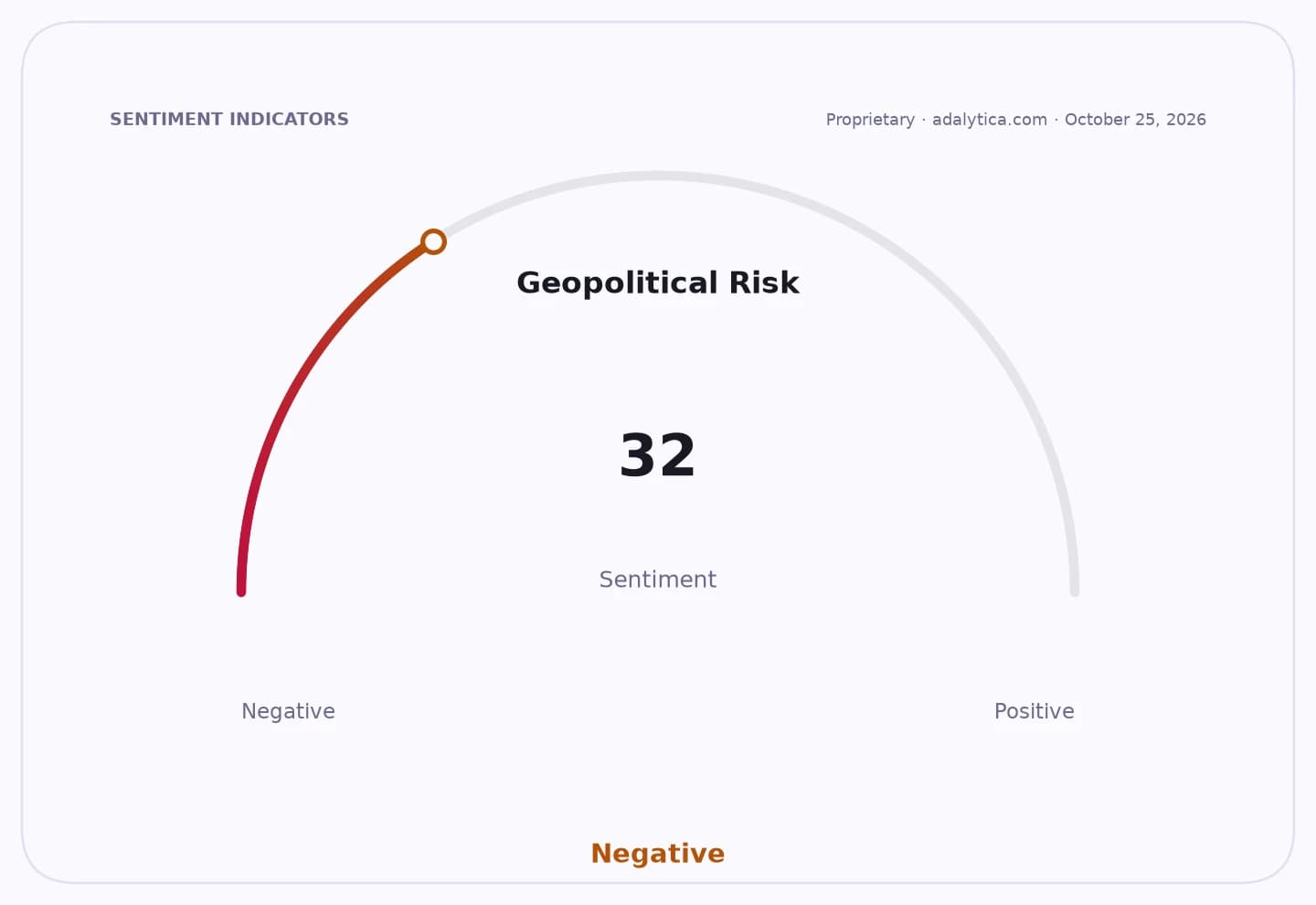
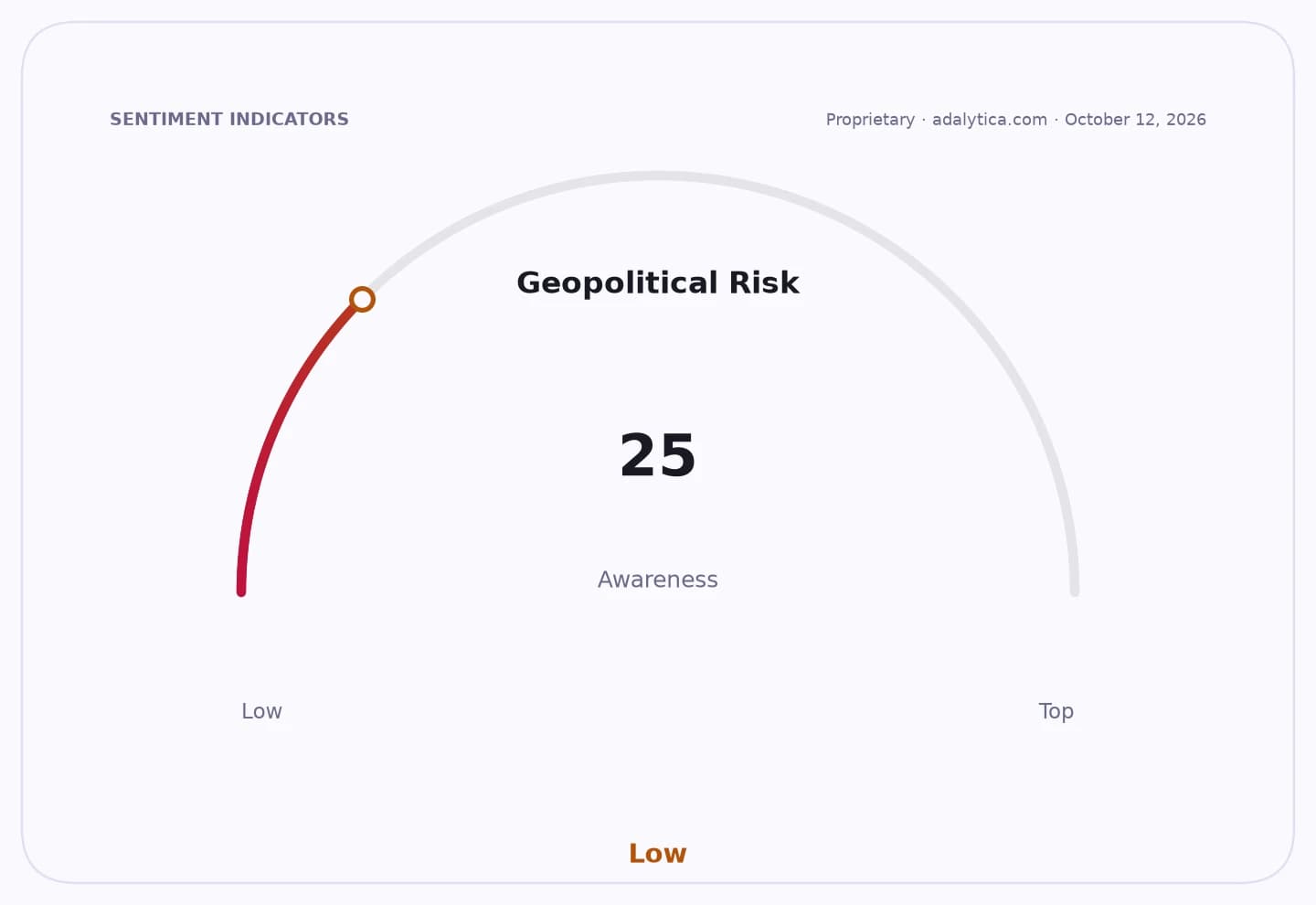
Sentiment Indicators
That level is the lowest for this date in the 2011-to-2025 record and sits 14.8 percentage points below the five-year average of 89.33%. The gap matters economically because underground storage is the EU’s main seasonal shock absorber, covering as much as one-third of winter demand when temperatures fall and pipeline flows are tighter. With stocks already lagging normal levels, the region has less room to absorb a cold snap, a Russian supply interruption, or an LNG market squeeze without forcing prices higher.
For investors, the immediate implication is support for European gas prices and for volatility across the energy complex. Traders tend to price storage deficits early, especially when the balance flips from injections to withdrawals before the official winter peak. That can benefit gas producers, LNG exporters and some utility hedging books, while hurting industrial users and households exposed to spot or near-term contract resets. It also keeps pressure on European governments and utilities to secure incremental supply at a time when procurement costs remain sensitive.
The data also underline how fragile the recovery in storage has been. Europe’s inventories were already at a record seasonal low in August, recovering only partially through September. Even after that rebound, the bloc entered late October materially below the level European regulators want ahead of winter. The EU’s storage rule, introduced in 2022, aims for 90% full by Nov. 1, though the target has effectively been eased to 80% in response to supply concerns. At 74.6%, the bloc remains beneath even that softer threshold.
The market backdrop is therefore one of limited margin for error. A normal winter could still be manageable if LNG imports stay strong and temperatures remain mild, but any combination of colder weather, stronger Asian demand, or geopolitical disruption would tighten balances fast. That makes the start of net withdrawals more than a routine seasonal marker: it is the point at which Europe’s gas market stops building protection and starts spending it.
| Entity | Gains | Losses |
|---|---|---|
| Gas producers and LNG exporters | ▲Firmer prices | ▼Lower export flexibility |
| European utilities and traders with hedges | ▲Managed exposure | ▼Higher replenishment costs |
| Industrial gas users and consumers | ▲None | ▼Higher winter price risk |
| EU policymakers | ▲Seasonal clarity | ▼Less storage headroom |