US oil and gas production has climbed to its highest level on record, a development that matters far beyond the energy patch because it can help keep fuel supplies ample, support domestic inflation relief and reinforce cash flows across the large-cap producers that dominate the sector.
US Oil Output Hits Record as XLE Stays Strong

For investors, the biggest takeaway is not just that production is high, but that it is high while prices are still firm. West Texas Intermediate crude was trading around $86.74 a barrel in the latest forecast, and the Energy Select Sector SPDR fund, or XLE, finished near $63.64, well above its 50-day and 200-day moving averages. That combination points to a market that is still rewarding producers for volume growth, even as oil remains expensive enough to support margins, dividends and buybacks.
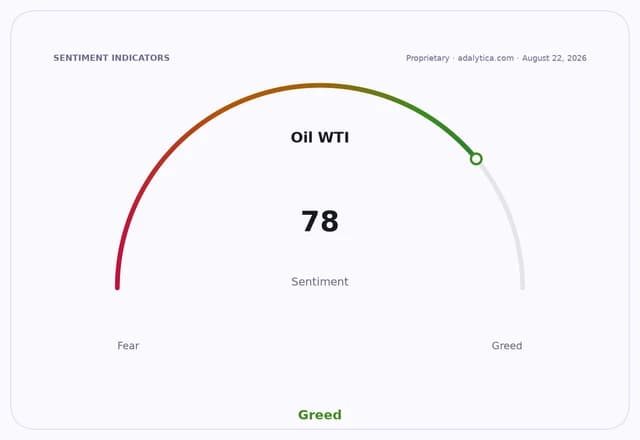
Sentiment IndicatorsⓘProprietary · adalytica.com · August 22, 2026
This is a snapshot — live sentiment, awareness and momentum for 130+ markets update continuously in the dashboard.Open AlphaPulse
The message is clear: the US is not just coping with volatile energy markets, it is shaping them. Higher output improves energy security and gives the economy a buffer against supply shocks, whether they come from the Middle East, OPEC+ policy or weather-driven disruptions. It also matters for interest rates and the consumer. Energy prices feed directly into headline inflation, so more supply can help restrain the kind of price spikes that force the Federal Reserve to stay tighter for longer.
That’s why the rally in energy stocks deserves attention. XLE has surged, with its latest close still comfortably above both the 50-day and 200-day moving averages, while its relative strength index has moved into overbought territory. In plain English, investors have been pressing the sector hard because they still see a powerful combination of disciplined supply, healthy cash generation and shareholder returns. Adalytica’s US oil trade signals also show sentiment in “Greed” territory, reflecting how strongly the market has embraced the bullish energy narrative.
The same dynamic is showing up in the broader commodity complex. USO, the oil ETF, has stayed elevated, while natural gas proxy UNG remains much weaker, underscoring a familiar split in the energy market: crude producers are in the driver’s seat, but gas remains more of a stock-specific or weather-specific trade. That matters because integrated giants and shale-focused producers tend to benefit most when oil is strong and output is rising, whereas gas-heavy names need a different catalyst.
For long-term investors, the record output story is a reminder that energy is no longer just about scarcity and price spikes. It is about operational scale, capital discipline and the ability to turn high volumes into free cash flow. Companies such as Exxon Mobil and Chevron have spent years building that model, and the latest production backdrop suggests the majors still have room to keep rewarding patient shareholders.
The risks are familiar: commodity prices can reverse quickly, political pressure can build if gasoline rises, and any slowdown in global growth would eventually show up in demand. But for now, the economic setup favors producers and energy funds over consumers facing higher fuel costs. If you are building a diversified portfolio for the next 3 to 10 years, the sector remains worth watching — and, for disciplined investors, possibly holding for the long haul.
| Entity | Gains | Losses |
|---|---|---|
| US oil and gas producers | ▲Stronger cash flow | ▼Lower pricing power if supply surges too far |
| Energy ETFs such as XLE | ▲Sector inflows and momentum | ▼Volatility if crude cools |
| Consumers and airlines | ▲More stable fuel supply | ▼Still vulnerable to high pump prices |
| Natural gas fund UNG | ▲Limited direct benefit | ▼Lags crude-linked energy strength |