Rents in the U.S. are decelerating again, and that matters because the apartment market is shifting from a landlord’s pricing boom to a more competitive phase where higher asking prices are increasingly difficult to sustain.
U.S. rents cool as apartment pricing power fades

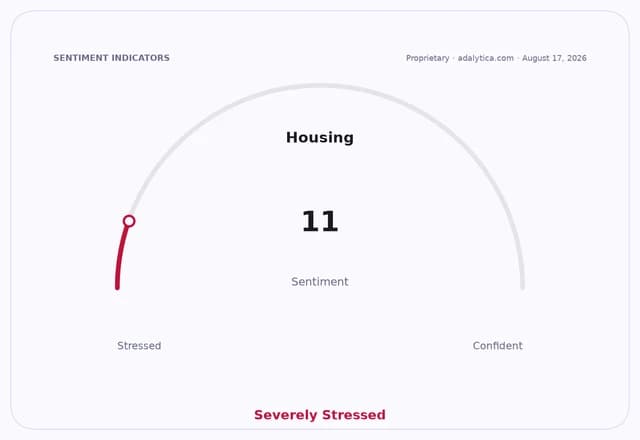
The latest housing-rent indicators point to a market in which owners can no longer rely on broad rent inflation to drive growth. A gauge of housing and rent inflation sentiment from Adalytica.com sits at 11, labeled “Extreme Fear,” while the underlying rental data show a recent burst of weakness and only a partial rebound. One housing series fell to 1,199 in May before recovering to 1,427 in June, with a July forecast of 1,333.3. Another broader home-price series has continued climbing, but rent growth is no longer keeping pace with the kind of gains landlords enjoyed earlier in the cycle.
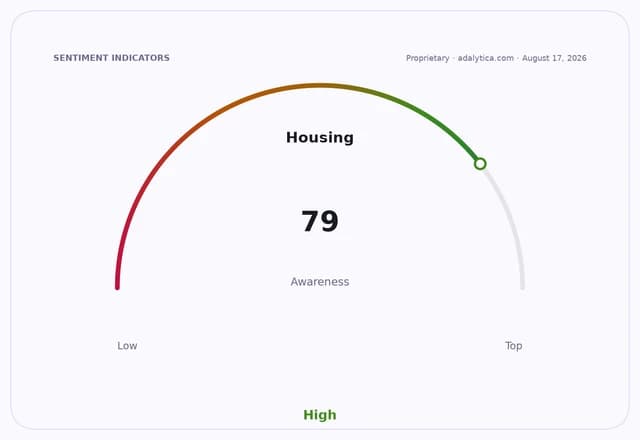
Sentiment IndicatorsⓘProprietary · adalytica.com · August 17, 2026
This is a snapshot — live sentiment, awareness and momentum for 130+ markets update continuously in the dashboard.Open AlphaPulse
That backdrop helps explain the comment from investor Diego Moya that he would not go to a town and ask for 1,300 euros in rent if comparable units were renting for 700. It is a simple pricing rule, but it captures the new market reality: landlords have to anchor to local affordability and competing supply, not just to inflationary momentum or past peak pricing. In a weaker demand environment, overreaching on rent can lengthen vacancy periods and erode realized income more than it improves sticker rates.
For apartment owners such as American Homes 4 Rent, Invitation Homes and Apartment Investment & Management, the implications are direct. The challenge is no longer just raising rents on renewals; it is preserving occupancy and protecting same-home revenue growth without pushing tenants to cheaper alternatives. Invitation Homes reported renewal lease net effective rental rate growth of 3.2% in the second quarter, while new-lease growth was just 1.1%, underscoring how much more constrained pricing is for fresh tenants. That gap matters because renewals can support revenue, but new leases usually reveal the true pricing power of a portfolio.
The macro forces behind the shift are familiar. After the post-pandemic surge in rents and home values, affordability is tighter, households are more selective and supply in several markets has improved. That combination limits landlords’ ability to reprice aggressively, especially in markets where renters can compare available units more easily or where recent construction has added competition.
For investors, the story is less about whether rent inflation disappears and more about whether earnings estimates need to be re-rated. Slower new-lease growth can mean softer net operating income growth, lower confidence in same-store revenue forecasts and less room for valuation expansion in residential real estate investment trusts. On the other hand, a normalizing market may also reduce churn and support retention, which would favor landlords with scale, lower leverage and efficient operating platforms.
The key test in the months ahead is whether the June rebound in housing-rent data marks a floor or just another pause in a broader cooling trend. If asking rents continue to diverge from what tenants can actually pay, apartment owners may be forced to choose between occupancy and pricing power — and in this market, occupancy is likely to win.
| Entity | Gains | Losses |
|---|---|---|
| Tenants | ▲Better negotiating power | ▼Less choice in high-demand pockets |
| Apartment landlords | ▲Higher occupancy if pricing is restrained | ▼Slower rent growth |
| REIT investors | ▲More sustainable retention rates | ▼Lower NOI and valuation upside |
| Local renters in cheaper towns | ▲Relative affordability | ▼Potentially more in-migration pressure |