US stocks are starting the day with a tailwind as Treasury yields ease and Washington sharpens its economic pressure on Iran, giving investors a rare mix of lower discount rates and a geopolitical shock that is not immediately spilling into energy prices.
US stocks rise as yields ease and Iran pressure builds
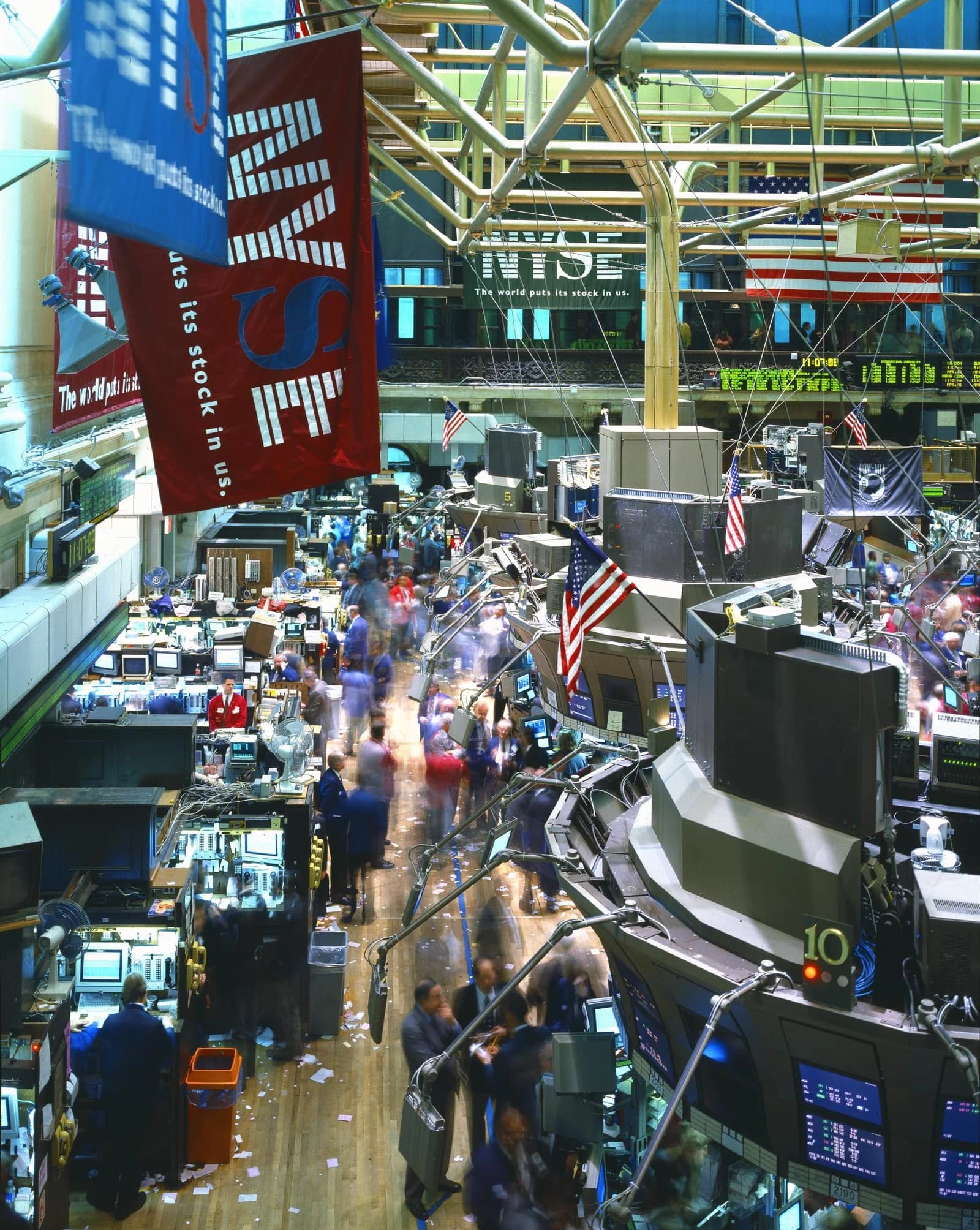
That combination matters because it relieves one of the market’s biggest pressure points: the bond market. When yields cool off, growth stocks and long-duration assets get a valuation lift. At the same time, tougher sanctions on Iran — including fresh US Treasury actions targeting people and entities tied to Tehran’s financial networks — reduce some of the market’s anxiety around Middle East escalation while still keeping crude traders alert to any retaliation risk.
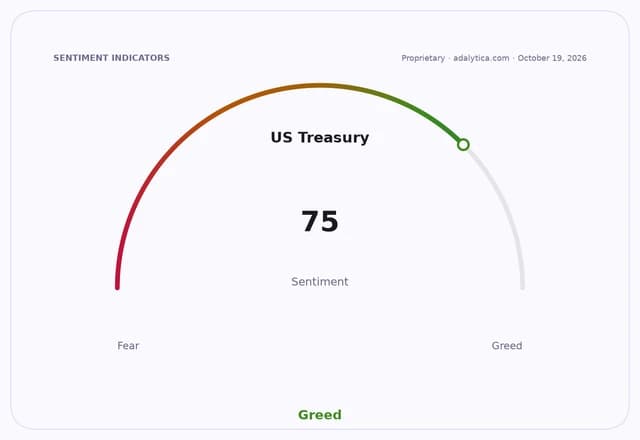
Sentiment IndicatorsⓘProprietary · adalytica.com · October 19, 2026
This is a snapshot — live sentiment, awareness and momentum for 130+ markets update continuously in the dashboard.Open AlphaPulse
The move comes after Treasury Secretary Scott Bessent intensified the administration’s economic campaign against Iran, as US sanctions and allied pressure have pushed Iranian crude exports by sea to zero, according to the news context. For investors, that is the real macro setup to watch: sanctions are tightening financial conditions for Iran, but they are also feeding a broader global narrative about supply chains, shipping, and energy risk premium. So far, the bond market is reading the news as disinflationary enough to support duration.
Adalytica’s signals underscore that split. US Treasury bonds show “greed” sentiment even as awareness remains in “extreme fear,” a setup that points to investors leaning into bonds after recent volatility. The S&P 500, by contrast, sits in “fear” territory, suggesting the equity market is still cautious even as futures point higher. The dollar also looks softer, which typically helps risk assets and eases pressure on multinational earnings.

That backdrop is especially important for high-beta names and rate-sensitive growth stocks such as Tesla. TSLA closed at $354.72 on Oct. 16, above its 50-day moving average of $359.46? Actually, the stock remains close to that short-term trend line and well below its 200-day moving average of $387.99, a sign the bigger recovery thesis is not yet fully confirmed. Still, the technical picture has improved from earlier weakness, with RSI at 48.2 and momentum indicators stabilizing after a long slide. In other words, Tesla is in the kind of reset phase where any pullback in yields can have an outsized effect on sentiment.
Alcoa is also in focus because industrial cyclicals tend to trade with the macro cycle, the dollar and global growth expectations. AA ended at $41.45, far below its 200-day average of $57.36, which tells you the market is still pricing in a weaker aluminum backdrop than the company’s longer-term earnings power may justify. If lower yields are a sign the market believes inflation pressure is fading, that helps cyclicals at the margin, even if the immediate catalyst is geopolitical rather than operational.
Interactive Brokers is another beneficiary of the day’s setup. IBKR closed at $82.69, below its 50-day average of $90.20 but above its 200-day average of $82.28, leaving it at a key inflection point. Brokerages like IBKR tend to gain when markets are active, volatility is alive and investors keep shifting capital across asset classes — all of which are more likely when sanctions, yields and geopolitics are moving together.
The deeper investment read-through is that the market may be underestimating how much this new phase of sanctions-driven pressure on Iran could reshape capital flows. If Treasury yields keep cooling, that supports the broad market. If sanctions keep tightening without a corresponding spike in oil, that is a favorable mix for equities and especially for growth, brokers and other financial intermediaries. The biggest risk is a miscalculation in Tehran that drags energy higher and forces yields back up.
For now, the setup favors being constructive on equities with exposure to falling yields, active trading and secular growth. Tesla remains a high-beta rebound candidate if rates stay contained, while Interactive Brokers looks like a cleaner beneficiary of increased market activity. The trade here is not to chase the headline — it is to position for the second-order effects if sanctions pressure Iran without igniting an energy shock.
| Entity | Gains | Losses |
|---|---|---|
| US stocks | ▲Lower discount rates | ▼None immediately |
| Treasury bonds | ▲Rising demand | ▼Yield bulls |
| Tesla (TSLA) | ▲Rate relief, rebound potential | ▼200-day resistance |
| Interactive Brokers (IBKR) | ▲More trading activity | ▼Low-volatility markets |