Long-dated US Treasury yields stabilized after a sharp New York selloff, while a drop in oil prices helped steady US equity futures and ease some of the inflation pressure that had rattled global markets.
US Treasury Yields Stabilize as Oil Prices Ease

The move matters because the recent jump in crude had pushed borrowing costs higher and tightened financial conditions just as investors were already worried about growth. When oil and yields rise together, it is a double hit for stocks: higher energy costs can squeeze corporate margins, while higher bond yields raise discount rates and make equities less attractive.
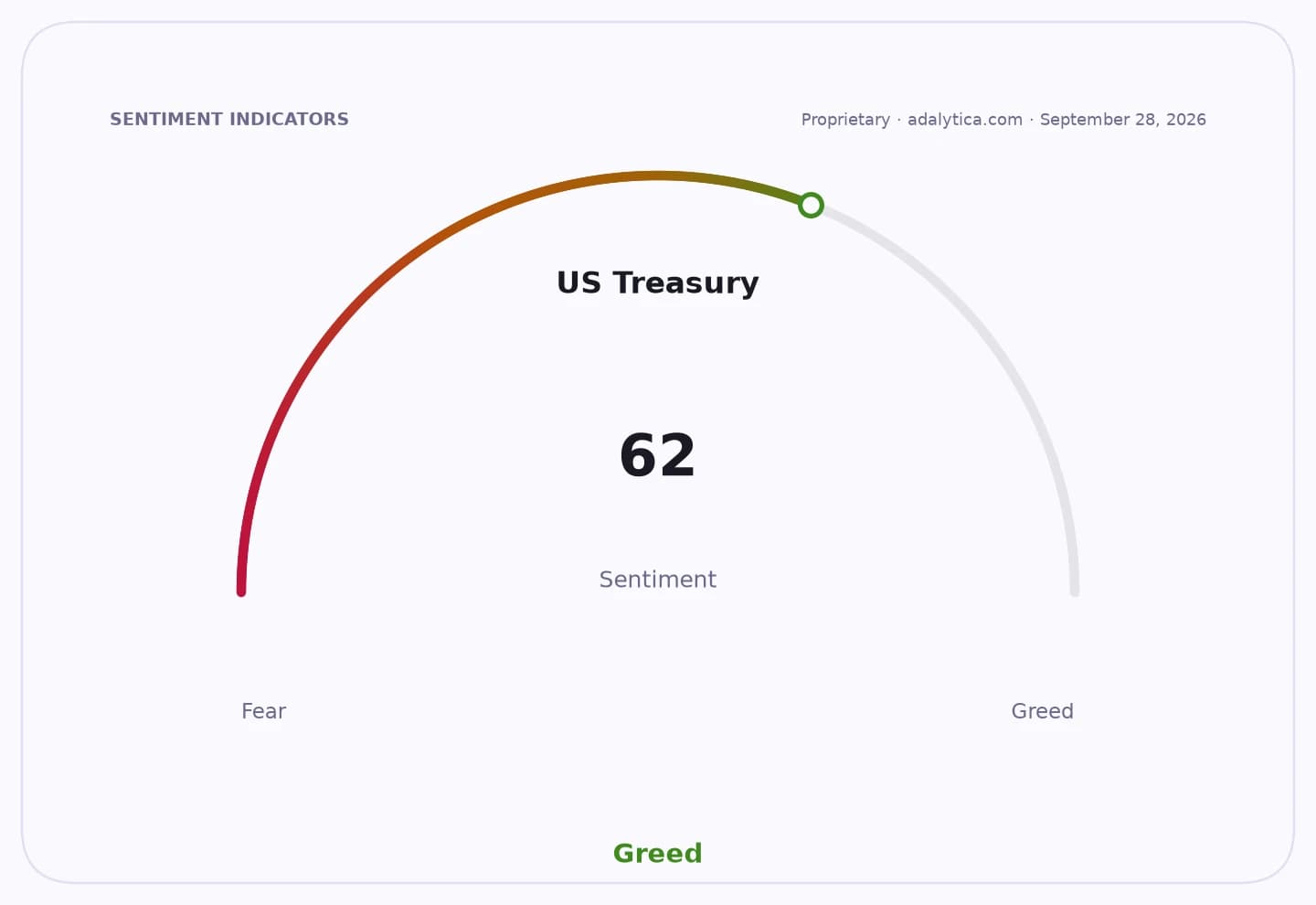
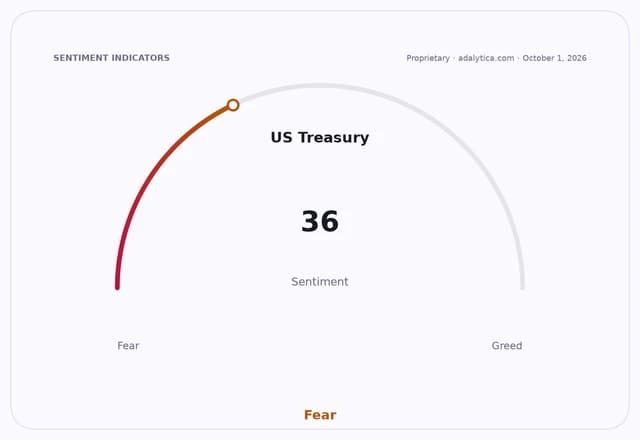
Sentiment IndicatorsⓘProprietary · adalytica.com · October 1, 2026
This is a snapshot — live sentiment, awareness and momentum for 130+ markets update continuously in the dashboard.Open AlphaPulse
By late trade, the benchmark 10-year Treasury yield was around 5.2%, near its highest level in more than two years, after earlier weakness in the bond market. The 2-year yield was about 4.9%, underscoring how firmly markets are still pricing in restrictive Federal Reserve policy.
Oil’s retreat offered some relief. West Texas Intermediate futures were down from the latest spike above $108 a barrel, a move that had been fueled by fading hopes for a US-Iran agreement and had amplified inflation concerns across asset classes.
US stock futures were supported by the pullback in energy and the stabilization in bonds, though the tone remained fragile. The S&P 500 was already under pressure, with Adalytica’s trade signal gauge showing fear in US equities, while Treasury bond signals were neutral but still drawing extreme investor attention.
The action also left the dollar weak and added to the sense that market positioning remains crowded around inflation and rates. For investors, the key question is whether the latest oil move proves temporary or feeds another leg higher in yields that would keep pressure on equity valuations, rate-sensitive sectors and risk appetite.
Attention now turns to upcoming economic releases and any fresh geopolitical developments that could keep crude elevated or force another rethink on the Fed path.
| Entity | Gains | Losses |
|---|---|---|
| US equity futures | ▲Relief from lower oil and steadier yields | ▼Ongoing inflation and growth fear |
| Treasury bulls | ▲Stabilization after selloff | ▼Higher yields if oil rebounds |
| Oil producers | ▲Higher prices and tighter supply | ▼Demand-sensitive consumers and airlines |
| Consumers and importers | ▲Slight cost relief from weaker crude | ▼Energy-heavy sectors and inflation-linked budgets |