Domestic bond traders are growing more uneasy as U.S. Treasury yields climb to levels not seen since 2002, reviving pressure on Japanese government bonds and tightening the room for policy makers and issuers alike.
U.S. Treasury Yields Rise Pressure Japanese Bonds

The immediate market concern is simple: when overseas benchmark rates rise this sharply, Japanese debt is harder to price in isolation. The U.S. 10-year yield has surged to 5.29%, while the 30-year has moved to 5.6%, a global sell-off that is feeding directly into higher term premium expectations in Japan and across Asia. That matters because Japanese yields have been pinned for years by ultra-loose monetary policy and heavy central-bank intervention; a sustained rise in foreign rates tends to pull capital out of lower-yielding markets and raises the hurdle for domestic bond buyers.
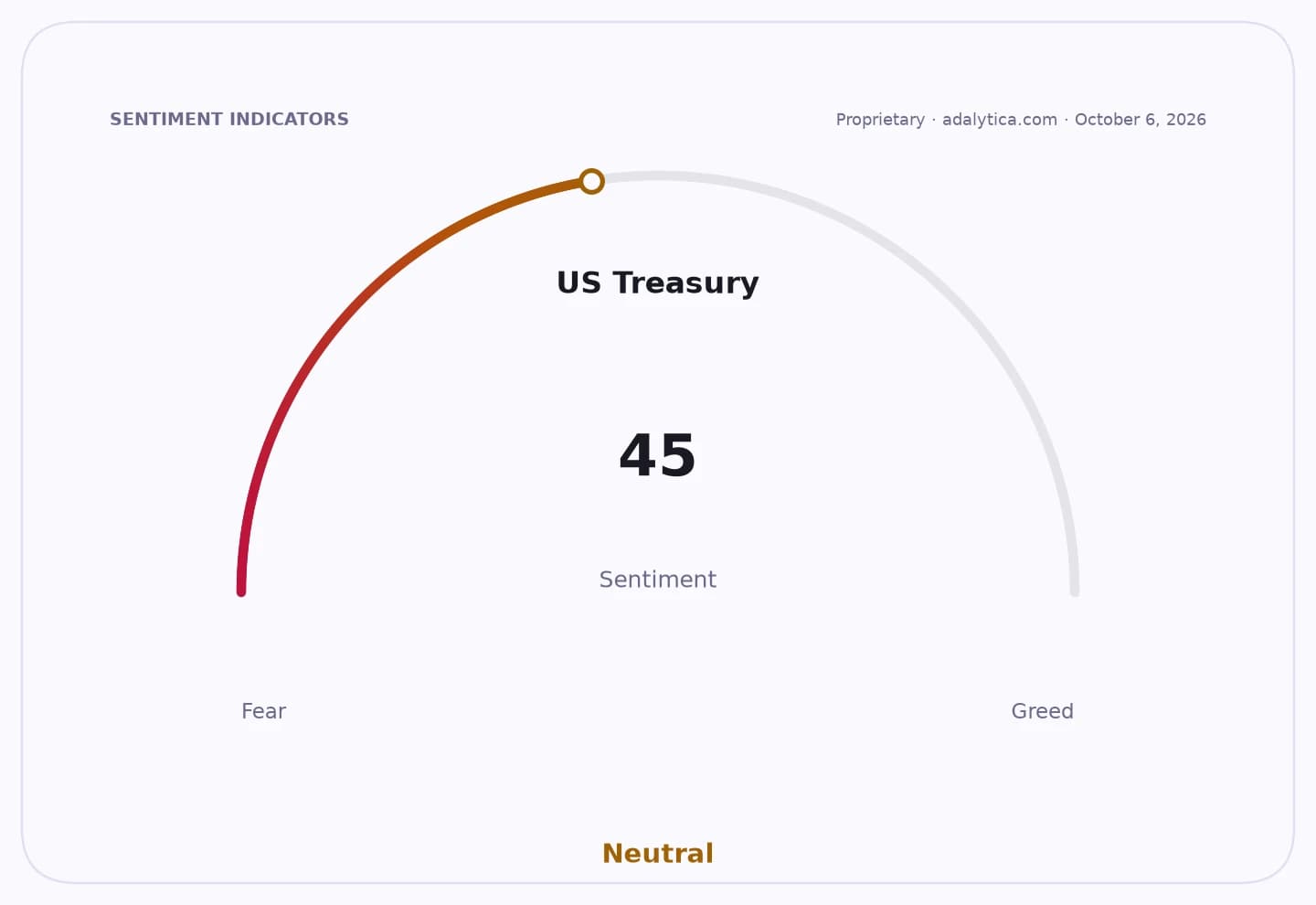
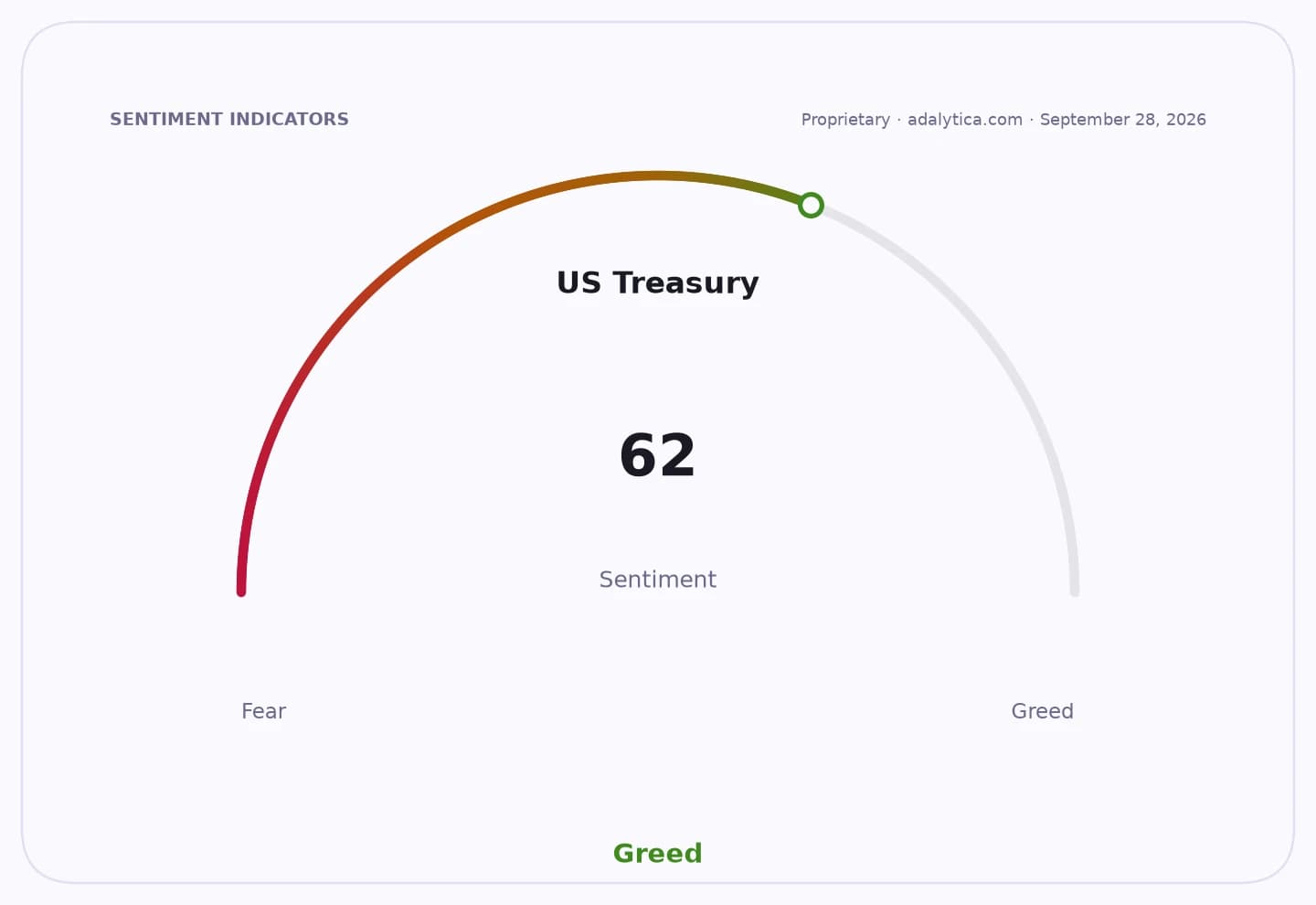
Sentiment IndicatorsⓘProprietary · adalytica.com · October 5, 2026
This is a snapshot — live sentiment, awareness and momentum for 130+ markets update continuously in the dashboard.Open AlphaPulse

For investors, the key issue is duration risk. Long-dated sovereign bonds are particularly exposed when global yields reprice upward, and the latest move has already shown up in U.S.-listed long-bond proxies: the iShares 20+ Year Treasury Bond ETF has fallen to about $77.48, below its 50-day moving average of $81.15 and far under its 200-day average of $83.73. Its RSI reading near 27 points to an oversold market, but momentum remains weak, with MACD still negative and below its signal line. Those technical readings do not change the macro picture, but they underscore how forcefully investors are de-risking duration.
The broader economic significance is that higher overseas rates reduce the policy cushion for Japan. When foreign borrowing costs rise, domestic yields cannot stay disconnected for long without forcing the Bank of Japan to defend the market more aggressively or accept a sharper repricing in government debt. That creates a harder environment for the Ministry of Finance as well, because funding costs rise just as fiscal flexibility narrows. The U.S. move also matters for Japan’s corporate borrowers, whose offshore funding and hedging costs can rise quickly when Treasury yields and the dollar’s direction become less benign.

The currency channel is part of the story too. The dollar has weakened sharply over the past month in Adalytica’s gauge, with sentiment in “fear” territory and awareness still elevated, reflecting a more fragile backdrop for cross-border asset allocation. If foreign yields stay high while the dollar remains unstable, Japanese institutions may have less incentive to add duration abroad, leaving domestic bond markets more dependent on local buyers at a time when inflation and supply concerns are rising.
The bull case for bonds is that the sell-off may be approaching exhaustion after such a violent move, and oversold technicals could attract tactical buying. The bear case is that the move reflects a deeper regime shift: inflation is proving stickier, fiscal borrowing needs remain large, and global investors are demanding more compensation for holding long-term debt. In that scenario, Japanese bonds would not be insulated for long.
For now, the market’s narrative is clear: what happens in overseas rates is no longer a distant variable for Japan’s bond market. It is becoming the main driver of domestic pricing, fiscal calculations and portfolio positioning.
| Entity | Gains | Losses |
|---|---|---|
| Global bond bears | ▲Higher yields | ▼Higher bond prices |
| Japanese bond buyers | ▲Better entry levels | ▼Mark-to-market losses |
| Japanese government | ▲None | ▼Higher funding costs |
| U.S. Treasury shorts | ▲Momentum in yields | ▼Carry risk if yields reverse |