Artificial intelligence is moving closer to acting as a useful second set of eyes in psychiatry after researchers at UTHealth Houston and Yale University said a video-analysis system using Qwen3-Omni matched psychiatrists’ overall diagnostic assessments in tests of simulated patients.
UTHealth Houston, Yale test AI psychiatry video analysis

That matters because psychiatry remains one of the most judgment-heavy parts of medicine, where doctors must weigh speech, tone, facial expression, behavior and thought process at the same time. A tool that can analyze those cues from video and turn them into a written assessment could help fill gaps in care, especially in regions with too few specialists.
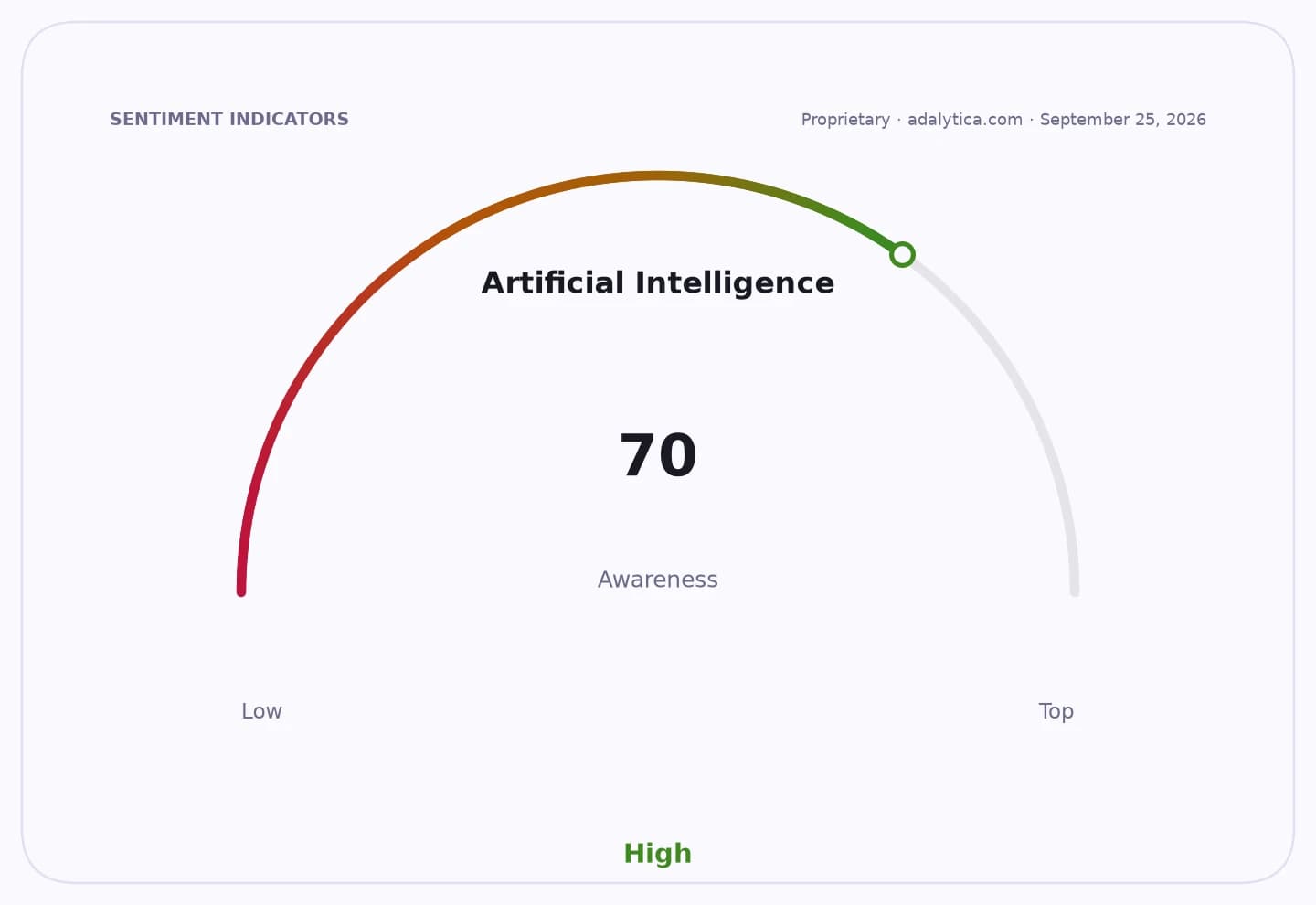
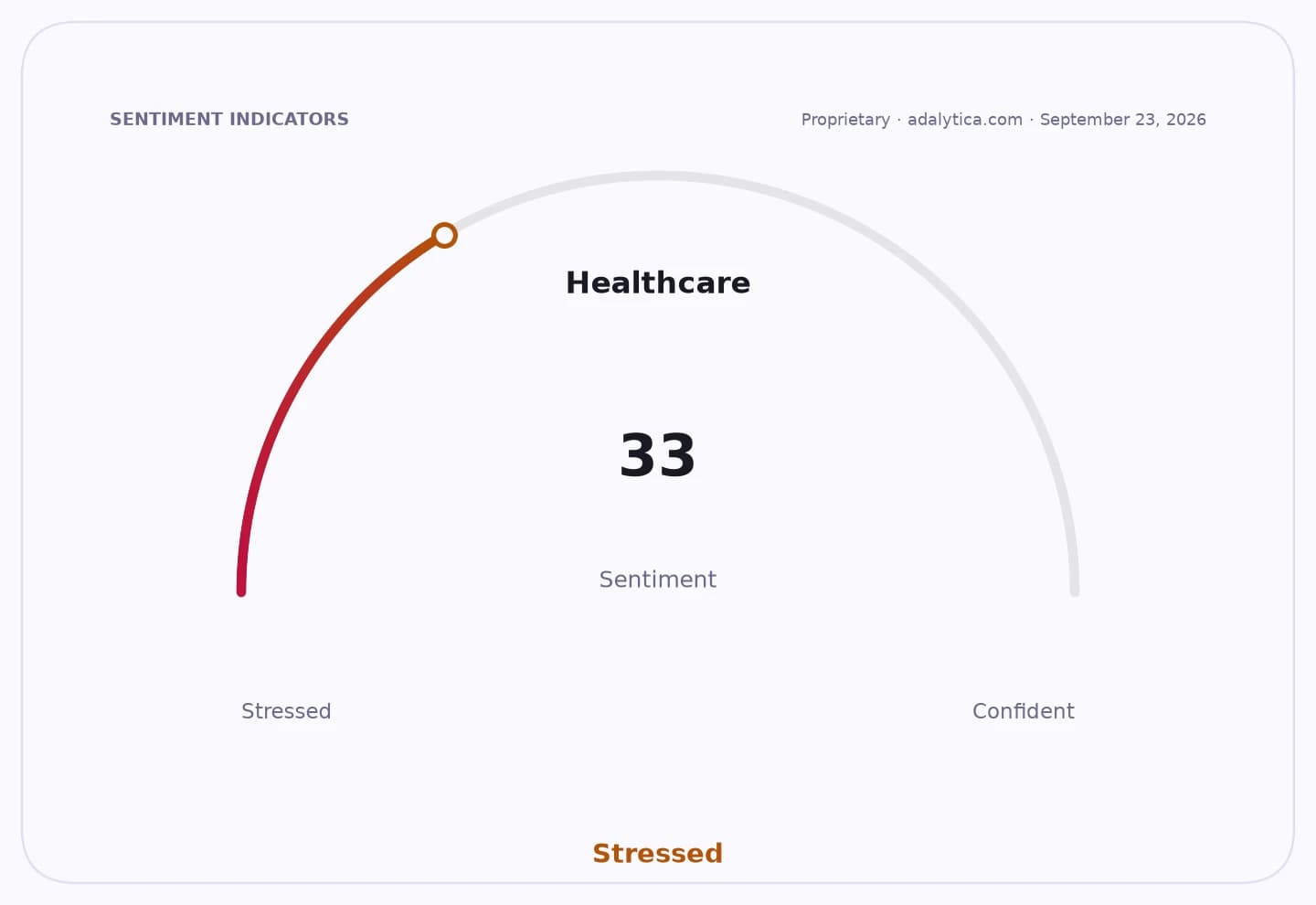
Sentiment IndicatorsⓘProprietary · adalytica.com · September 20, 2026
This is a snapshot — live sentiment, awareness and momentum for 130+ markets update continuously in the dashboard.Open AlphaPulse
The system was tested on standardized patients acting out clinical cases, including schizophrenia, obsessive-compulsive disorder and bipolar disorder at different severities. Researchers said both the AI and psychiatrist teams had to classify patients across 10 criteria, including mood, appearance, cooperation, speech, perception, suicidal thoughts, delusions, obsessions, compulsions, and the coherence and speed of thought.
The AI was not perfect. It struggled with some single categories, including appearance and more subtle movements, but the researchers said its overall diagnostic judgment remained accurate and close to that of the psychiatrist teams.
For investors and healthcare operators, the practical significance is less about replacing physicians than extending access. The researchers said the system could serve as decision support for clinicians without psychiatric training, such as a pediatrician in a remote area needing a second opinion, and as a training tool for students and junior doctors comparing their assessments with experienced psychiatrists.
The work also fits a broader push in healthcare AI, where software is increasingly being embedded into clinical workflows rather than used only as a chat interface. Publicly traded healthcare names such as UnitedHealth Group, HCA Healthcare and CVS Health have all been wrestling with cost pressure and staffing constraints, making automation that improves triage and documentation potentially valuable if it can be validated and deployed safely.
The next test is whether the model can improve its performance on the finer details of a psychiatric exam without losing the broad accuracy that made it notable in the first place. Regulators, clinicians and hospital systems will also want evidence that the tool performs reliably outside a controlled research setting before it can be adopted more widely.
| Entity | Gains | Losses |
|---|---|---|
| UTHealth Houston / Yale researchers | ▲Validation of clinical AI | ▼Slower proof of real-world use |
| Rural clinicians / pediatricians | ▲Second-opinion support | ▼Need for specialist access |
| Psychiatry trainees | ▲Teaching tool and feedback | ▼Reliance on imperfect AI |
| Traditional manual assessment | ▲Augmented workflow | ▼Some diagnostic monopoly |