Wiring Epic Systems’ deterioration score to automatic pages for critical-care teams was associated with an 18% drop in the adjusted odds of in-hospital death, underscoring that the financial and clinical value of hospital AI may depend less on model accuracy than on how quickly clinicians act on it.
Epic Systems alerting tied to lower hospital mortality

The study, published July 29 in NEJM AI and covering 23,132 high-risk adult patients across 11 New Jersey hospitals, suggests the biggest payoff from widely deployed clinical AI comes from workflow design, not algorithm rankings. RWJBarnabas Health and Rutgers researchers found that when patients crossed the highest-risk threshold on Epic’s Deterioration Index, the system pushed notifications directly to rapid response teams. That change lifted rapid-response activations to 37.5% of stays from 25.3% and coincided with a fall in unadjusted in-hospital mortality to 18.6% from 23.1%.
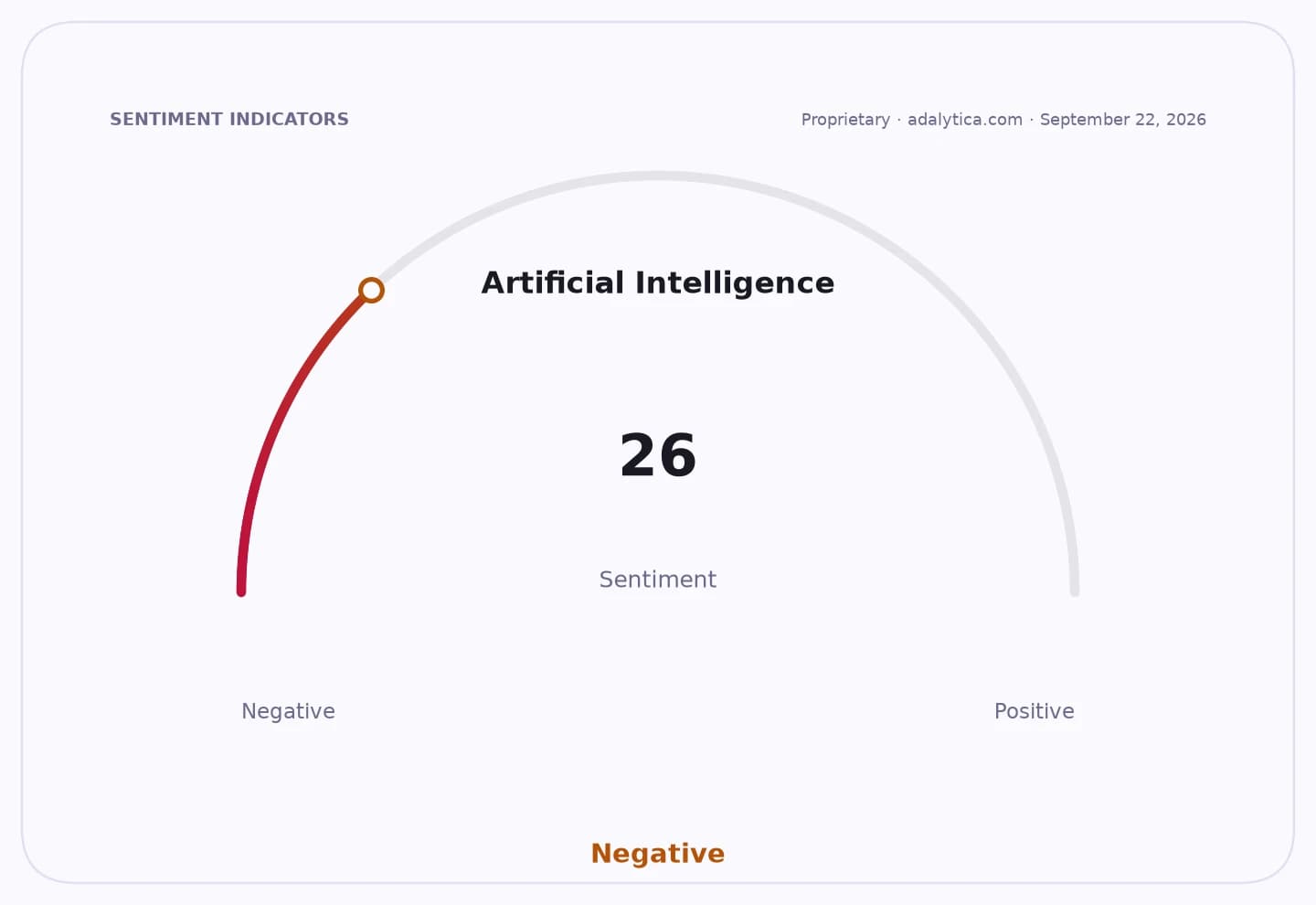
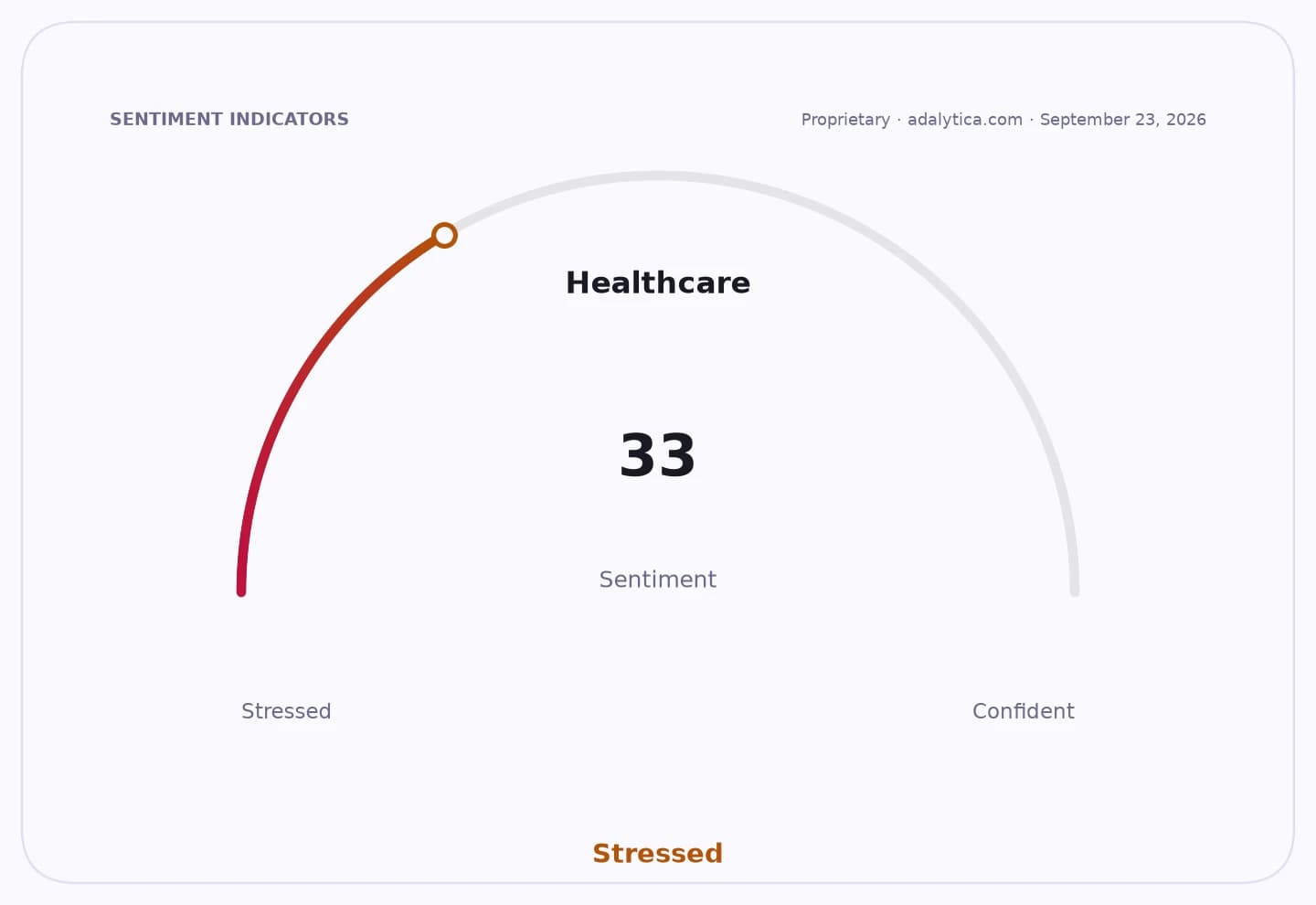
Sentiment IndicatorsⓘProprietary · adalytica.com · September 19, 2026
This is a snapshot — live sentiment, awareness and momentum for 130+ markets update continuously in the dashboard.Open AlphaPulse
The findings matter because hospital AI is increasingly being judged not on the elegance of its prediction, but on whether it changes bedside behavior fast enough to alter outcomes. In the study’s adjusted analysis, the odds ratio for in-hospital death was 0.82 after accounting for age, comorbidities, hospital type, index score and clustering by hospital. Escalations to higher levels of care held near 1% in both periods, suggesting the intervention did not simply flood hospitals with intensive-care transfers. Instead, it appears to have improved the timing and coordination of response.
That distinction is important for investors in health-tech, hospital operators and software vendors because it points to a practical commercial lesson: AI tools embedded in electronic health records may create value only when tied to staffing, education and escalation protocols. RWJBarnabas said the benefit came from “the partnership around the algorithm,” not from the algorithm alone, and the authors credited clinician training, alert tuning and a standing response team as much as the Epic score itself. For hospitals, that raises the bar on implementation but also lowers the risk that a new model will remain a passive dashboard feature with little return on investment.
The study also lands against a backdrop of skepticism around Epic’s predictive models. In a separate large comparison of early-warning systems, the Epic index lagged rivals on discrimination and produced a median one-hour lead time before deterioration, versus 11 hours for eCART and eight hours for a hand-calculated score. That makes the New Jersey result especially notable: even a model that has not topped benchmark tests may still improve outcomes if it is operationalized better than competitors. For hospital buyers, that shifts the debate from “which score is best?” to “which workflow reliably gets the right clinician to the bedside in time?”
For investors, the implications are mixed. Bullish investors can argue that the study strengthens the case for enterprise AI sold inside hospital systems, where recurring software revenue may be easier to defend if it measurably reduces mortality and supports staffing efficiency. Bears will note the evidence is observational, not randomized, and depends on a single health system’s execution; the result may not travel cleanly to hospitals with thinner staffing or weaker rapid-response coverage. Still, the message is clear: in healthcare AI, the moat may be implementation, not model architecture.
The next test is whether other health systems can reproduce the mortality benefit with the same Epic-based alerting, or whether outcomes improve only when hospitals add the training, governance and response capacity that RWJBarnabas built around it. Epic’s score is already widely deployed, which means the commercial opportunity is less about selling a new algorithm than helping hospitals convert existing data exhaust into faster, more disciplined clinical action.
| Entity | Gains | Losses |
|---|---|---|
| RWJBarnabas Health | ▲Lower mortality risk | ▼Less effective passive workflows |
| Epic Systems | ▲Validation of installed software | ▼Criticism of model-alone performance |
| Hospital rapid response teams | ▲More actionable alerts | ▼More workload if poorly tuned |
| Competing early-warning vendors | ▲Benchmark pressure | ▼Epic’s broader installed base |