The U.S. dollar’s buying power abroad is putting low-cost destinations back at the center of travel planning, with Uzbekistan ranked No. 1 on Stacker’s list of the 20 best places where the dollar stretches furthest.
Uzbekistan tops dollar-stretches-travel ranking
That matters because affordability is one of the clearest determinants of demand in global leisure travel, and the list shows where price-sensitive Americans are most likely to redirect spending as airfares, lodging and daily expenses remain elevated. The ranking also helps explain why outbound U.S. travel has stayed resilient even as inbound tourism to the United States has softened: Americans are still traveling, but they are increasingly chasing value.
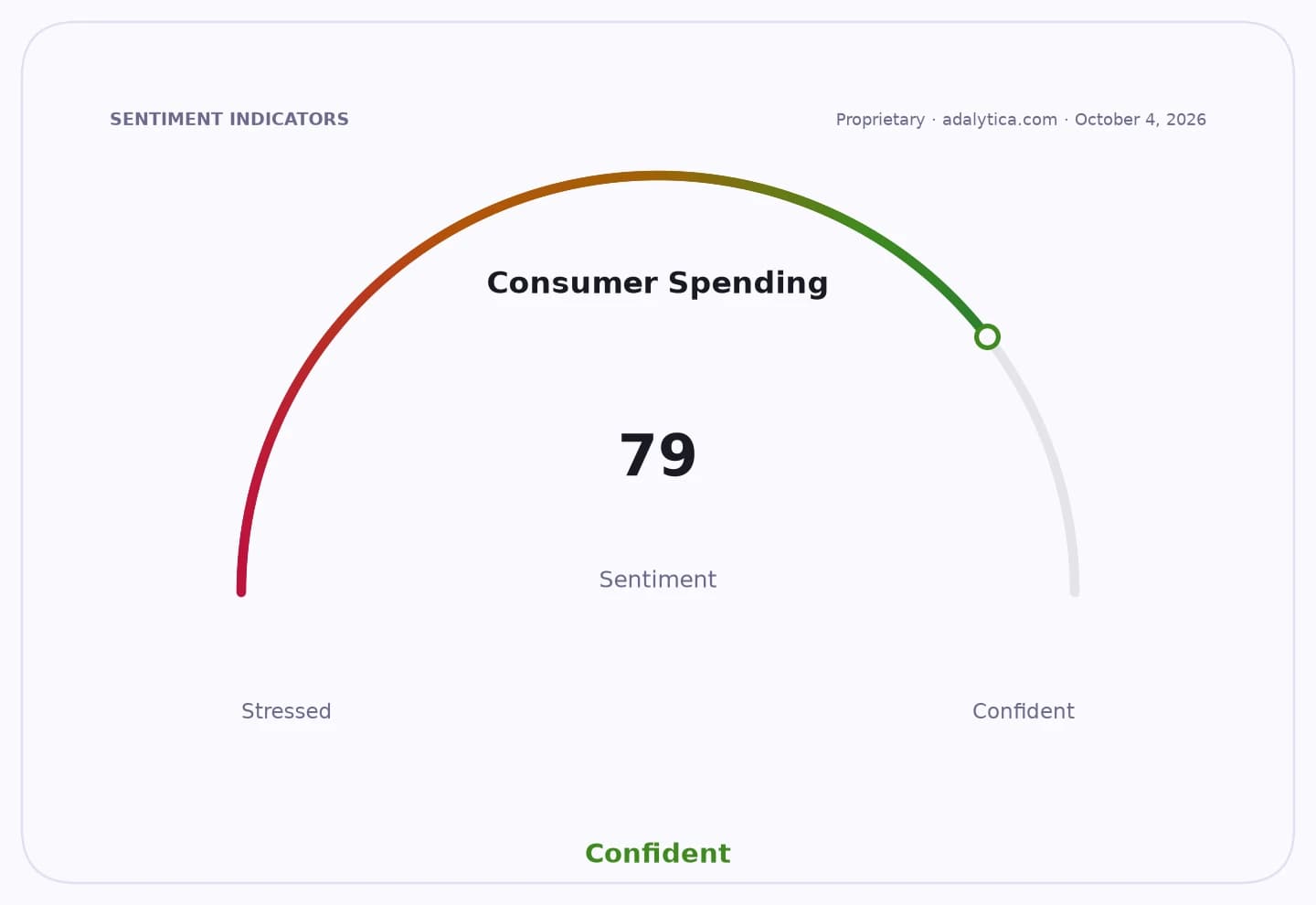
Sentiment IndicatorsⓘProprietary · adalytica.com · October 7, 2026
This is a snapshot — live sentiment, awareness and momentum for 130+ markets update continuously in the dashboard.Open AlphaPulse
Stacker’s ranking, based on WorldData.info cost indices and State Department advisories, puts Uzbekistan’s cost of living at 78.2% below the U.S., making it the cheapest destination on the list. Kyrgyzstan, Bhutan and Georgia round out the top tier, while seven of the 10 cheapest destinations are in Asia, underscoring how far a dollar can go across Central and Southeast Asia compared with many long-haul alternatives.
For travelers, the appeal is straightforward. Uzbekistan’s Samarkand and Bukhara offer historic sites for a few dollars or less, while destinations such as Vietnam, Cambodia and Thailand combine low admission prices with relatively cheap food, transport and lodging. That pricing advantage is especially relevant in an environment where 72% of Americans say cost is their biggest travel worry, according to Beach.com, and where “slow travel” — longer stays in fewer places — is becoming a more common way to control budgets.
The ranking also points to a broader trade-off between affordability and safety. Stacker’s review notes that countries deemed safer by WorldData.info are more often expensive than the U.S., while cheaper destinations are more likely to come with travel warnings or political risk. That tension helps explain why some of the most budget-friendly locations, including Georgia, Kyrgyzstan and Angola, carry caveats from the State Department or other authorities.
For the travel industry, the message is mixed. Low-cost destinations stand to benefit from price-conscious demand, particularly from U.S. travelers looking beyond Europe’s pricier hubs. Airlines, tour operators and online booking platforms can use that shift to stimulate traffic to secondary and emerging destinations. But the flip side is that elevated currency and economic volatility can quickly alter where Americans go, leaving demand concentrated in places that combine affordability with relatively manageable risk.
That dynamic is visible in market and consumer behavior more broadly. Outbound international departures by U.S. citizens rose 5.2% year over year in March 2026, the latest data cited in the source material, even as inbound tourism to the U.S. fell about 5.5% between 2024 and 2025. For investors in travel and leisure, the takeaway is that the next leg of demand may be shaped less by prestige destinations and more by value-driven routing, package pricing and foreign-exchange sensitivity.
Booking platforms such as Booking Holdings and Expedia, along with airlines including Delta, are exposed to that shift. A stronger dollar can support U.S. outbound demand by making foreign trips cheaper in local terms, but it can also steer travelers toward lower-yield destinations, pressuring average ticket and hotel prices. Technical readings on the travel stocks reflect that volatility: Booking and Expedia have both sold off sharply from earlier highs and sit well below their 50-day moving averages, while Delta has held up better but remains sensitive to changes in discretionary spending and international demand patterns.
The main investment implication is that budget tourism is not just a consumer trend; it is a currency story and a margin story. As long as the dollar remains relatively firm and Americans keep prioritizing value, the beneficiaries are likely to be destinations and travel intermediaries that can package affordability into attractive itineraries. The losers are higher-cost markets that depend on affluent tourists or premium pricing to fill rooms, tours and seats.
| Entity | Gains | Losses |
|---|---|---|
| Uzbekistan, Kyrgyzstan, Bhutan | ▲More U.S. budget demand | ▼Pricier destination rivals |
| Booking Holdings, Expedia | ▲Higher outbound booking volume | ▼If travelers trade down |
| Delta Air Lines | ▲Stronger international leisure demand | ▼Premium-fare destinations |
| High-cost European destinations | ▲— | ▼Value-seeking U.S. travelers |