The Central Bank of Venezuela pushed the official exchange rate to Bs. 820.10 per dollar on Sept. 9, another step higher that underscores how quickly the bolívar is losing ground and how inflationary pressure is building into September.
Venezuela BCV Raises Official Dollar Rate to Bs. 820.10

The move, up Bs. 5.41 or 0.66% from Bs. 814.69 the previous day, takes the currency through another round-number threshold and confirms that the official market is still adjusting upward after a month in which the exchange rate advanced steadily. The euro also climbed, fixing at Bs. 954.02 from Bs. 947.30.
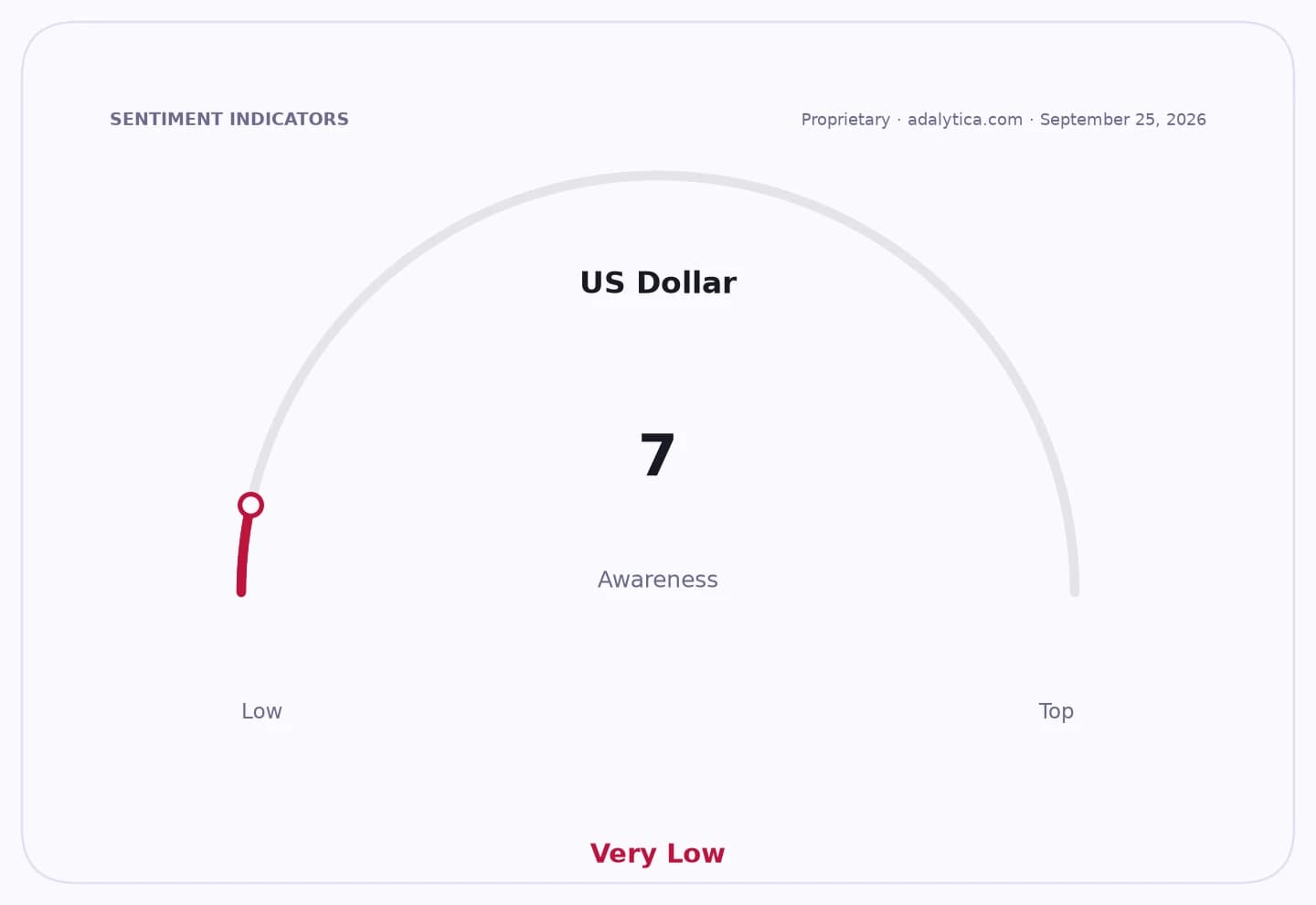
Sentiment IndicatorsⓘProprietary · adalytica.com · September 10, 2026
This is a snapshot — live sentiment, awareness and momentum for 130+ markets update continuously in the dashboard.Open AlphaPulse
That matters because in Venezuela the official dollar is not just a reference rate. It is the pricing anchor for imports, wages, public finances and corporate balance sheets in an economy that has long relied on foreign currency to function. When the BCV keeps ratcheting the rate higher, the cost of imported food, medicine, fuel inputs and consumer goods rises almost immediately, while households with incomes denominated in bolivars see purchasing power erode further.
The latest increase also signals that the authorities are still managing a controlled devaluation rather than a stable exchange regime. The BCV said the figure reflects the weighted average of trades in participating bank dealing rooms, but the steady daily crawl higher suggests the central bank is validating market pressure rather than reversing it. For businesses that price goods off the official rate, every incremental move complicates inventory decisions, working capital needs and margins.
For investors, the key issue is not the size of a single adjustment but the direction of travel. A weaker bolívar tends to feed near-term inflation, widen the gap between bolivar revenues and hard-currency costs, and increase demand for dollars or dollar-linked assets. That supports the case for hard-currency exposure, but it also raises the risk of deeper real-economy stress, including weaker consumer demand and more pressure on banks, importers and local retailers.
The devaluation comes against a backdrop of fragile confidence in Venezuela’s macro framework. Opposition leader María Corina Machado has argued that the country needs political and economic reforms, not just financial arrangements, to restore stability. Those broader concerns matter for markets because exchange-rate management in Venezuela remains tied to policy credibility, sanctions dynamics and the state’s ability to secure foreign currency from oil and other channels.
In practical terms, the next focus is whether the BCV can slow the pace of depreciation or whether the bolívar continues to slip through successive price barriers. If the move persists, inflation expectations are likely to worsen, dollarization pressures will intensify and the economy will become even more dependent on hard-currency cash flows, favoring exporters and dollar earners while punishing wage earners and bolívar-based consumers.
| Entity | Gains | Losses |
|---|---|---|
| Dollar holders | ▲Preserve purchasing power | ▼— |
| Bolivar earners | ▲— | ▼Real income shrinks |
| Importers and retailers | ▲— | ▼Higher replacement costs |
| Venezuelan state / BCV | ▲Short-term price adjustment | ▼Credibility pressure |