Treasury yields have climbed to levels that make short-term government bond funds look far more attractive than they did a year ago, and that’s the real story behind the Vanguard-Schwab matchup. For investors hunting safety without giving up all return, the choice between Vanguard Short-Term Treasury ETF and Schwab Short-Term U.S. Treasury ETF now comes down to a simple question: which fund gives you the better blend of yield, price stability and liquidity when rates are still elevated?
VGSH vs SCHO in High Treasury Yields
That matters because the safe-haven trade is no longer about hiding from zero yields. The 2-year Treasury is around 4.8% and the 10-year is near 5.3%, so even short-duration Treasury ETFs can offer meaningful income while keeping interest-rate risk relatively contained. In other words, investors do not have to stretch into equities or longer bonds to find a return that looks respectable on a risk-adjusted basis.
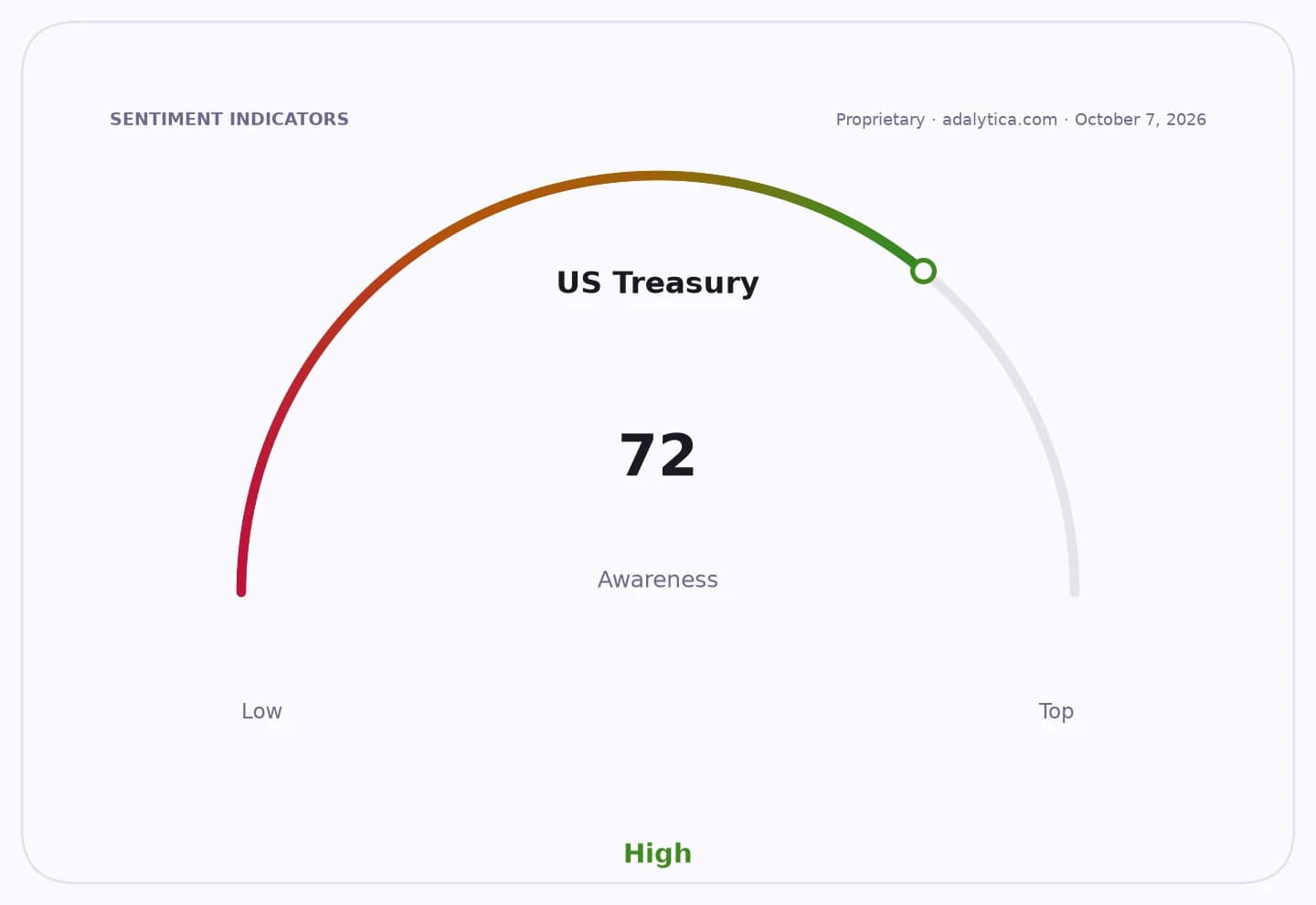
Sentiment IndicatorsⓘProprietary · adalytica.com · October 7, 2026
This is a snapshot — live sentiment, awareness and momentum for 130+ markets update continuously in the dashboard.Open AlphaPulse
On the latest prices, Vanguard Short-Term Treasury ETF, or VGSH, closed at $57.51, while Schwab Short-Term U.S. Treasury ETF, or SCHO, ended at $23.85. Both funds have been remarkably steady, which is exactly what you want from a short-term Treasury fund. VGSH has traded just above its 50-day and 200-day moving averages, while SCHO has also held slightly above those benchmarks, underscoring how little volatility investors have taken on. For long-term holders, that stability is the point: you are buying a parking place for cash that still earns something.
The edge, at least on raw yield potential, still leans toward the Treasury backdrop rather than the funds themselves. When the Fed funds rate is about 3.75% and the market is pricing it near 3.73% next month, short-term Treasury ETFs should continue to harvest comparatively high income as older, lower-yielding securities roll off. That makes these funds useful not just for cautious investors, but for anyone waiting for better entry points in stocks, credit or longer-duration bonds.
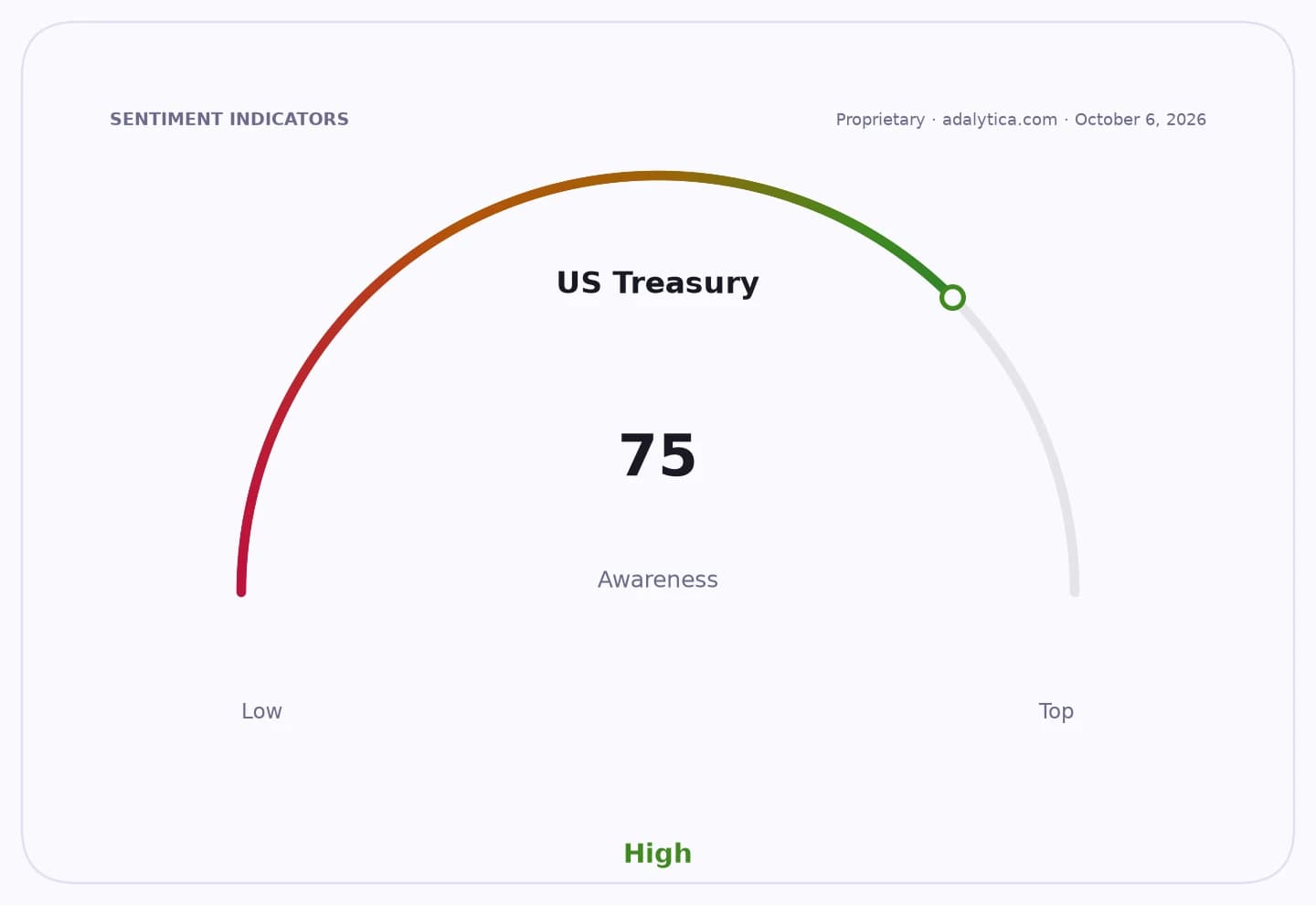
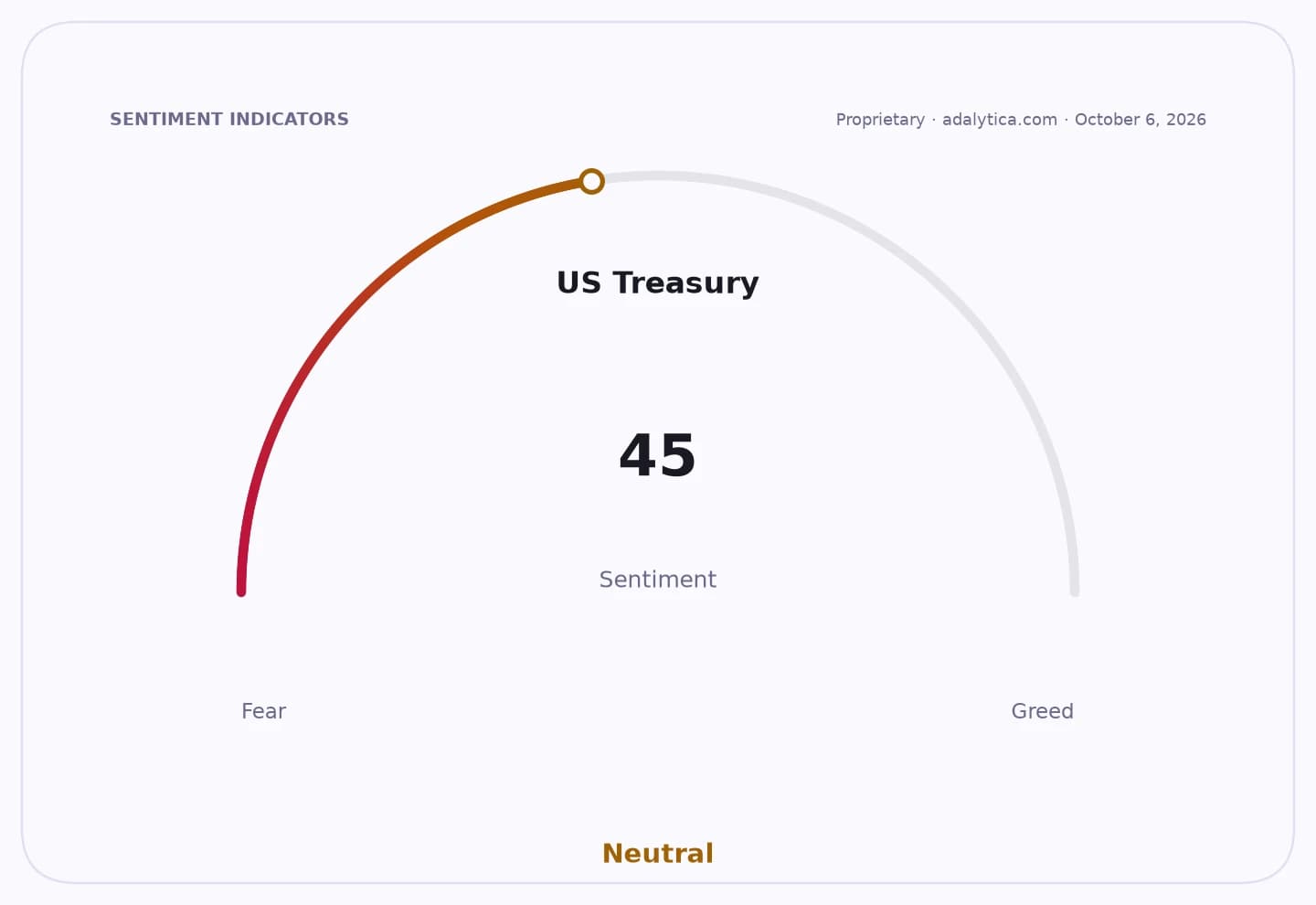
Adalytica’s trade signals also show why the safe-haven trade remains in favor. Treasury bond sentiment is neutral, but awareness is elevated, suggesting investors are watching the asset class closely even if they are not aggressively piling in. At the same time, the S&P 500 is flashing extreme greed, which usually strengthens the case for having some dry powder in short-term Treasuries rather than being fully exposed to risk assets at stretched levels.
Between the two ETFs, the practical difference for investors is small. Vanguard and Schwab both give low-cost exposure to short-term Treasuries, and both are doing the job they were built to do: preserve capital and deliver a modest return in a higher-rate world. Vanguard’s larger asset base may appeal to investors who value scale and liquidity, while Schwab’s rival fund offers a simpler, lower-cost way to hold short government paper. For most buy-and-hold investors, the more important decision is not which ticker wins by a few basis points, but whether they want this defensive allocation at all.
And right now, that answer is increasingly yes. Treasury yields are still high enough that cash-like government exposure can play a real portfolio role, especially if inflation stays sticky or growth slows and stocks wobble. For investors building wealth over years, not weeks, short-term Treasury ETFs deserve a place on the watchlist — and for those already sitting on cash, they may be worth buying as a steady, unexciting, but highly useful safe haven.
| Entity | Gains | Losses |
|---|---|---|
| VGSH investors | ▲Slightly higher-rate safety | ▼Stock-market upside |
| SCHO investors | ▲Low-cost Treasury exposure | ▼Longer-duration bond gains |
| Treasury buyers | ▲Attractive yield with low volatility | ▼Equities during risk-on rallies |
| Cash holders | ▲Better return on idle money | ▼Staying in near-zero-yield accounts |