AI is making Vietnam’s creative economy faster and cheaper to produce, but it is also forcing artists, museums and policymakers to confront a more expensive problem: how to protect cultural identity when the machine learns from incomplete, foreign or legally sensitive data.
Vietnam AI Creative Economy Faces Data and Copyright Risks
That tension is now central to the country’s creative industries because the economic value of AI depends not just on how much content it can generate, but on whether that output is accurate, lawful and culturally credible. In sectors such as heritage, music, film and design, a flawed dataset can turn a productivity gain into reputational damage, copyright risk or a distorted public record.
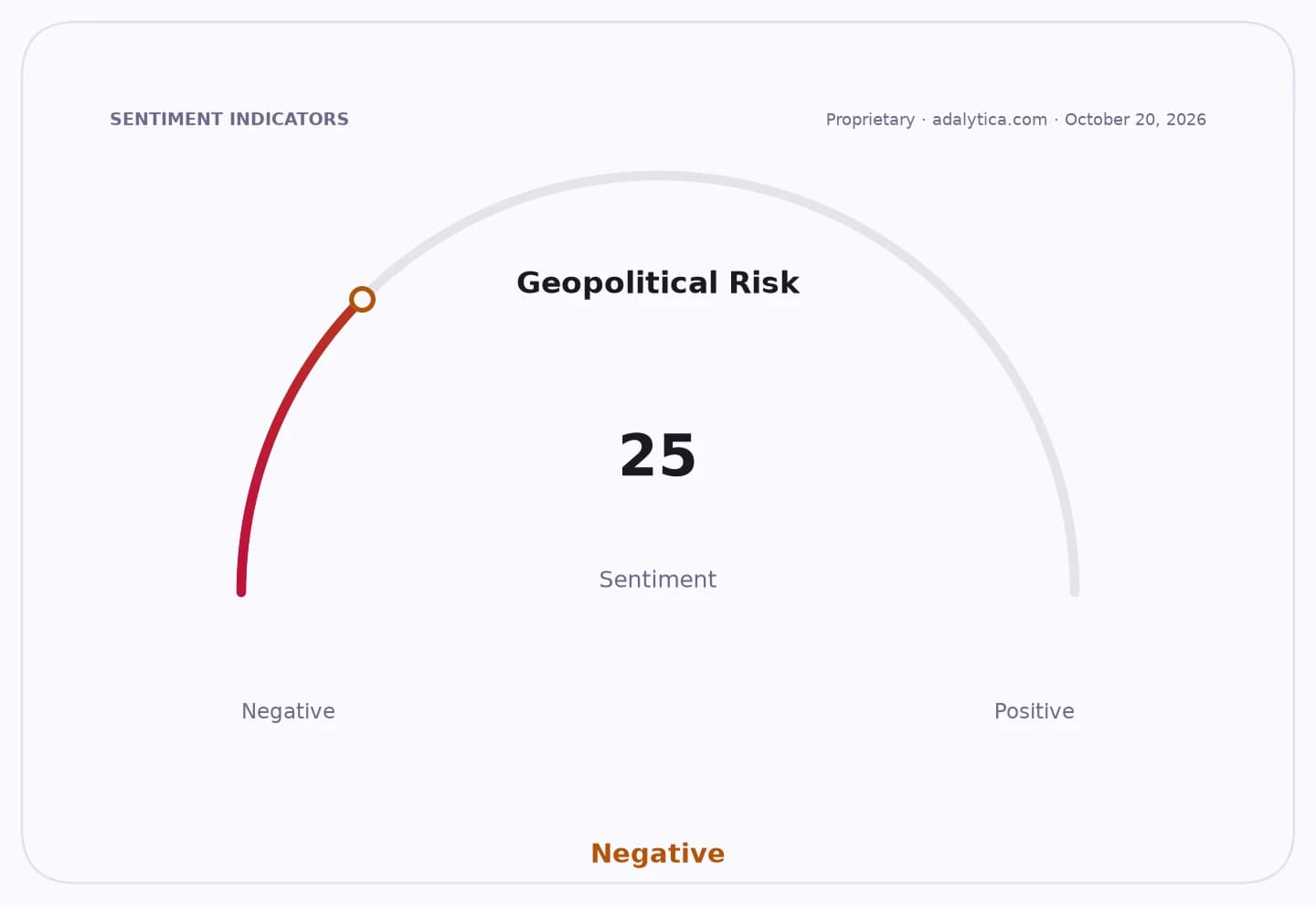
Sentiment IndicatorsⓘProprietary · adalytica.com · October 22, 2026
This is a snapshot — live sentiment, awareness and momentum for 130+ markets update continuously in the dashboard.Open AlphaPulse
The issue is not theoretical. At Hanoi Museum, which holds nearly 73,000 documents and artifacts, AI is being used to research, catalogue and interpret cultural material that would take far longer to process manually. But when the museum used a foreign AI tool to make an animated film about the Vườn Chuối archaeological site, the result did not reliably reflect Vietnamese cultural characteristics. The museum had to spend additional time digitizing material, cleaning patterns and rubbings, and working with another partner to redraw excavation data before feeding it back into the system.
That experience captures the economic logic of AI adoption in culture: the technology can cut labor needs and speed up production, but only after substantial upfront investment in data preparation. For creators and institutions, the true cost is often shifting from people to data engineering, curation and verification.
For investors and companies tied to the creative stack, that matters because the next phase of AI growth is likely to reward firms that can offer trusted, localized and rights-cleared models rather than generic generation tools. Microsoft, Nvidia and Adobe all sit in that chain. Microsoft’s shares were last at $523.79, Nvidia’s at $215.55 and Adobe’s at $261.90, with all three still trading above their 200-day moving averages, even as short-term technicals have softened for Microsoft and Nvidia. The market’s broader enthusiasm for AI remains strong — Adalytica’s AI gauge showed extreme greed — but the Vietnamese case shows why sentiment can outrun execution if governance and data quality lag.
That helps explain why copyright and data protection are becoming as important as model quality in creative AI. Vietnamese legal experts cited three directly relevant rule sets: intellectual property, personal data protection and AI regulation. Under copyright principles, creators using AI must be able to prove substantial human contribution — from setting prompts and choosing parameters to editing and finalizing output. If training data includes protected performances, recordings or images without proper permission, the legal exposure rises further.
The stakes are higher in cultural work because errors are not just commercial. A misread motif, an inaccurate historical scene or a distorted symbol can spread at scale and become part of the digital record. That makes “beautiful but wrong” AI output a policy problem as much as a creative one.
Vietnam’s AI readiness report suggests the country has political commitment, digital infrastructure and a growing AI industry, but still lacks mature ethical institutions, high-quality data sets, specialist talent and sector-specific standards for culture, heritage and language. It also points to missing mechanisms for community participation in AI design and oversight, especially in preserving minority and indigenous languages.
The likely near-term winners are creators, institutions and software providers that treat AI as a collaborative tool backed by human verification, not as a replacement for curatorial judgment. The losers are businesses that chase speed while ignoring provenance, consent and cultural accuracy. As AI becomes embedded in content production, the competitive advantage will belong to those able to turn cultural knowledge into structured data without losing the human authority that gives it meaning.
| Entity | Gains | Losses |
|---|---|---|
| Creators using verified AI workflows | ▲Faster production, lower costs | ▼Less dependence on manual labor |
| Cultural institutions and museums | ▲Better cataloguing and access | ▼Higher data-cleaning burden |
| AI platforms with rights-cleared, localized models | ▲Stronger trust and adoption | ▼Generic tools with weak accuracy |
| Artists and rights holders | ▲More protection for works and identity | ▼Misuse of data, style and likeness |