Vietnam is moving to lock in its closest economic relationship with China just as investors look for the next beneficiaries of supply-chain realignment, infrastructure buildout and cross-border logistics.
Vietnam China visit boosts trade and logistics ties
National Assembly Chairman Tran Thanh Man will make an official visit to China from Oct. 11 to 15, co-chairing the second meeting of the Vietnam-China parliamentary cooperation committee, according to Vietnam’s foreign ministry. The trip matters less as ceremony than as a signal that both sides want to keep trade, investment and infrastructure ties on a firmer political footing at a time when Asia’s manufacturing map is still being redrawn.
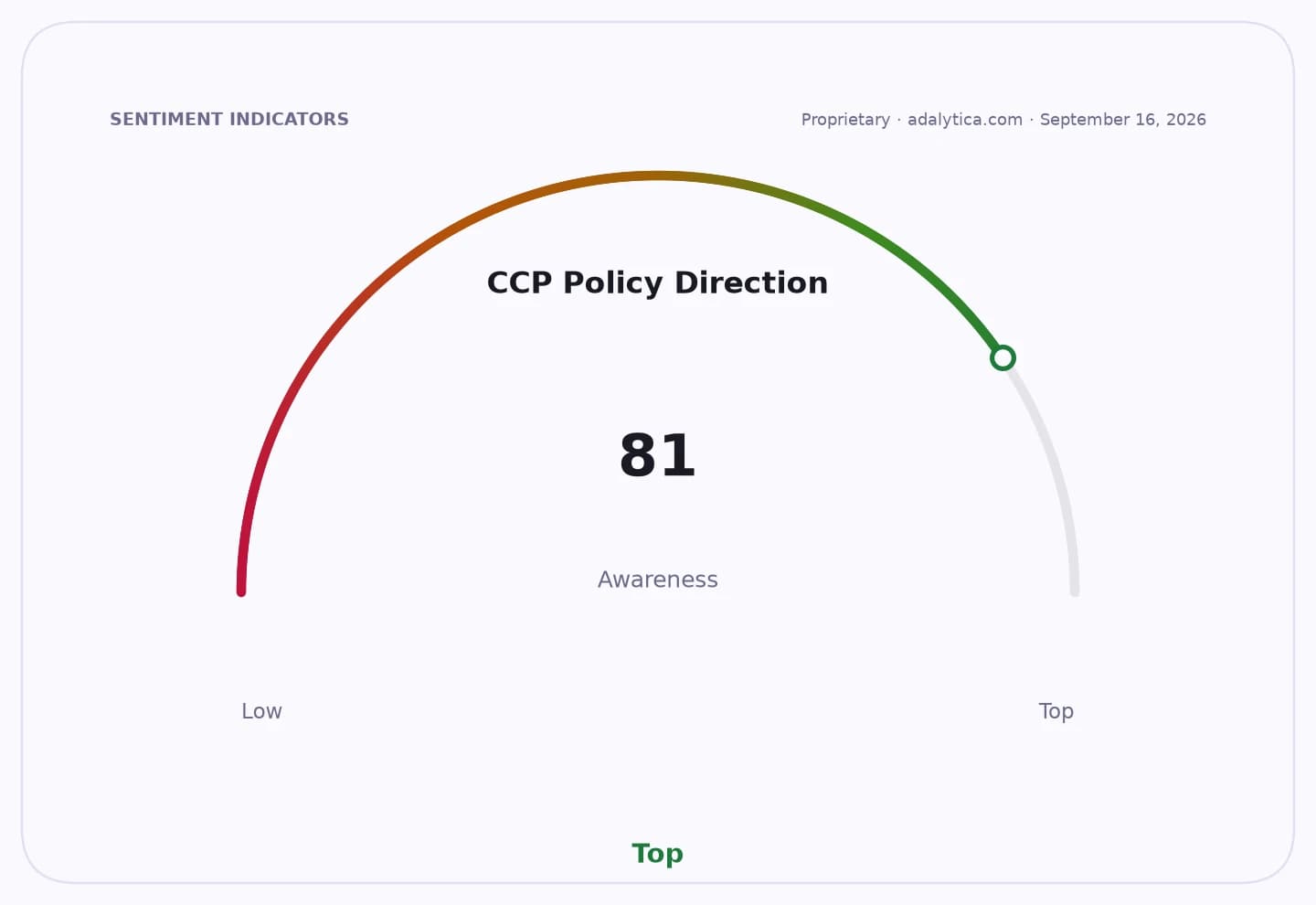
Sentiment IndicatorsⓘProprietary · adalytica.com · October 9, 2026
This is a snapshot — live sentiment, awareness and momentum for 130+ markets update continuously in the dashboard.Open AlphaPulse
That has direct economic consequences. China has been Vietnam’s biggest trading partner for more than 20 years, while Vietnam has now held the top spot as China’s largest trading partner in ASEAN for a decade and ranked as China’s fourth-largest partner globally in 2024 and 2025. In the first seven months of 2026, Chinese investors poured in nearly $3.7 billion of registered capital into Vietnam, up 31.5%, with 849 new projects accounting for about 35% of all newly licensed FDI. That is the kind of capital flow that supports factories, ports, roads and warehouse capacity — the real toll roads of the new Asia supply chain.
The political backdrop is even more important. April’s state visit by Vietnam’s top leadership to China produced a joint statement on deepening the comprehensive strategic partnership and 32 cooperation documents across multiple sectors. The parliamentary follow-up suggests the relationship is becoming more institutionalized, not less, even as global investors remain wary of US-China friction and broader geopolitical noise. Adalytica’s US-China relations sentiment gauge sits in fear territory, showing extreme caution, but the Vietnam-China channel is proving durable enough to keep deal flow moving.
For investors, that points to a clear playbook. Vietnam remains one of the strongest beneficiaries of China-plus-one manufacturing, but the bigger opportunity may sit in the less glamorous names tied to logistics, industrial land, transport links and cross-border throughput. The two sides are pushing standard-gauge rail connectivity and smart-border pilot projects aimed at faster customs clearance and lower logistics costs, exactly the kind of incremental reform that can lift margins across exporters and supply-chain operators.
The market is also telling the same story. Vietnam-listed VNM has slipped to 16.74 from 16.87 in two sessions, while the 50-day moving average remains above the stock’s latest close and the 200-day average sits higher still, a reminder that technical pressure has not yet been fully reversed. China-focused FXI, meanwhile, recovered to 34.22 on Oct. 9 after testing weaker levels earlier in the month, suggesting investors are still trading the policy backdrop rather than embracing a full risk-on rerating.
My view is that the market underestimates how much value can be created by steady, not headline-grabbing, diplomatic alignment. When Beijing and Hanoi keep channels open at the parliamentary level, the winners are usually the companies that move goods, build plants and finance the physical network between them. That is where the asymmetric opportunity sits now. If this visit reinforces the April reset, expect more money to flow into Vietnam’s industrial parks, logistics chains and infrastructure beneficiaries — and less patience for names that depend on friction, not integration.
| Entity | Gains | Losses |
|---|---|---|
| Vietnam industrials/logistics | ▲More trade flow | ▼Higher competition |
| Chinese exporters/investors | ▲Easier market access | ▼Pricing pressure |
| Cross-border rail/port operators | ▲Infrastructure demand | ▼Bottlenecks |
| Friction trades | ▲Lower policy premium | ▼Geopolitical tailwind |