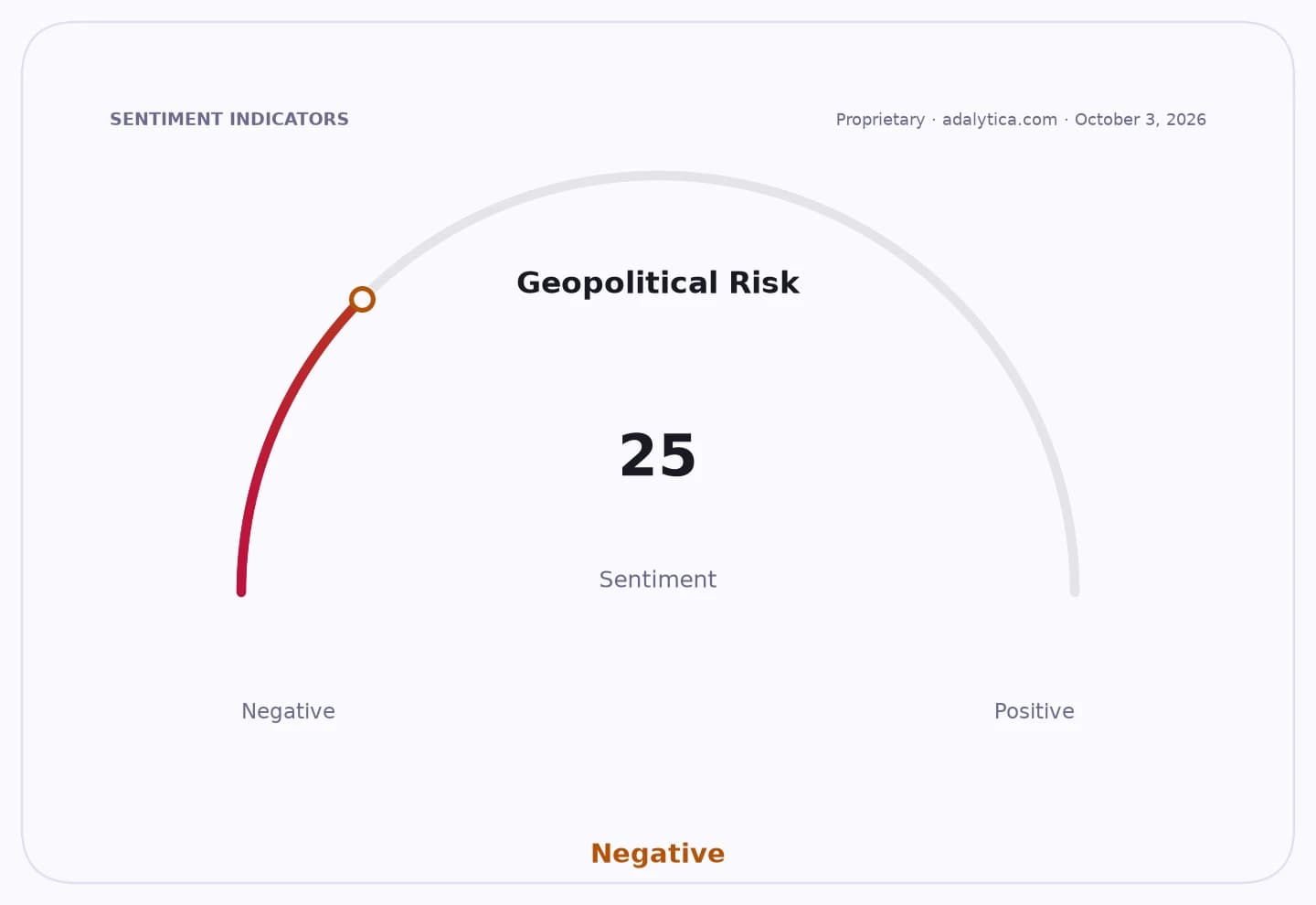
China’s long economic ascent is now colliding with a more fragile geopolitical phase, and that matters far beyond Beijing — especially for Thailand, which sits on the frontline of Chinese trade, tourism and supply-chain influence.
China Rising Amid Geopolitical Pressure

The biggest development in the supplied material is not simply a commemorative look at 77 years of “China Rising,” but the reminder that China’s next chapter is being written under tighter strategic pressure: intensified food-security efforts, sharper resistance to U.S. sanctions, and continued high-level diplomacy with Washington ahead of a possible Xi Jinping state visit. That combination points to a China that is still expanding its global reach, but now doing so while defending itself against external shocks and political constraints.
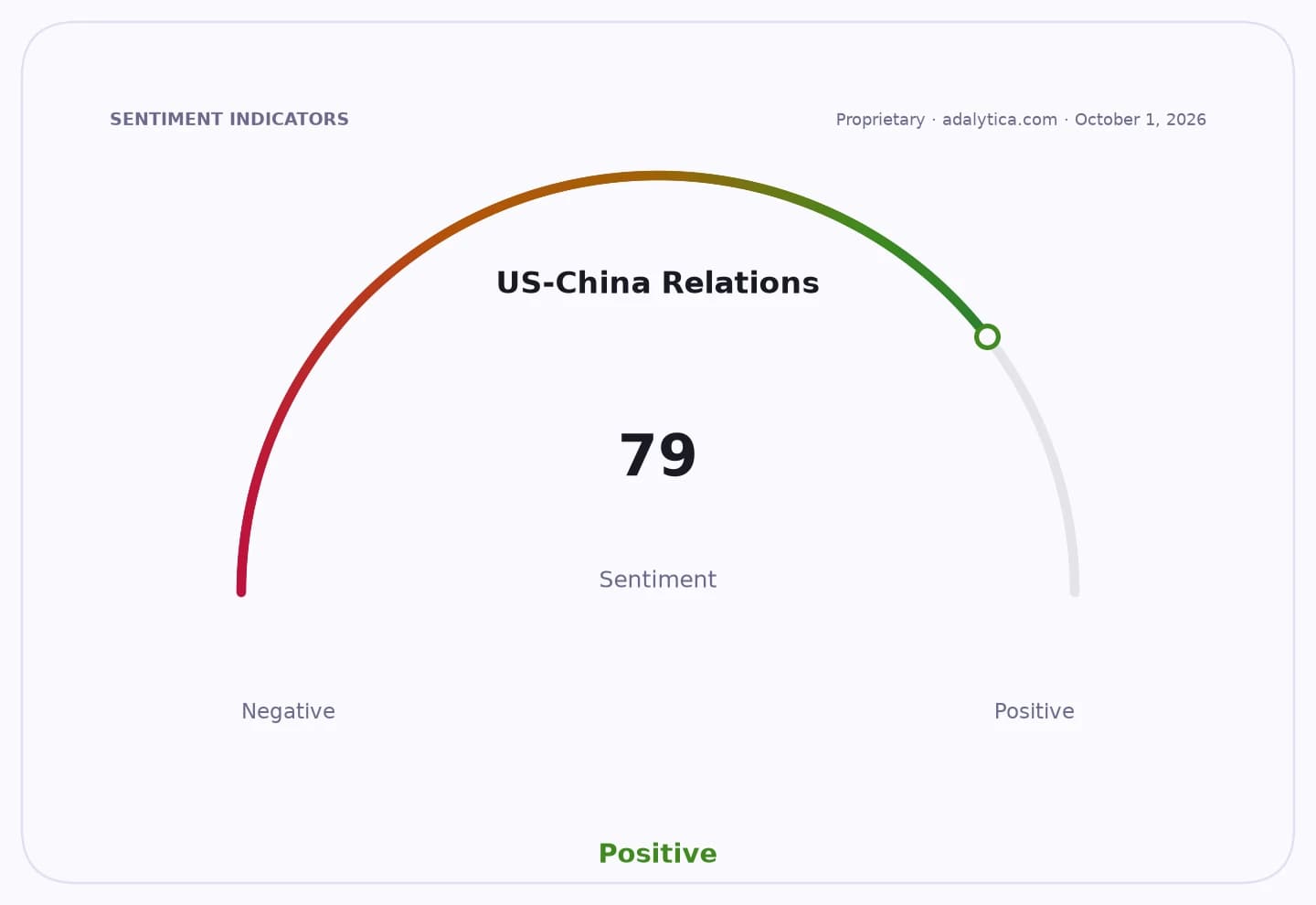
Sentiment IndicatorsⓘProprietary · adalytica.com · October 2, 2026
This is a snapshot — live sentiment, awareness and momentum for 130+ markets update continuously in the dashboard.Open AlphaPulse

For the global economy, that shift matters because China remains the key marginal driver in Asia for manufacturing demand, commodity flows, cross-border investment and regional sentiment. When Beijing prioritizes food security, it is not just a domestic policy headline; it is a signal that the leadership is preparing for a world of more disrupted supply chains, more volatile trade terms and less reliable external dependencies. That tends to favor countries and companies with control over essential inputs, logistics, warehousing, agribusiness and infrastructure.
Thailand is especially exposed to that reality. Its economy is tightly linked to Chinese travelers, Chinese capital, Chinese industrial demand and the broader ASEAN supply chain. If China leans harder into strategic self-reliance while keeping diplomatic channels open with the U.S., Thailand’s opportunity is to remain the regional bridge — but the risk is that it gets squeezed between competing blocs if trade friction worsens. Investors should view Thailand not as a passive bystander but as a beneficiary only if it can capture rerouted supply chains, tourism recovery and infrastructure-linked investment from China’s outward push.
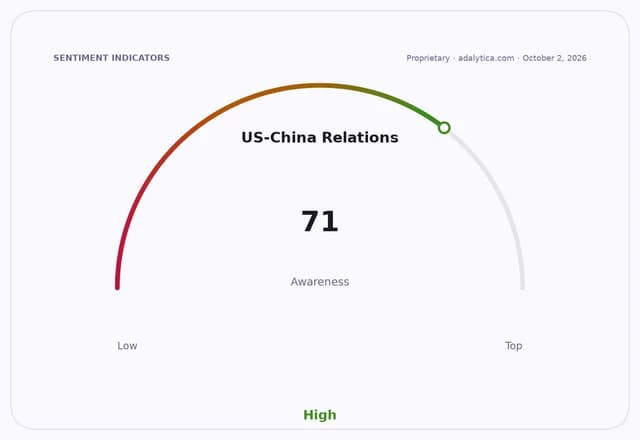
US-China Relations — 30-day sentimentadalytica.com
Explore this data interactively — full history, time series and cross-market comparisons.Open AlphaPulse
That is why the market lens matters. Chinese equities have not priced in a clean growth story. FXI, the large-cap China ETF, closed at 33.19 on Oct. 2, below its 50-day moving average of 35.13 and its 200-day moving average of 36.07, with RSI at 31.9 — levels that show a technically weakened tape even after earlier bursts of momentum. MCHI finished at 51.24, also below its 50-day and 200-day moving averages, while the leveraged YINN sank to 23.17 with RSI at 30.8, underscoring how quickly enthusiasm can fade when policy support, diplomacy and growth expectations fail to align.
The market, in other words, is treating China as a cyclical trade more than a structural theme. I think that is too narrow. The bigger investable story is the one beneath the headlines: China’s rising need to secure food, technology, trade routes and diplomatic leverage will keep capital flowing into the infrastructure and industrial systems that support the next phase of growth. That creates a long runway for selected beneficiaries in shipping, logistics, industrial automation, ports, power equipment and Asia-facing exporters that can serve both China and its neighbors.
Adalytica’s US–China Relations Sentiment gauge is still in “Greed” territory at 71, even after a sharp one-day drop, while the global stability gauge shows “Extreme Greed” at 86. That combination suggests the market is still leaning toward a negotiated balance rather than outright rupture. But that is exactly where opportunity and risk coexist: calm headlines can mask accelerating positioning for a less-globalized world.
My thesis is simple: China’s 77-year rise is no longer just a story of scale — it is a story of strategic adaptation under pressure. Investors should stop asking whether China is investable in the abstract and start asking where the next wave of state-directed capital, trade diversion and regional reordering will show up. For Thailand and the rest of Asia, the winners will be the firms and funds tied to connectivity, essential supply chains and geopolitical hedging. The losers will be the businesses still assuming the old open-trade regime will return unchanged.
| Entity | Gains | Losses |
|---|---|---|
| Thailand logistics and infrastructure firms | ▲Trade rerouting, regional hub demand | ▼Margin pressure if flows bypass Thailand |
| China’s strategic sectors | ▲Policy support, supply security | ▼Cyclical exporters reliant on open trade |
| FXI/MCHI longs | ▲Potential rebound on diplomacy or stimulus | ▼Weak trend, below key moving averages |
| YINN holders | ▲Sharp upside on China rally | ▼Magnified downside if sentiment sours |