Vietnamese travelers are broadening where they go in China, with Lijiang, Dali and Lhasa among the fastest-rising destinations as Southeast Asia’s biggest outbound market to the mainland shifts away from the traditional first-stop cities.
Vietnamese travelers widen China trips beyond gateway cities
The change matters because it points to a more diverse and higher-value tourism flow between two large neighboring economies. As Chinese authorities look to revive inbound travel and regional spending, a Vietnamese market that is no longer concentrated solely in Shanghai, Beijing, Guangzhou and Shenzhen could spread tourist receipts deeper into western China, support domestic airlines and hotels, and lift secondary cities that have been trying to capture more international visitors.
Sentiment IndicatorsⓘProprietary · adalytica.com · October 7, 2026
This is a snapshot — live sentiment, awareness and momentum for 130+ markets update continuously in the dashboard.Open AlphaPulse

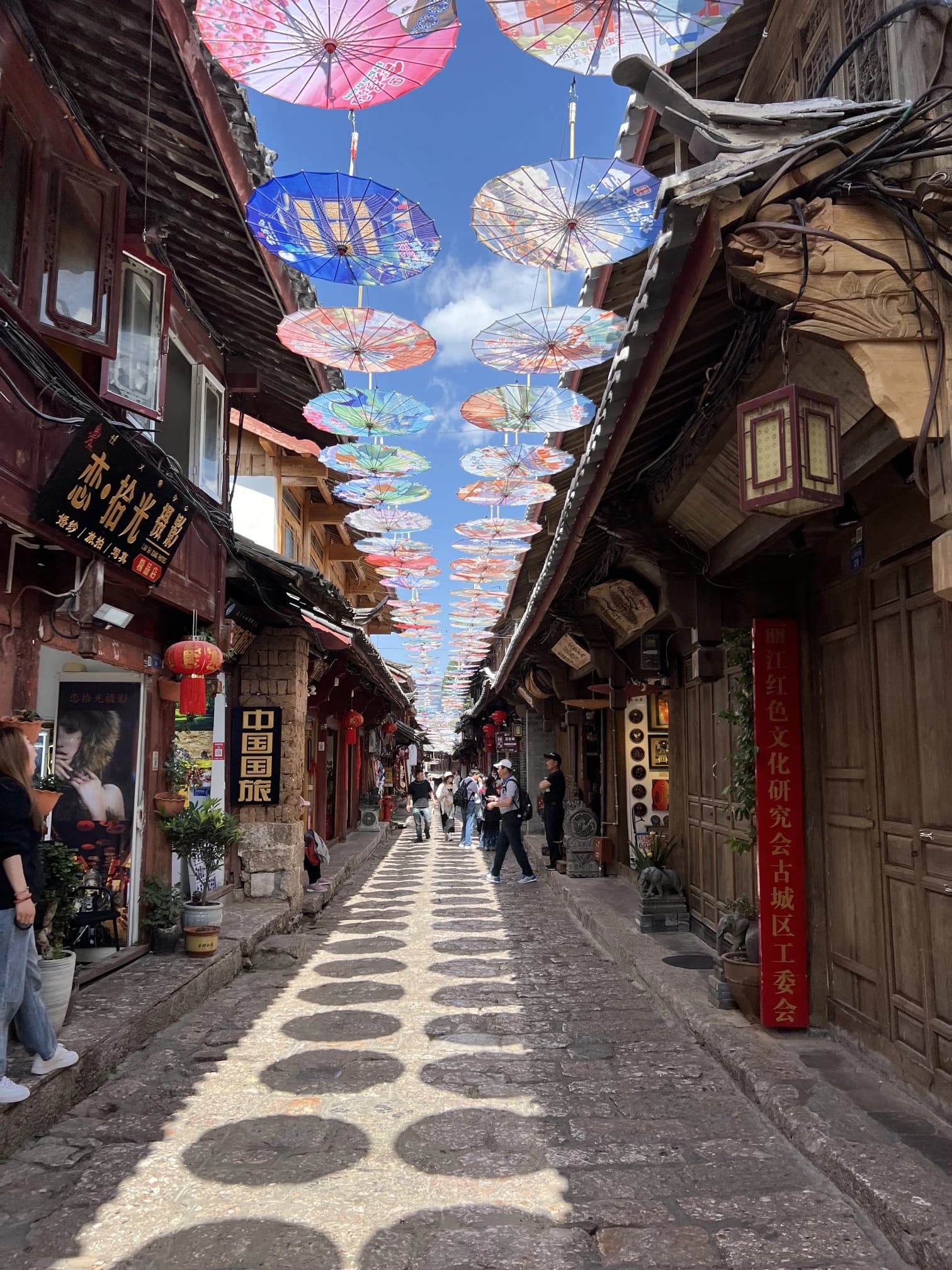
Traveloka data for January through August show Vietnamese bookings are moving toward Yunnan and Tibet, with Lijiang climbing 11 places to become the most-booked Chinese city among Vietnamese users, Dali rising nine places and Lhasa jumping 17 places to No. 18. The gains are notable because they sit alongside still-familiar destinations such as Shenzhen, which ranked third, and Hangzhou, which came fifth, suggesting expansion rather than substitution.
That pattern fits a broader Chinese tourism shift toward so-called “new first-tier” cities, a group that includes Chengdu, Chongqing, Hangzhou, Qingdao, Xi’an and Wuhan. In other words, Vietnamese demand is not just following the largest gateways; it is increasingly mirroring China’s own domestic tourism re-ranking, where cities with stronger cultural, scenic and connectivity appeal are taking share from the old coastal default options.
For investors in travel platforms, airlines and hotel operators, the shift is a reminder that growth in Chinese inbound and regional tourism is becoming more granular. Routes and lodging tied to heritage and nature destinations may capture more incremental demand than the big-business hubs alone. That is potentially constructive for regional carriers, tour operators and hotel chains with a presence in Yunnan and Tibet, while also reinforcing the value of distribution platforms that can surface lesser-known destinations to cross-border travelers.
The macro backdrop is supportive. China received 22.914 million foreign arrivals in the first half of the year, with Vietnam among the 10 largest source markets, alongside South Korea, Russia, Malaysia, Thailand and Singapore. That makes Vietnam important not only as a neighboring source market, but as part of the wider Southeast Asian recovery in outbound travel to China. At the same time, Chinese travelers remain the largest foreign market for Vietnam, underscoring how deeply the two countries’ tourism cycles are linked.
The bull case is that improving air connectivity, stronger digital booking behavior and rising appetite for cultural travel will keep broadening the map for Vietnamese tourists. The bear case is that geopolitical frictions, visa hurdles or weaker consumer spending could quickly concentrate demand back into the safest, best-connected Chinese hubs. For now, the evidence suggests Vietnamese visitors are no longer treating China as a single-city or single-corridor trip, and that is a meaningful shift for both destination economics and travel-sector positioning.
| Entity | Gains | Losses |
|---|---|---|
| Lijiang, Dali, Lhasa | ▲More Vietnamese bookings | ▼Traditional gateway cities |
| Traveloka | ▲Higher cross-border search volume | ▼Offline travel agents |
| Yunnan and Tibet tourism | ▲Broader foreign demand | ▼Reliance on domestic travelers |
| Beijing, Shanghai, Guangzhou | ▲Still high volume, but less concentrated growth | ▼Share of Vietnamese incremental trips |