Vietnam’s coal industry used a politically charged anniversary to underscore a more practical message: stable power supply is now a core part of energy security, not just event logistics. For the 90th anniversary celebration of the mining workers’ tradition in Quảng Ninh, national leaders called on the sector to strengthen forecasting, organize production better and ensure steady coal deliveries, especially for power generation.
Vietnam Coal Sector Gets Policy Backing for Power Supply
The emphasis matters because Vietnam’s electricity system remains heavily exposed to swings in coal availability, demand from thermal plants and broader fuel-market volatility. By putting reliable coal supply and power continuity at the center of the celebration, Hanoi is signalling that the industry’s role extends beyond heritage and employment to national energy stability, industrial output and social order in the country’s mining heartland.
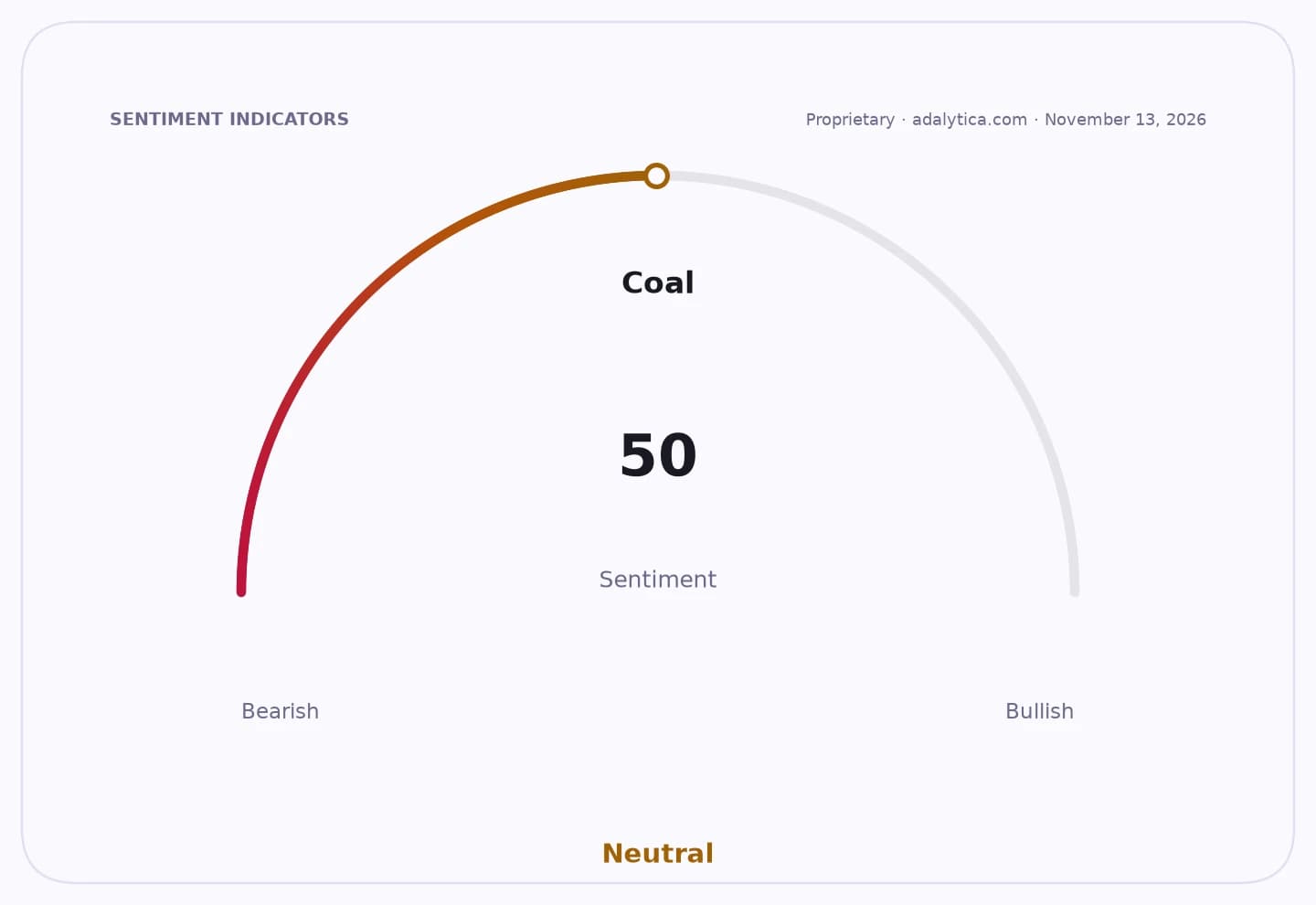
Sentiment Indicators
General Secretary and State President To Lam praised the coal sector’s contributions and urged it to accelerate mechanization, automation and digital transformation while tying growth to environmental protection and social welfare. That is a familiar policy mix, but it carries real economic weight: higher productivity is needed to keep domestic coal output dependable as the state tries to avoid supply disruptions that can ripple into electricity generation and manufacturing.
The event itself was staged as a major state occasion, with more than 10,000 delegates, miners, residents and visitors in attendance, and was broadcast live on VTV1 and VTV9. Quảng Ninh Electricity said it had prepared since late October 2026, coordinating with TKV, event organizers and local authorities to inspect site loads and design redundant power systems for the 12/11 Square venue.
That technical preparation shows how seriously the authorities treated the risk of any interruption. The utility said it ran the main stage, sound, lighting and live broadcast from three large generators rated at 2x1000kVA and 1x825kVA, backed by a hot standby 1000kVA unit and UPS systems for automatic transfer. A separate 22kV network supplied surrounding lighting, while technicians checked joints, RMUs and feeder lines and suspended all outage-related work on the grid.
For investors, the story is less about the ceremony than the policy signal. Coal remains strategically relevant in Vietnam’s power mix, and the government’s insistence on “stable supply” suggests domestic miners and their infrastructure partners will stay central to energy planning even as the country pursues cleaner growth. That supports the case for continued capex in mining efficiency, grid resilience and utility reliability, but it also keeps pressure on the sector to control environmental and operating risks.
The broader backdrop is a global coal market still pulled between energy security and decarbonization. Europe is again weighing temporary coal use to offset gas risk, while Asian demand remains sensitive to weather, LNG competition and industrial activity. Against that backdrop, Vietnam’s message is straightforward: the transition will not come at the expense of power reliability, and the coal industry is expected to deliver both energy and stability.
| Entity | Gains | Losses |
|---|---|---|
| TKV and domestic coal sector | ▲Policy backing for stable output | ▼Pressure to modernize quickly |
| Quảng Ninh utility network | ▲Visibility for reliability investments | ▼Higher operational readiness costs |
| Vietnamese power system | ▲More secure fuel supply | ▼Slower move away from coal |
| Clean-energy advocates | ▲— | ▼Continued coal centrality in policy |