Indonesia’s clarification that coal exports through DSI do not change the commercial nature of transactions matters because it keeps the country’s coal trade rules in place at a moment when the market is already wrestling with tight margins, volatile demand and policy risk.
Indonesia Clarifies Coal Export Rules
Coal
For investors, the message is straightforward: the government is not signaling a wholesale redesign of coal export economics. That reduces the chance of abrupt contract disruptions for exporters and traders that rely on Indonesia’s thermal coal flows, even as policymakers try to balance revenue, jobs and energy transition pressure. In coal, regulatory certainty is often more important than the headline itself.
Sentiment Indicators
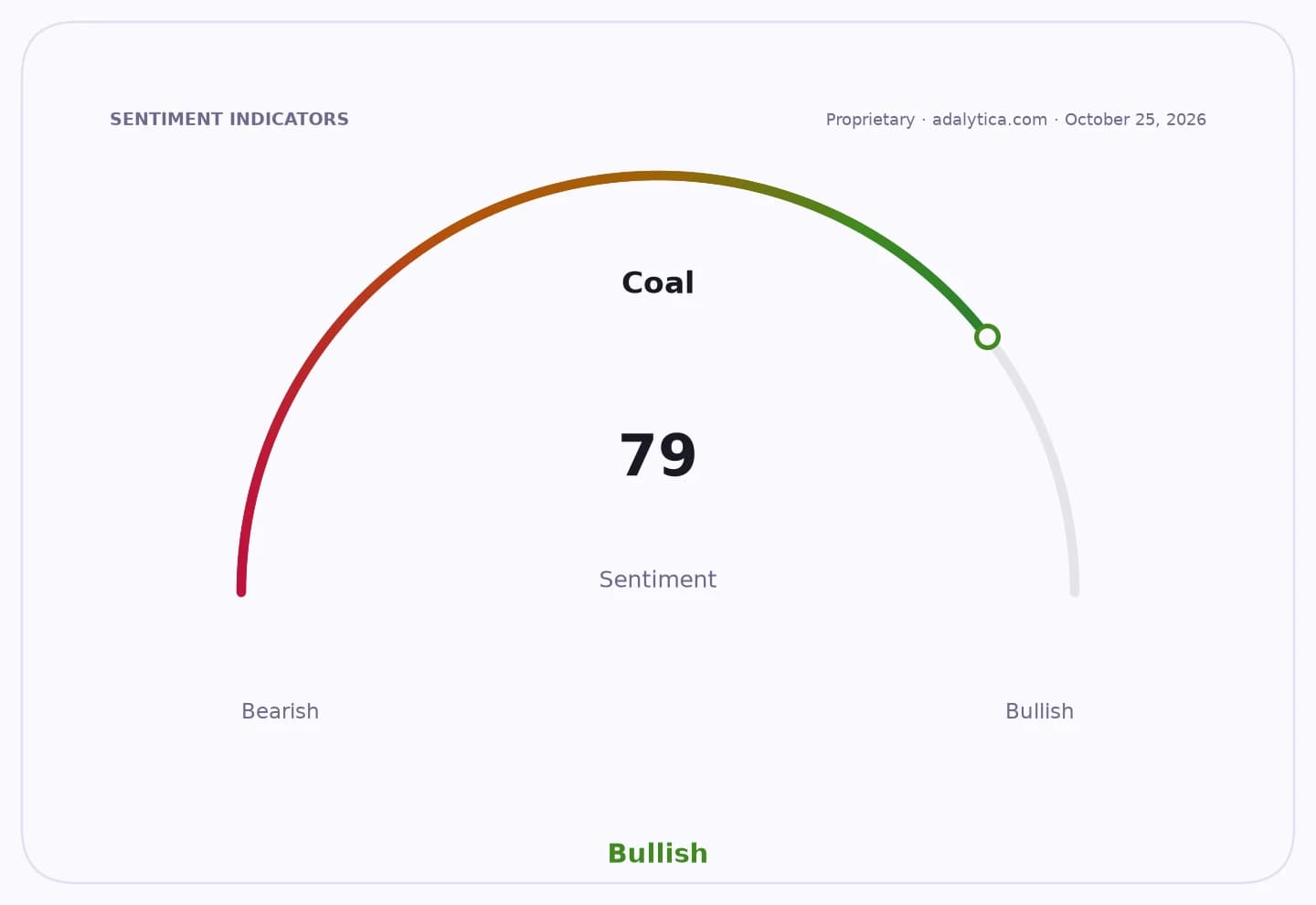
The backdrop is a sector that has been whipsawed by policy noise and uneven demand. Adalytica’s Coal Fear & Greed Index shows sentiment at neutral while awareness remains in fear territory, a sign that investors are still discounting the durability of coal cash flows despite periodic rallies. Global stability sentiment is also elevated, but awareness is extremely low, underscoring how quickly geopolitical and trade headlines can move commodity names before fundamentals catch up.
That matters for producers such as Peabody Energy, which has been swinging sharply as traders price in changing coal dynamics. BTU closed at $17.41 on Nov. 12, far below its 50-day moving average of $23.85 and its 200-day average of $27.12, a sign the stock has already been punished for pessimism. But the recent bounce from the lows, along with RSI readings still deep in oversold territory, suggests the market is pricing a lot of bad news into coal equities.
Coal — 30-day sentimentadalytica.com
Explore this data interactively — full history, time series and cross-market comparisons.
The bigger investment point is that coal remains a cash-generating, politically sensitive bridge fuel, especially in Asia where energy security still trumps idealized transition timelines. Indonesia is a critical node in that market, and any reassurance that export mechanics remain intact helps support the trading and shipping ecosystem around the trade. It also reinforces the case for owning the low-cost producers and infrastructure names that benefit when thermal coal volumes remain resilient.
I believe the market is underestimating how much earnings power still sits in coal if policymakers keep exports flowing and demand in India and other import markets stays firm. The near-term catalyst is not a dramatic policy shift, but the absence of one — and in coal, that can be enough to unlock a rerating.
For investors seeking asymmetric exposure, the setup favors selective coal producers, export-linked logistics and shipping names, while the losers are the shorts betting on a sudden collapse in export economics or a rapid policy clampdown that has not yet materialized.
| Entity | Gains | Losses |
|---|---|---|
| Indonesian coal exporters | ▲Contract stability | ▼Policy uncertainty premium |
| Peabody Energy (BTU) | ▲Export-linked sentiment rebound | ▼Shorts betting on collapse |
| Coal shippers and traders | ▲Continued cargo flow | ▼Disruption risk thesis |
| Transition-only investors | ▲— | ▼Near-term coal cash flow durability |