Vietnam is stepping up support for online selling as provincial officials train businesses, cooperatives and producers to market goods on digital platforms and livestream, a move that could widen access to buyers and lift sales for local specialty products.
Vietnam supports e-commerce training for local sellers

The campaign matters because e-commerce is increasingly a distribution channel, not just a marketing tool, for small manufacturers and rural producers trying to move inventory beyond local markets. By teaching sellers how to structure livestreams, present products and interact with customers, authorities are trying to turn digital commerce into a more efficient route to demand, especially for OCOP and other provincial brands that often lack broad retail reach.
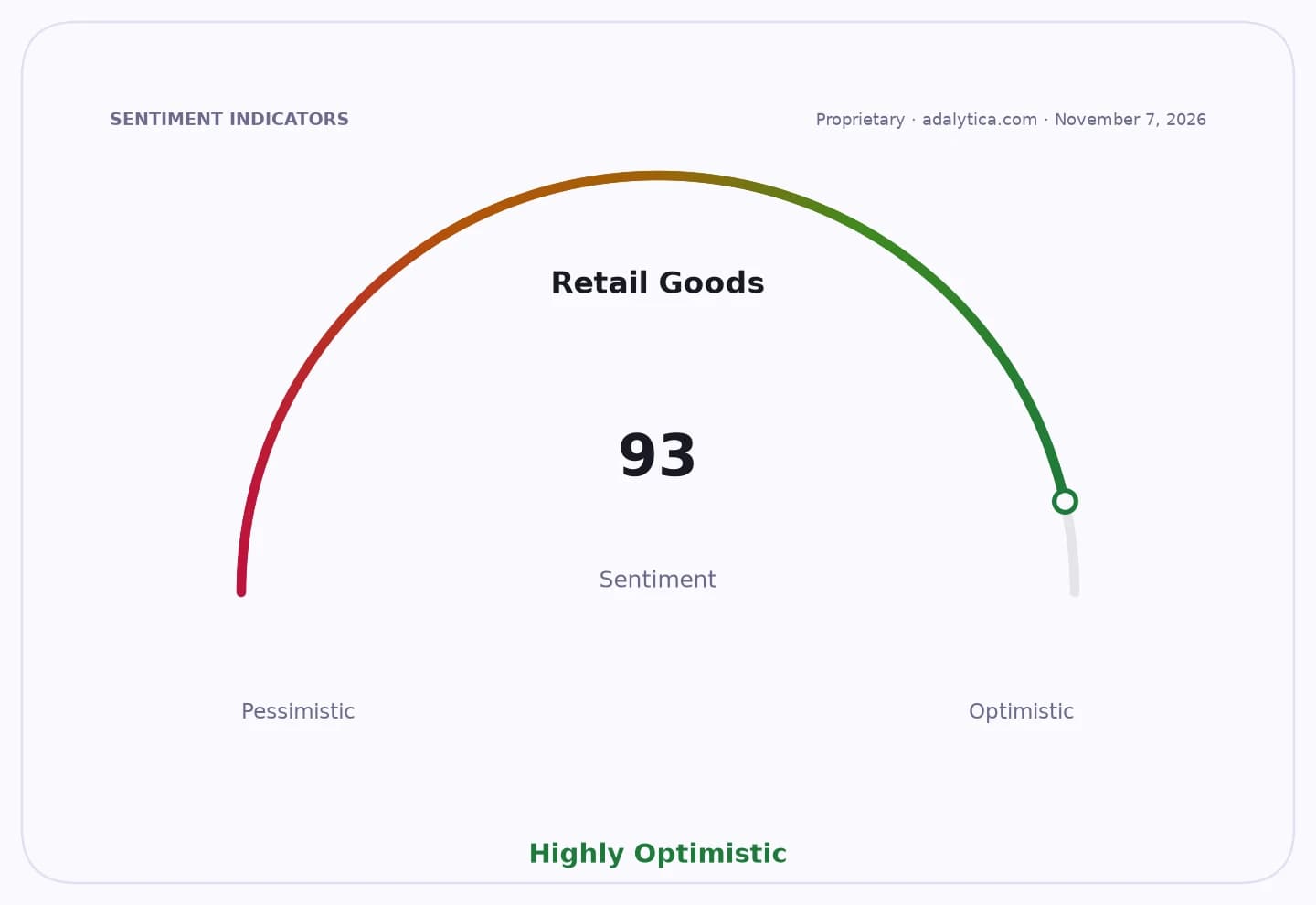
Sentiment Indicators
The Quang Tri Department of Industry and Trade and the Vietnam E-commerce Association held the session to explain upcoming e-commerce rules, update sellers on 2027-2030 development priorities and guide implementation of a rural e-commerce criterion tied to new-style countryside building. Officials also pushed practical skills such as scripting livestreams, highlighting product advantages and improving online conversion.
For investors, the story reinforces a broader shift in Asian retail toward digital-first product promotion, where traffic, advertising and transaction volume increasingly flow through platforms rather than physical stores. That supports the long-term case for marketplace operators, payment providers and logistics networks that benefit when more merchants move online and when more categories become digitally shoppable.
The backdrop is cautious consumer demand. Adalytica’s Consumer Spending Sentiment gauge is in “Fear” at 18, while retail sales sentiment is neutral at 45, suggesting households remain price-sensitive even as online commerce becomes more embedded in shopping behavior. In that environment, lower-cost digital promotion and livestream selling can be especially effective for value-oriented goods.
Vietnam’s push fits a wider trend in which governments are treating e-commerce as infrastructure for domestic consumption and regional competitiveness. If the training translates into better execution, the beneficiaries will be small sellers, platform operators and consumers hunting for cheaper and more differentiated products; the laggards are traditional channels that rely on local foot traffic and weaker digital capabilities.
| Entity | Gains | Losses |
|---|---|---|
| OCOP producers and cooperatives | ▲Broader market access | ▼Reliance on local sales |
| E-commerce platforms | ▲More merchants and traffic | ▼Slower offline channels |
| Consumers | ▲More choice and price competition | ▼Fewer in-person shopping advantages |
| Traditional retailers | ▲— | ▼Lost footfall and share of demand |