Gold’s sharp retreat is doing more than erasing recent gains for Vietnamese buyers: it is exposing how fragile retail gold demand becomes when prices swing hard and the market is flooded with counterfeit “second-edition” bars and coins sold below official levels.
Vietnam Gold Falls as Counterfeit Bar Risk Rises

In Vietnam, SJC 9999 gold bars fell further on Oct. 21 to 142.3 million dong per tael, while rings dropped to 140.9 million dong, extending a volatile week in which buyers were already nursing losses and the fear of buying too late was compounded by a new fraud risk. The domestic weakness mirrors a softer global backdrop, with spot gold around $4,119.62 an ounce, down 0.51%, even as bullion remains elevated versus historical norms.
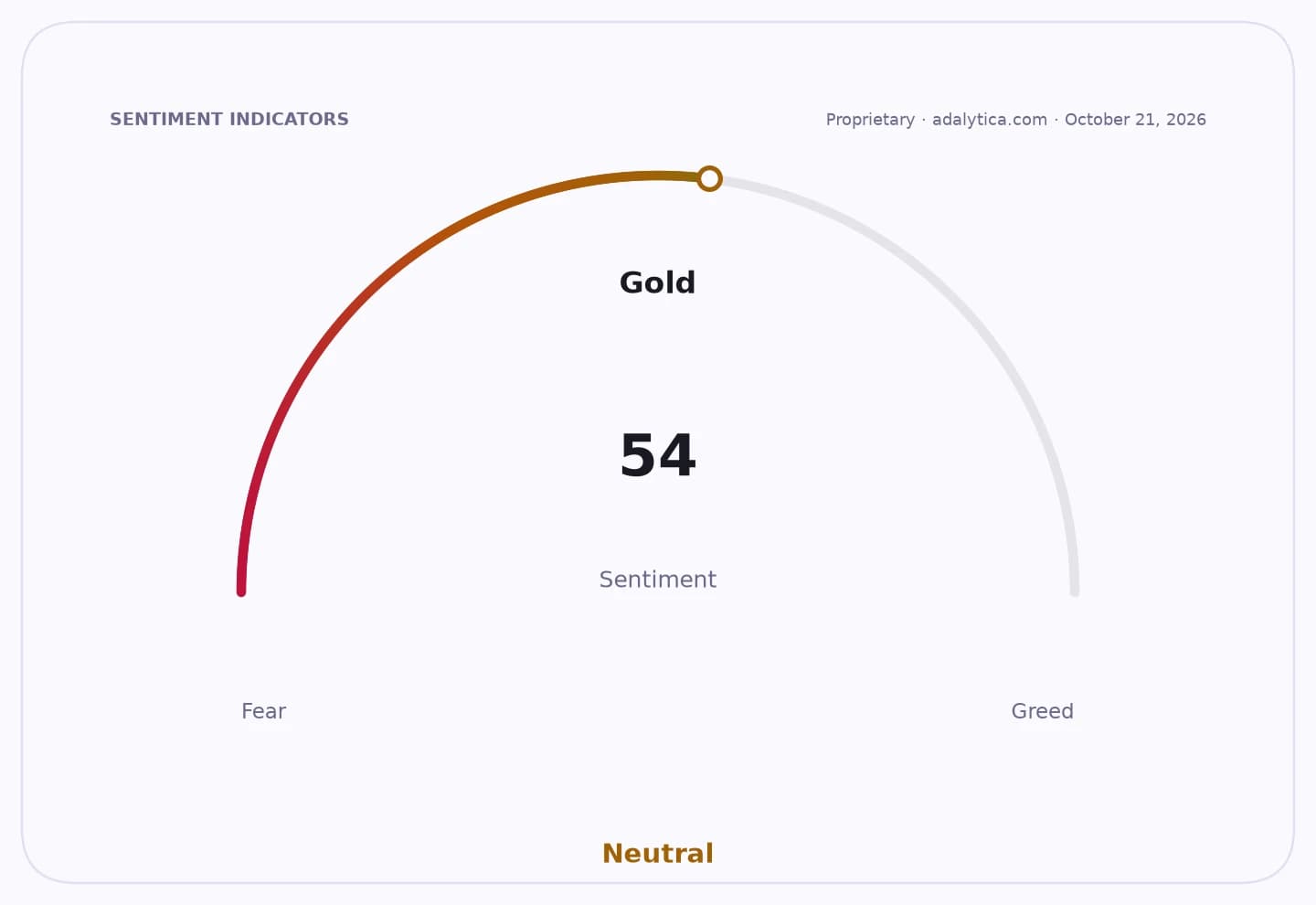
Sentiment IndicatorsⓘProprietary · adalytica.com · October 22, 2026
This is a snapshot — live sentiment, awareness and momentum for 130+ markets update continuously in the dashboard.Open AlphaPulse
The bigger economic issue is not just price volatility, but market dislocation. When official and informal channels diverge, consumers looking to preserve savings in physical gold become vulnerable to products that look authentic but carry lower purity or lighter weight. That matters in an economy where household savings habits still favor bullion, especially around festive buying seasons, and where trust in the metal’s liquidity is central to its role as a store of value.
Industry warnings in Ankara underline the same point. The city’s jewelers’ chamber said unauthorized workshops are producing quarter, half and Republic-style gold pieces that are almost indistinguishable from official mint products, with the shortfall often discovered only when a buyer tries to resell them at a shop. The chamber warned that the stamping and detailing on these pieces can be blurrier than mint issues and that consumers should insist on branded packaging, labeled ribbons and, crucially, receipts or invoices.
That advice matters because the downside is asymmetric. Buyers can lose not only to falling bullion prices but also to a much steeper discount if a piece is found to be underweight or of inferior fineness. Sellers of fake or off-spec gold benefit from the price spread and from periods of high retail anxiety, while reputable jewelers and mint-backed products gain as consumers seek provenance and easier resale.
For investors, the story reinforces two separate trade-offs. First, near-term gold enthusiasm can be punished when momentum reverses, as shown by the latest pullback in both physical and paper prices. Second, in stressed retail markets, liquidity and authenticity premium increasingly matter as much as headline spot prices. That tends to favor institutional vehicles, branded mint products and verified dealers over informal, cash-heavy channels.
The message for savers is simple: in a volatile gold market, the cheapest-looking offer can be the most expensive one.
| Entity | Gains | Losses |
|---|---|---|
| Official mints / licensed dealers | ▲Trust premium | ▼Informal sellers |
| Retail gold buyers | ▲Safer resale | ▼Fraud and discounts |
| Fake “second-edition” producers | ▲Short-term margin | ▼Regulatory scrutiny |
| Gold holders in volatile market | ▲None | ▼Price losses |