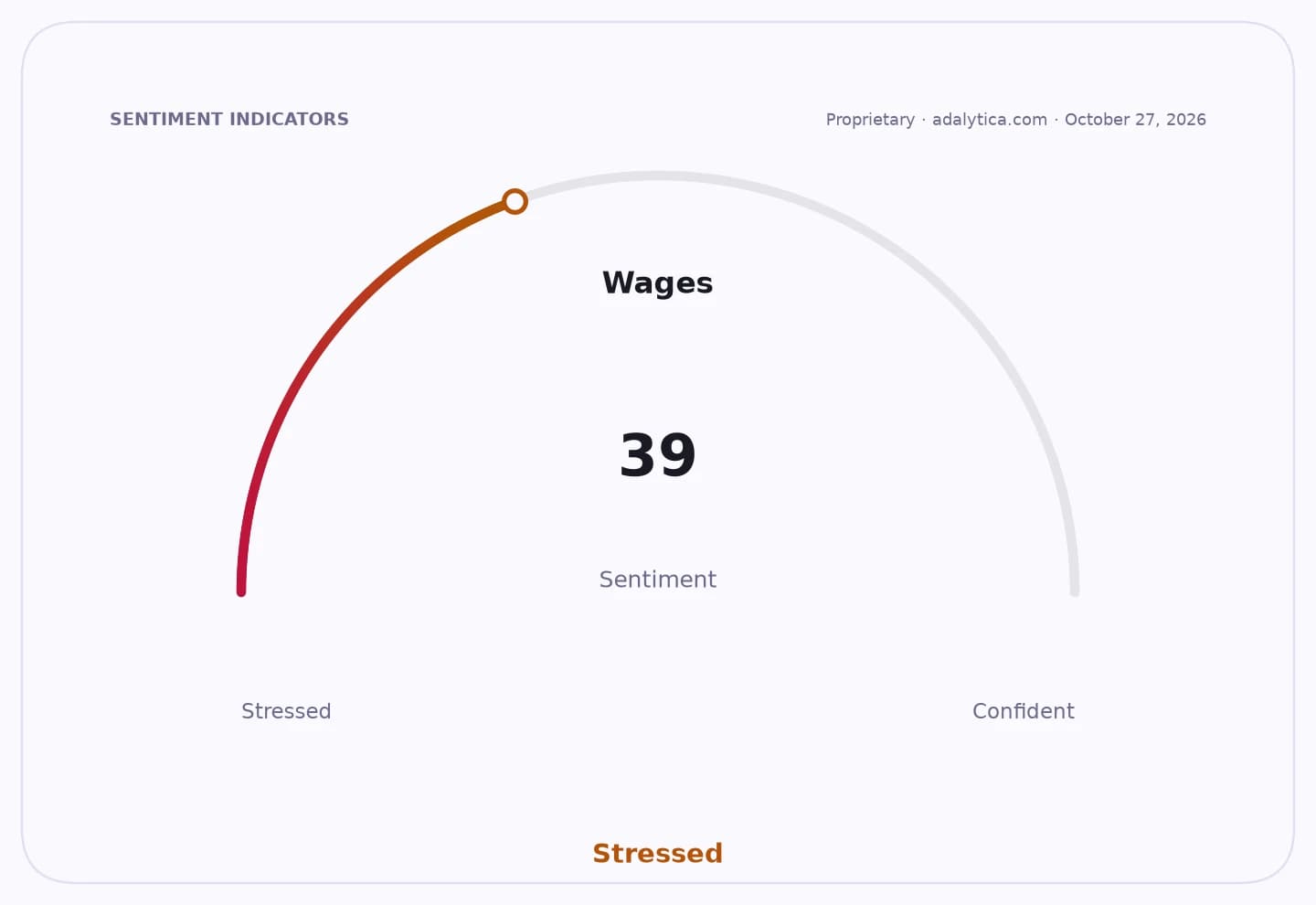
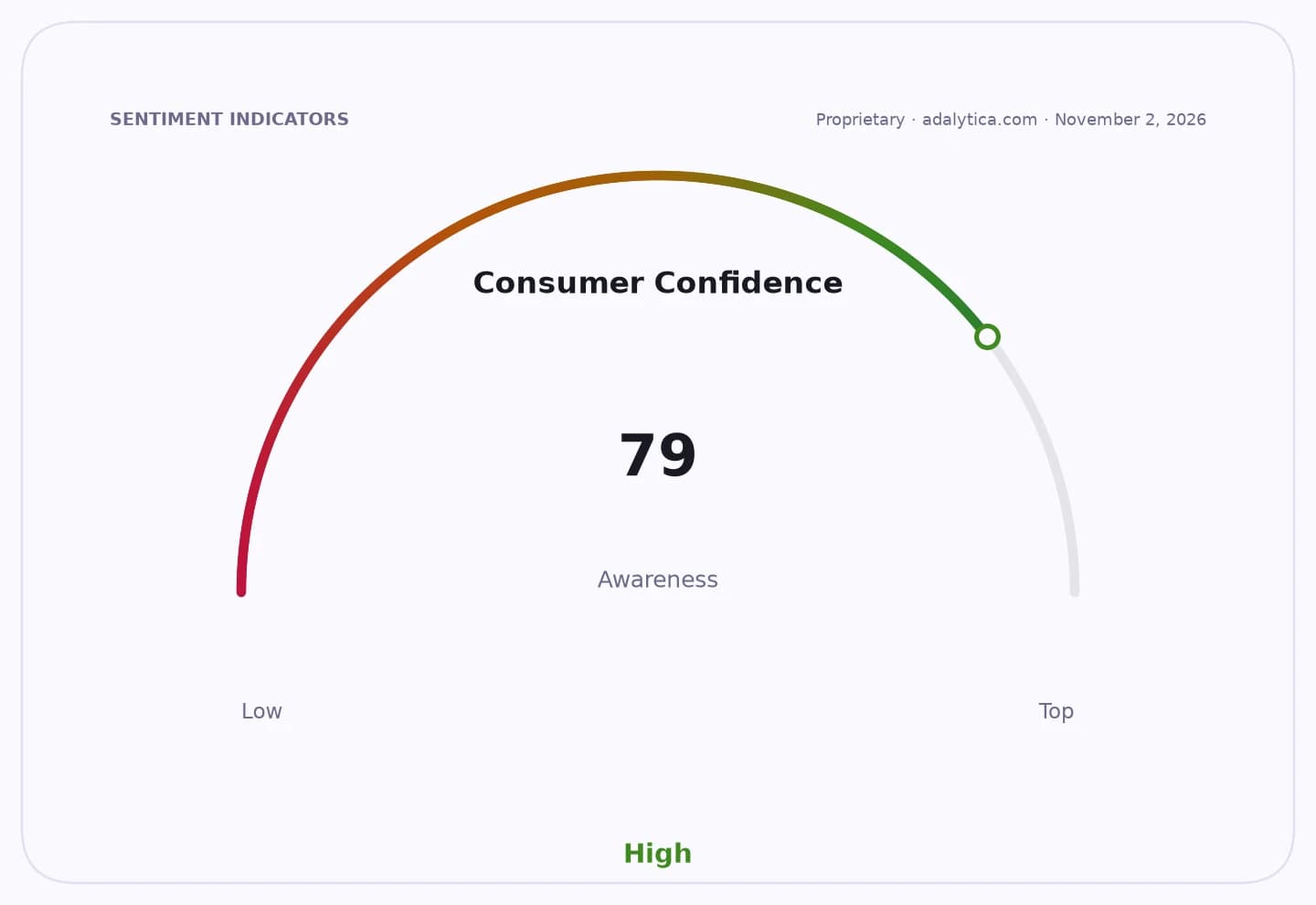
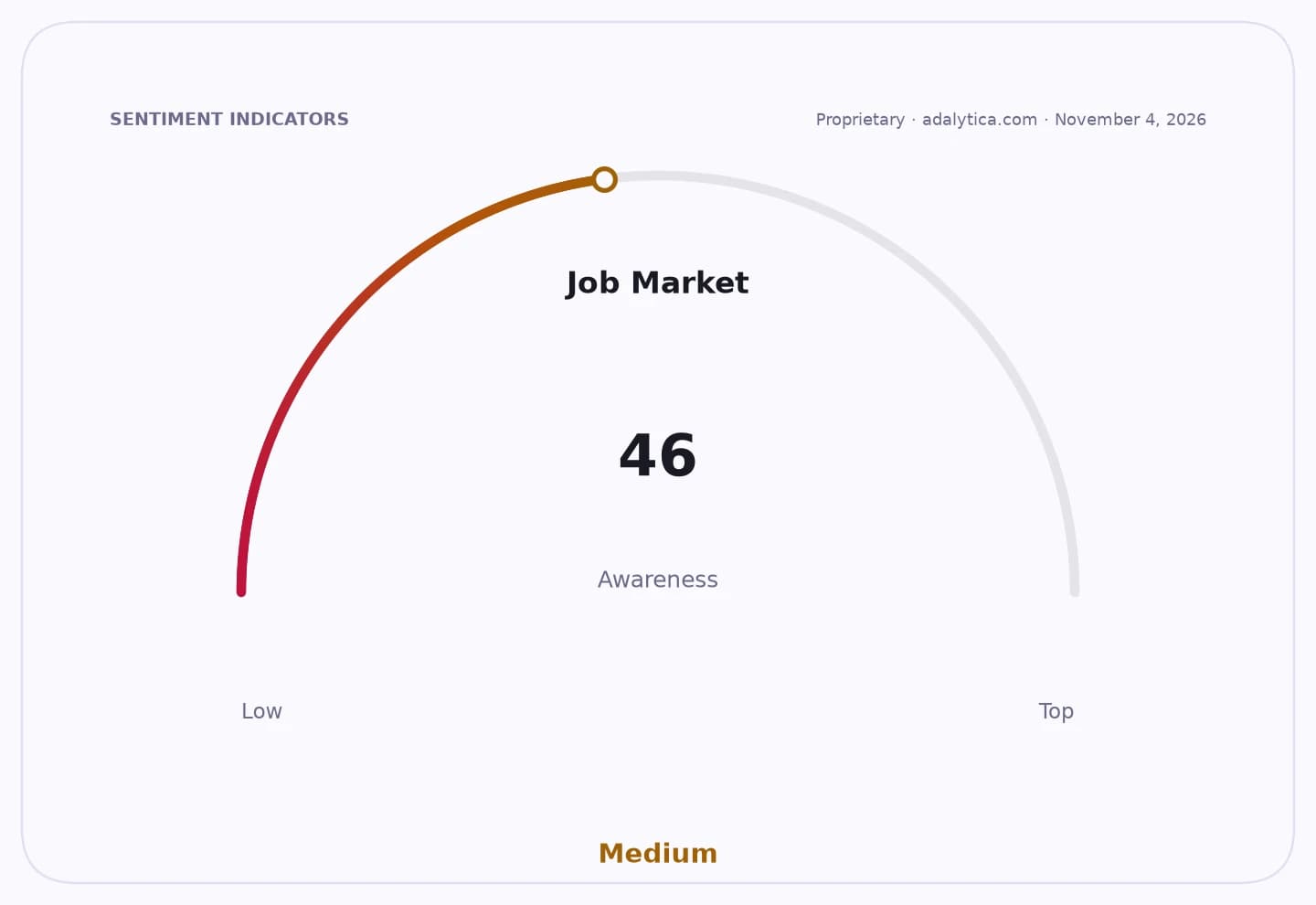
Vietnam will raise its regional minimum wage from Jan. 1, 2027, a policy move that will boost pay for millions of formal-sector workers and force employers to absorb higher labor costs just as inflation and wage pressure remain in focus.
Vietnam raises minimum wage for 2027
The government decree lifts the monthly floor in Region I to 5.7 million dong from 5.31 million dong, an increase of 390,000 dong. Region II will rise to 5.08 million dong, Region III to 4.45 million dong and Region IV to 4.04 million dong, while the hourly minimum will climb as high as 27,400 dong in the top-wage area.
Sentiment Indicators
Economically, the decision matters because minimum wages set the benchmark for a wider range of pay negotiations, overtime calculations and related allowances. In a labor market where factories, contractors and service businesses rely heavily on wage-sensitive workforces, even a modest nominal increase can ripple through payroll budgets, pricing decisions and profit margins. The decree also explicitly requires employers to review labor contracts, collective agreements and pay rules, reducing the scope for companies to delay the pass-through.
The increase is not uniform, but the structure still leaves employers with a clear cost headwind. Region I, which includes the highest-paying urban and industrial locations, gets the largest monthly increase, while hourly minimums also rise across all four zones. The government said pay for weekly, daily, piece-rate and contract workers must also be adjusted so that converted monthly or hourly pay does not fall below the new floor.
For investors, the implications are most direct in labor-intensive sectors such as manufacturing, garments, footwear, retail, logistics and construction, where wage bills are a key component of operating costs. Companies with limited pricing power could see margin pressure if they cannot pass on higher payroll expenses, while firms with stronger supply-chain discipline or automation exposure may be better placed to defend earnings. Exporters, in particular, face a familiar trade-off: higher worker compensation can support domestic consumption and social stability, but it can also squeeze competitiveness if rivals in other low-cost markets do not face similar increases.
The policy also has macro significance. Higher minimum wages can help support household income and consumption at a time when policymakers are trying to sustain growth without letting living standards erode. But the risk is that a broad wage floor lift feeds into services inflation or prompts employers to trim hiring, especially among smaller firms. That tension is why wage hikes in fast-growing Asian economies are often welcomed by workers but treated cautiously by business groups and investors.
The winners are likely to be lower-paid workers and households that depend on wage income. The biggest losers are labor-intensive employers whose margins are already thin. What happens next will depend on whether the wage increase remains contained within payroll budgets or starts to flow through to prices, hiring and investment plans in 2027.
| Entity | Gains | Losses |
|---|---|---|
| Low-wage workers | ▲Higher take-home pay | ▼— |
| Consumers/households | ▲Better purchasing power | ▼Possible higher prices |
| Labor-intensive employers | ▲— | ▼Higher payroll costs |
| Exporters/manufacturers | ▲— | ▼Margin pressure |