Romania’s minimum-wage debate is turning into a broader fight over household purchasing power, with the National Trade Union Bloc saying 1.4 million employees now earn the legal floor or just 75 lei above it and urging a 2027 gross minimum of 4,652 lei.
Romania minimum wage debate widens over pay and inflation
Job Market
That matters because the minimum wage has stopped being a narrow labor issue and has become a transmission mechanism for inflation, consumer spending and wage compression across large parts of the economy. If roughly 26.9% of workers are clustered at or near the floor, then any adjustment ripples quickly through payrolls, retail demand and public finances.
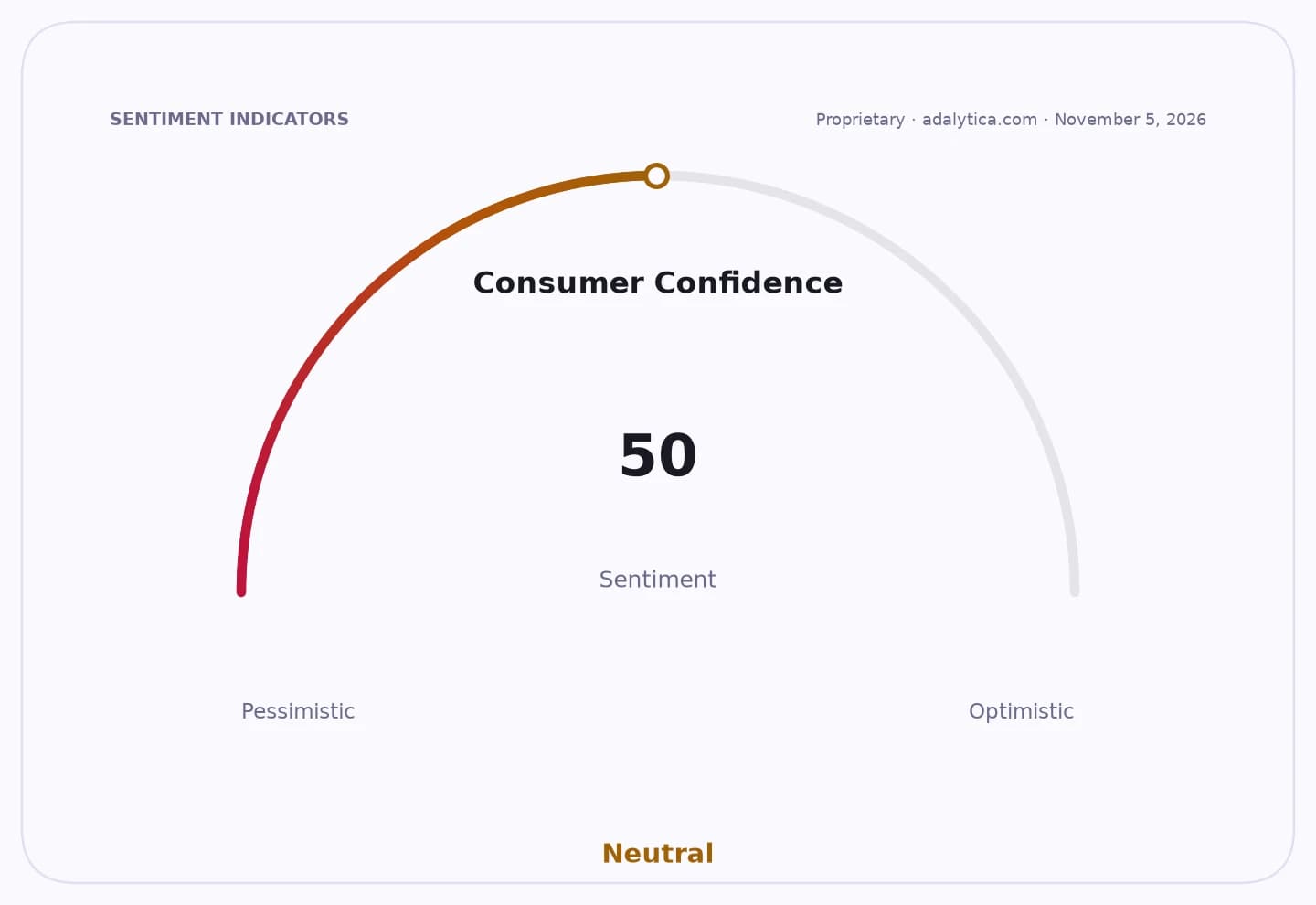
Sentiment Indicators
The union’s proposal would raise the gross minimum by 327 lei from the current 4,325 lei and would recover part of the purchasing power lost during an 18-month freeze, when prices rose 13.8% and the union says the minimum wage lost about 12% in real terms. BNS argues the current formula would deliver only 4,583 lei in 2027, while its adjusted calculation would produce 4,652 lei, or 48.5% of the forecast average wage, comfortably within the legal range.
That detail matters for investors because Romania is not dealing with a classic labor market margin issue; it is dealing with a structural wage ladder problem. BNS says eight in 10 workers earn less than the average base salary, and the minimum wage has effectively become a de facto pay scale for a big chunk of the private sector. That raises the odds of follow-on wage claims in low-margin industries such as retail, manufacturing, logistics and services.
The union is also highlighting what it calls a “fiscal wall” near the minimum, where tax and social contributions can leave a slightly higher gross salary delivering a smaller net gain than the minimum itself. If employers face rising labor costs without a clear net benefit to workers, wage pressure can spill into turnover, informal pay practices and demands for relief through tax policy instead of productivity gains.
The macro backdrop reinforces the pressure. A minimum wage that has barely kept pace with inflation while productivity continues to rise is a sign that domestic demand is being supported less by broad-based real income growth than by administrative wage setting. That is not a recipe for easy disinflation, especially if the government ultimately accommodates a larger-than-formula increase to avoid social friction.
For markets, the immediate implication is simple: labor-intensive Romanian businesses face another round of cost inflation, while consumer-facing sectors may get a short-term demand lift if wages rise faster than prices. The bigger opportunity is in the second-order effects — companies that sell automation, software, logistics efficiency and productivity tools into Central and Eastern Europe stand to benefit if employers are forced to do more with fewer low-paid workers.
The political message is even clearer. BNS is pushing not just for a higher minimum, but for automatic indexation, an official minimum consumption basket and stronger collective bargaining. That is a roadmap for a more rules-based wage regime and, if adopted, a more persistent upward bias in labor costs. Investors should position for a labor market where wage inflation remains sticky and the winners are the firms with pricing power, scale and productivity leverage.
| Entity | Gains | Losses |
|---|---|---|
| Low-wage workers | ▲Higher take-home pay | ▼Real income erosion if wages stay frozen |
| Labor-intensive employers | ▲Faster wage clarity | ▼Higher payroll costs |
| Consumer-facing retailers | ▲Potential demand boost | ▼Margin pressure from labor inflation |
| Automation and productivity vendors | ▲More demand for efficiency tools | ▼None directly |