Rice prices in Vietnam edged higher again on October 15, with CL555 raw rice quoted at 8,800-8,850 dong per kilogram, underscoring a market that is tightening in some grades even as others remain stable.
Vietnam Rice Prices Edge Higher on October 15
The move matters because rice remains one of Asia’s most politically sensitive staples and a key input for household inflation. Even a modest rise in a traded benchmark such as CL555 can feed through millers’ margins, export offers and eventually retail pricing if buying interest holds up. For investors tracking agricultural commodities, the latest gain adds to evidence that grain markets are still reacting to supply constraints rather than settling into a broad-based correction.
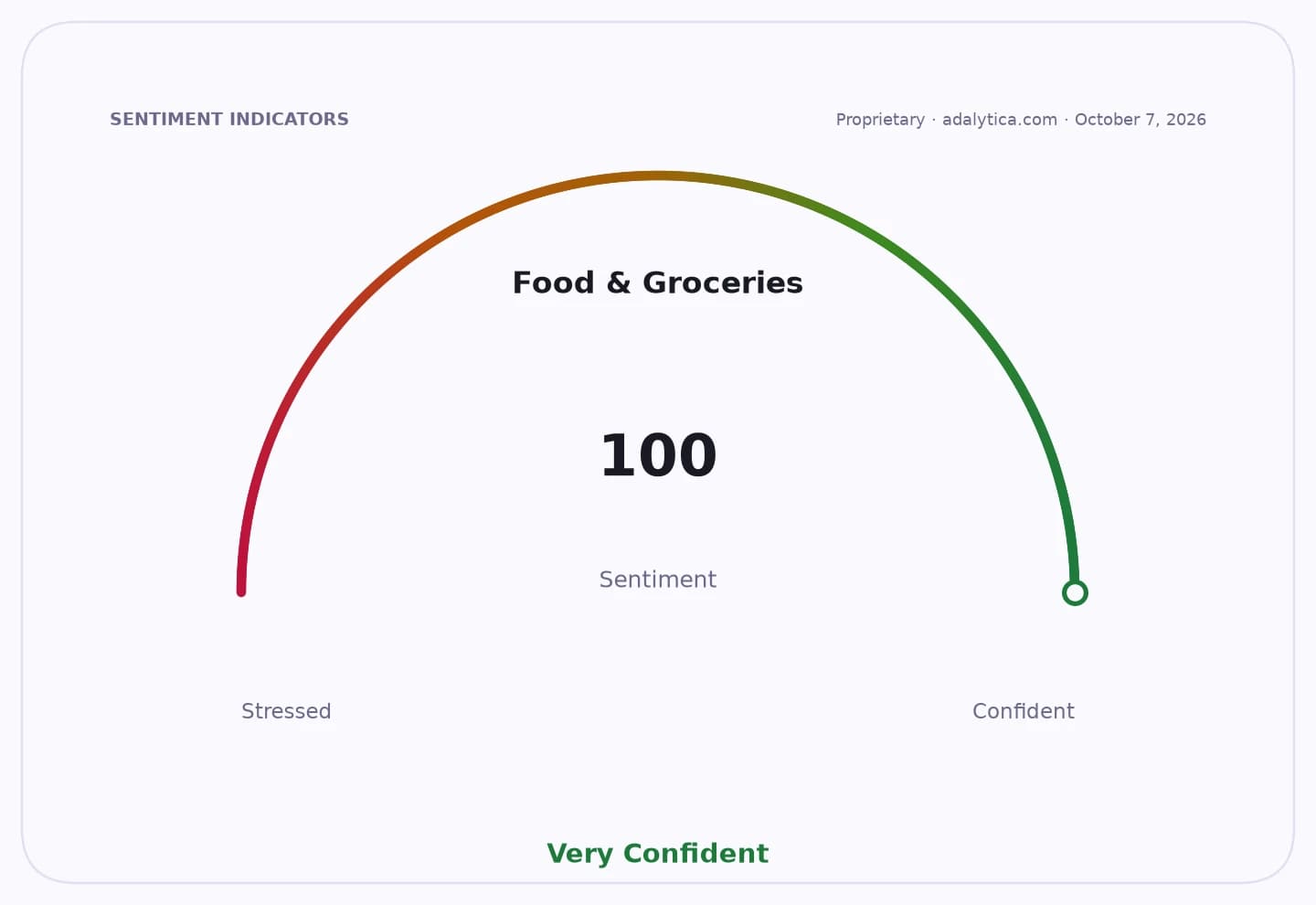
Sentiment IndicatorsⓘProprietary · adalytica.com · October 16, 2026
This is a snapshot — live sentiment, awareness and momentum for 130+ markets update continuously in the dashboard.Open AlphaPulse
The domestic market is not moving in lockstep. CL555 rose 50 dong a kilogram at both ends of its range, while bran also inched higher. By contrast, IR504 was unchanged, and fresh paddy prices were mixed, with DS1 the highest among varieties tracked at 6,500-6,600 dong a kilogram. That divergence points to a segmented market in which millers, traders and exporters are paying up selectively for specific qualities rather than bidding the whole complex higher.
The pricing pattern also fits a broader global backdrop of firmer rice and grain markets. World rice prices have been supported by supply tightness and lower exports, while domestic Vietnamese rice and broken rice shipments have weakened versus a year earlier, putting pressure on the industry’s trade balance. When export prices rise faster than inland costs, processors can gain some support on margins, but consumers and downstream buyers face the risk of renewed cost inflation.
For exporters, the immediate question is whether the higher CL555 level can be sustained. Jasmine export offers at 515-519 dollars a ton suggest external demand remains active enough to keep quotations firm, but not so strong as to guarantee a uniform rally across varieties. For millers and traders, the risk is that narrow gains in raw rice and by-products can compress spreads if paddy supply does not improve.
The near-term outlook will depend on whether buying interest broadens beyond CL555 and bran. If demand persists, those categories should stay supported; if not, the market may continue to rotate between firmer export grades and flat or softer domestic benchmarks. For investors, the key signal is not a single price tick but the persistence of dispersion across rice grades, which usually marks a market still searching for an equilibrium.
| Entity | Gains | Losses |
|---|---|---|
| CL555 rice sellers | ▲Higher selling price | ▼Buyers facing tighter supply |
| Rice millers/exporters | ▲Better export quotations | ▼Margin pressure if paddy costs rise |
| Vietnamese consumers | ▲None | ▼Higher staple costs |
| Competing lower-grade rice like IR504 buyers | ▲Stable pricing | ▼Less upside from the rally |