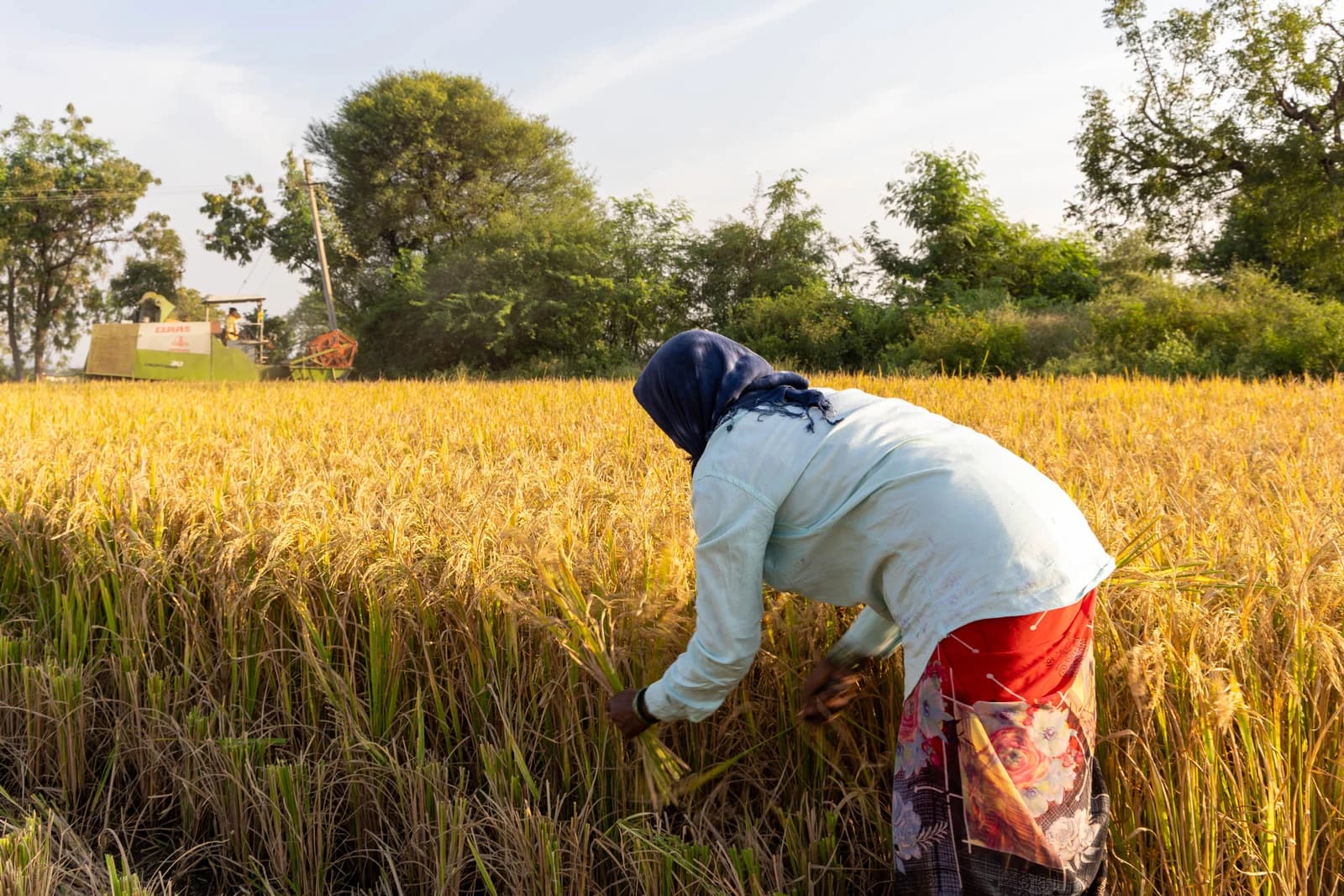
Rice prices in Vietnam’s Mekong Delta edged higher on October 17, but the market is still short of the buying momentum needed to turn a small raw-rice rebound into a broader uptrend.
Vietnam rice prices edge higher on export demand
The clearest move was in export raw rice IR 504, which rose 200 dong a kilogram to 8,900-9,000 dong, while CL 555 added 50 dong to 8,800-8,900 dong. That matters because these grades sit at the heart of the processing and export chain: when factory demand improves even slightly, raw rice prices are usually the first to react. For farmers, millers and exporters, the question is whether this is a one-off adjustment or the start of firmer procurement ahead of overseas tenders.
Sentiment IndicatorsⓘProprietary · adalytica.com · October 20, 2026
This is a snapshot — live sentiment, awareness and momentum for 130+ markets update continuously in the dashboard.Open AlphaPulse
The rest of the market tells a more cautious story. Fresh paddy prices were largely unchanged across the Mekong Delta, with IR 50404 at 6,000-6,200 dong a kilogram, OM 18 at 6,200-6,300 dong and DT8 at 6,200-6,400 dong. Retail rice also held steady, suggesting domestic consumption has not yet provided a separate lift. In other words, the move is concentrated in the upstream export channel, not across the full supply chain.
That split is economically important. Rice is a major income source in southern Vietnam, and even a modest rise in export raw rice can improve mill margins and support farm-gate sentiment if it persists. But with trading described as sluggish in many localities, the market is still waiting for stronger procurement from processors and exporters. Without that, the current increase risks fading into the same sideways pattern that has dominated recent sessions.
Vietnam’s export quotes were also unchanged, with 5% broken rice at $440-$445 a ton and Jasmine rice at $515-$519 a ton, leaving the country competitive but not dominant versus Thailand and India. That keeps the focus on physical demand rather than price-setting power: if buyers return, exporters can defend margins; if not, the market stays range-bound.
The investable read-through is straightforward. The market is missing the asymmetry here: rice names tied to processing, logistics and export execution can benefit quickly if procurement tightens, while weaker buying leaves the story stuck at the paddy level. For now, the signal is constructive, not conclusive. Traders should watch whether IR 504 and CL 555 can hold these gains into the next buying cycle, because that will decide whether this is the first leg of a recovery or just a brief pricing hiccup.
| Entity | Gains | Losses |
|---|---|---|
| Export rice millers | ▲Wider raw-material pricing support | ▼Margin pressure if buying stays weak |
| Mekong Delta farmers | ▲Better paddy pricing later | ▼Limited benefit from slow trading |
| Rice exporters | ▲Firmer procurement signal | ▼Missed upside if demand does not return |
| Domestic consumers | ▲Stable retail prices | ▼None from this move |