Saving 2 million dong a month for 20 years can build a nominal nest egg of about 1.17 billion dong if the money earns 8% a year, but the bigger economic question is how much that sum will still buy by retirement.
Vietnam saving 2 million dong monthly for 20 years
That is the key takeaway from a simple but revealing calculation now circulating in Vietnamese financial media: disciplined monthly saving turns 480 million dong of principal into a far larger pot through compounding, yet inflation erodes the spending power of the final balance over two decades. At a 6% average bank return, the same savings plan would grow to roughly 924 million dong, underscoring how much long-term outcomes depend on the return gap between cash-like deposits and higher-yielding investments.
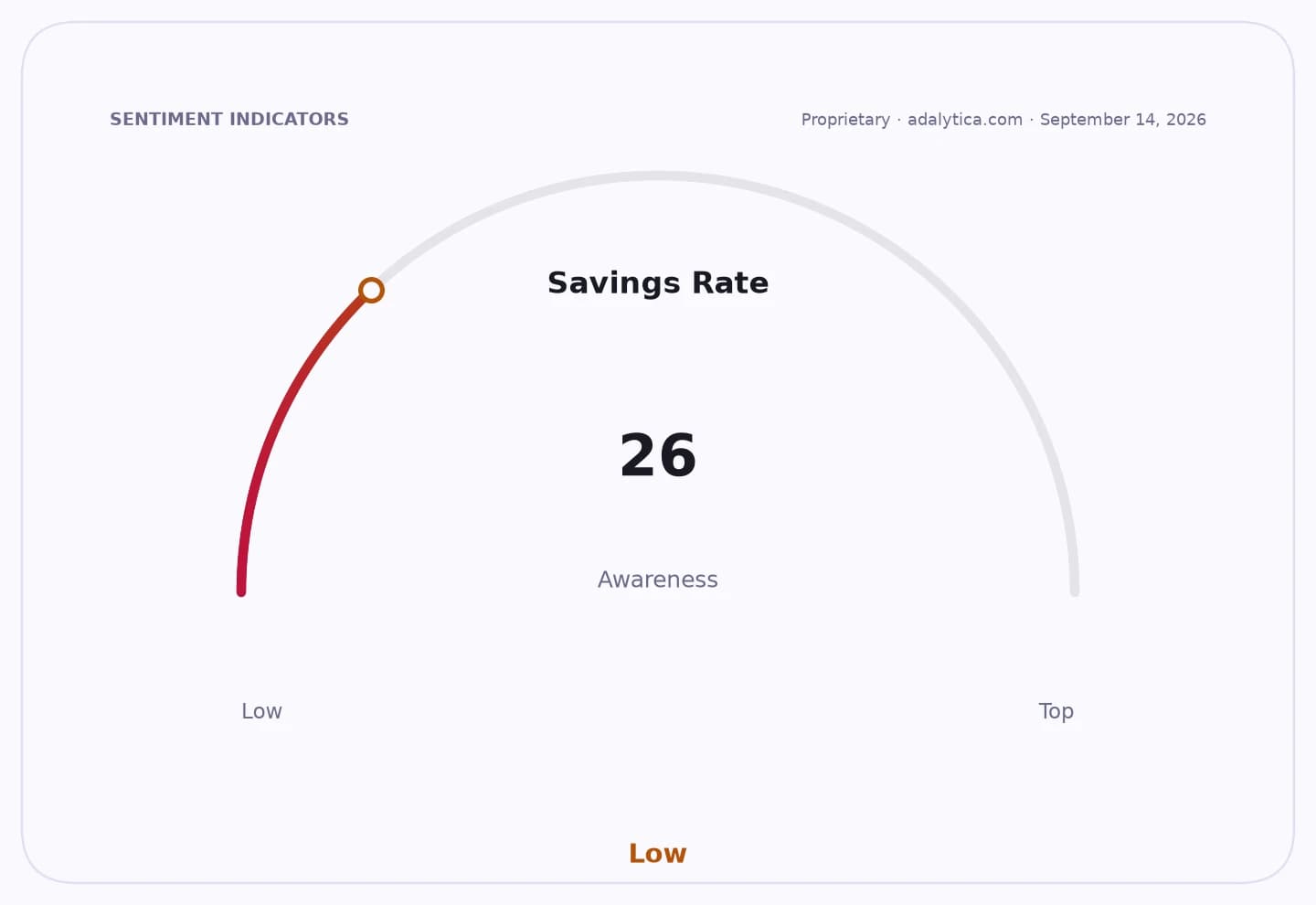
Sentiment IndicatorsⓘProprietary · adalytica.com · September 24, 2026
This is a snapshot — live sentiment, awareness and momentum for 130+ markets update continuously in the dashboard.Open AlphaPulse
For households, the arithmetic matters because retirement planning is increasingly a race between income growth and the cost of living. Saving 2 million dong each month amounts to 24 million dong a year, a figure that can feel manageable for middle-income families. Over 20 years, however, the real outcome diverges sharply depending on where the money sits. Kept in a plain saving habit with no return, the total would just be the 480 million dong in contributions. Invested at 8%, it nearly triples that amount.
The article’s warning about inflation is the most important part of the story. A nominal balance of 1.17 billion dong sounds substantial, but if consumer prices keep rising, the purchasing power at retirement could be materially lower. That is why the story is not really about “how much money will I have?” but “what standard of living will that money support?” For savers, the distinction determines whether the plan is enough to fund retirement, health costs and basic expenses.
The macro backdrop reinforces the point. U.S. inflation data in the supplied context show price pressures still running above the pre-pandemic era, a reminder that long-horizon savers cannot assume money parked in low-yield accounts will preserve value. Even in Vietnam, where deposit rates and local inflation may differ, the principle is the same: returns must outpace prices or real wealth shrinks. That dynamic is why financial planners often push households toward a mix of deposits, bonds, funds or other investments rather than relying solely on cash savings.
The market context also suggests investors are still willing to pay for duration and return. The iShares 20+ Year Treasury Bond ETF, TLT, remains under pressure and sits below both its 50-day and 200-day moving averages, while the S&P 500 ETF, SPY, trades well above its long-term average. That split reflects a market still favoring risk assets over traditional safe havens, a backdrop that may tempt savers to reach for higher returns even as it raises the stakes of poor asset selection.
Adalytica’s Consumer Spending Sentiment gauge shows “Extreme Greed” while awareness remains in “Extreme Fear,” a combination that suggests households are still inclined to spend, but may underestimate the long-term cost of not saving or investing early. For retirement planning, that is a warning sign: the biggest variable is not the monthly amount, but the consistency, the return earned and the discipline to stay invested through cycles.
For investors and savers alike, the narrative is straightforward. Small, regular contributions can create meaningful wealth over time, but only if the return is real after inflation. The difference between a 6% and 8% annual outcome is more than 200 million dong over 20 years, and that gap will likely widen if inflation stays sticky or if savers remain trapped in low-yield accounts. The lesson is less about a one-time calculator and more about the economics of patience, compounding and purchasing power.
| Entity | Gains | Losses |
|---|---|---|
| Savers investing early | ▲Higher retirement balance | ▼Lower real returns if they delay |
| Banks offering deposits | ▲Stable funding | ▼Lose to higher-yield assets |
| Inflation | ▲Erodes purchasing power | ▼Reduces real value of cash savings |
| Equity and bond funds | ▲More demand for returns | ▼Cash-only savers miss upside |