Vinh Long rice growers tied into a fixed-price ST25 production chain are holding profits even as heavy rain disrupts harvests and market prices fall, underscoring how contract farming is becoming a critical buffer for the Mekong Delta’s rice sector.
Vinh Long ST25 Farmers Hold Profits Under Contracts
The biggest takeaway for investors and agribusiness buyers is not the weather damage itself, but the way linked production is cushioning farmers from it. In Phong Thạnh commune, growers in the high-quality ST25 model are selling at 8,000 dong a kilogram under a take-or-pay style agreement with Quốc Khương BIOFARM, versus market prices of about 6,200 to 6,300 dong, giving them a meaningful margin floor even as yields soften.
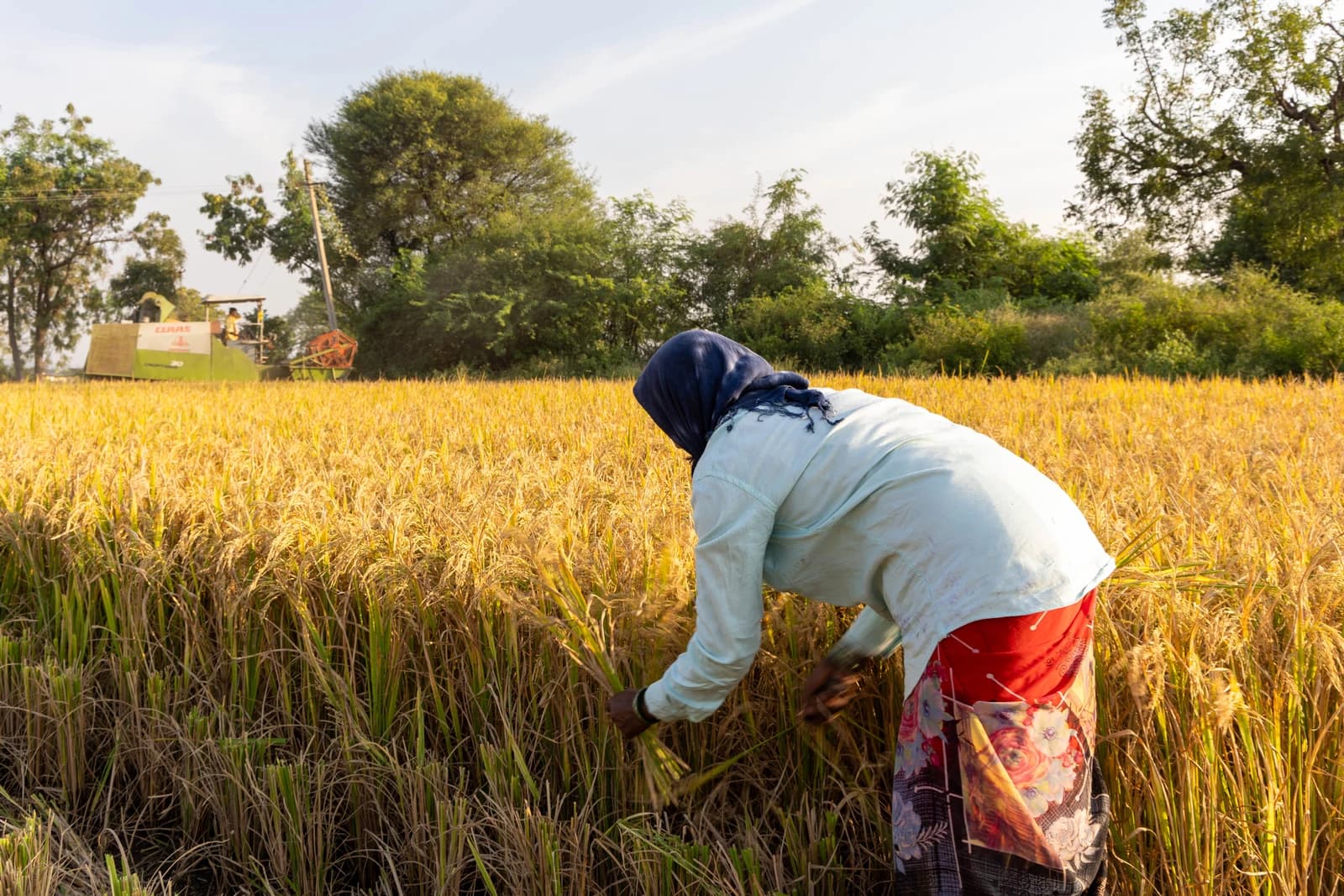
That price protection matters because rice farming in southern Vietnam is being squeezed from both sides: volatile farmgate prices and increasingly erratic weather. Mưa lớn has delayed harvesting, pushed some paddy to sprout in the field and reduced both yield and grain quality, but farmers in the linked model still expect average profit of about 40 million dong per hectare per crop, roughly 10 million to 15 million dong higher than outside the program.
The model is also shifting economics at the farm level by moving input financing away from growers. The company supplies fertilizer, seed and crop protection products, and even helps cover transplanting costs of about 250,000 dong per công, with expenses settled after harvest, easing the upfront cash burden that often keeps smaller farmers exposed to price swings.
For Vinh Long, the story goes beyond one commune. The province says 9,624 hectares are now enrolled in its participation in Vietnam’s 1 million-hectare low-emission, high-quality rice plan, above target by 20%, with early results showing profits up about 14% and greenhouse-gas emissions down more than 20%. That makes the province part of a broader policy push to move Vietnamese rice away from volume production and toward premium, lower-input output that can command better pricing.
The expansion in Phong Thạnh reflects that shift. A pilot on nearly 30 hectares in the winter-spring crop has grown to almost 75 hectares in the summer-autumn crop with 73 members, and organizers plan to add another 20 hectares in the autumn-winter season. For traders and millers, the rise in contract-linked acreage points to a more stable supply of higher-grade ST25 rice, even if traditional spot-market farmers remain exposed to weather and price risk.
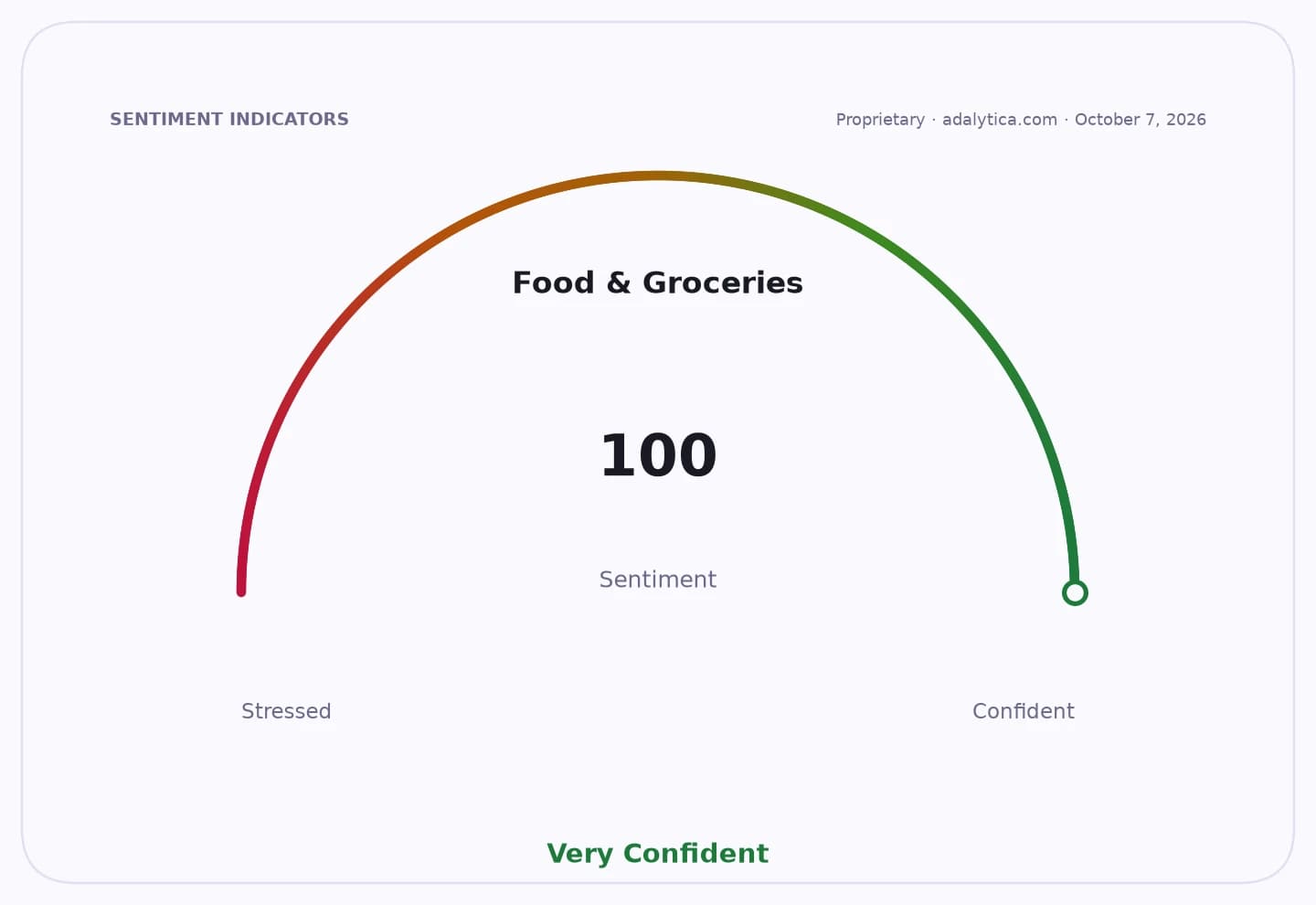
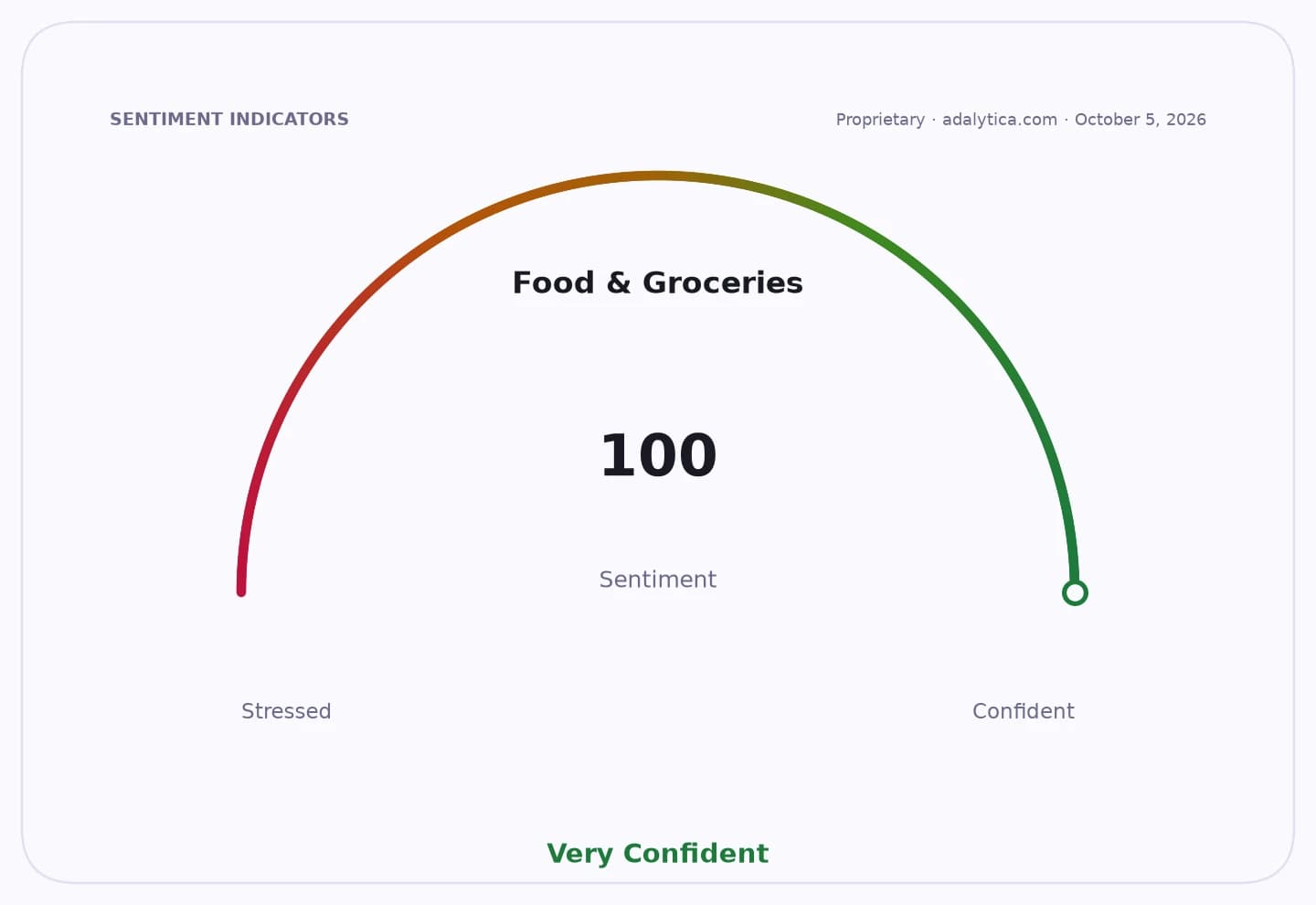
Adalytica’s food and grocery spending sentiment gauge also shows extreme greed, but the more relevant signal here is structural: buyers of rice are increasingly rewarding traceable, lower-input production, while farmers outside contract chains remain vulnerable to any further drop in prices or more rain-hit harvesting.
| Entity | Gains | Losses |
|---|---|---|
| Linked ST25 farmers | ▲Fixed 8,000 dong/kg pricing | ▼Spot-market volatility |
| Quốc Khương BIOFARM | ▲More reliable supply | ▼Exposure to contract pricing |
| Vinh Long province | ▲Higher-value rice output | ▼Traditional low-margin production |
| Spot-market growers | ▲None | ▼Lower farmgate prices, weather risk |