The Visegrad Four’s top generals met in Bratislava to accelerate cooperation on combat drones, counter-drone systems and military reserves, a sign that Central Europe is moving faster to adapt to the new economics of war.
Visegrad Four generals discuss drones and reserves
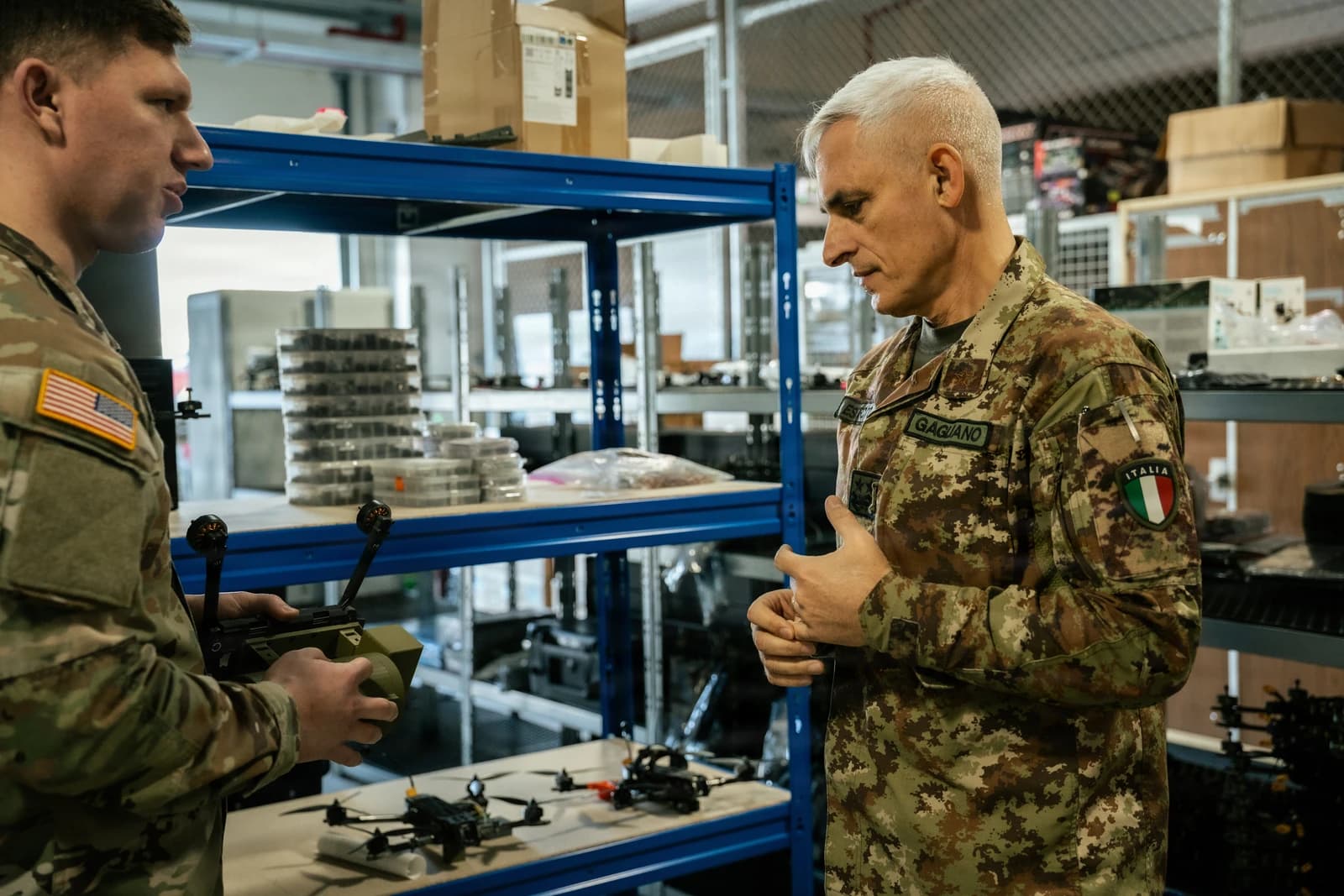
That matters because modern defense spending is no longer just about tanks, jets and artillery. The battlefield is being reshaped by cheap, fast-moving unmanned systems, electronic warfare and the need to field trained reserve forces quickly. For the V4 — Slovakia, the Czech Republic, Poland and Hungary — the message is clear: deterrence now depends as much on drones, industry capacity and mobilization readiness as it does on traditional hardware.
Sentiment Indicators
At the meeting, the chiefs of staff reviewed the development of the European Union’s V4 battle group and discussed ways to speed up military capability development, with particular emphasis on the defense industry. They also focused on unmanned aerial systems and the weapons used to counter them, underscoring how urgently European militaries are trying to keep pace with the battlefield lessons from Ukraine and other recent conflicts.
The reserve issue is just as important for investors and policymakers. Countries that can train, organize and refresh reserve forces quickly can expand military capacity without waiting years for new active-duty recruitment. That tends to drive demand not only for equipment, but also for training, communications, surveillance, logistics and domestic production chains that can scale in a crisis.
For defense contractors, this is exactly the kind of policy backdrop that can support multiyear orders. U.S. names such as Lockheed Martin, Northrop Grumman and RTX already benefit from NATO members’ push to strengthen air defense, missile defense and interceptor inventories. RTX has already said it secured a $1.0 billion Patriot GEM-T interceptor award linked to Poland through NATO’s procurement agency, a reminder that Central Europe’s rearmament is not abstract — it is turning into contracts. Northrop, meanwhile, continues to see demand tied to missile-defense and strategic-deterrent programs, while Lockheed remains a broad beneficiary of allied modernization spending.
The market message is broader than any one stock. Europe’s defense buildout is becoming a structural theme, not a headline trade. Drone defense, reserve readiness and industrial cooperation all point to sustained procurement across NATO and the EU, which should favor companies with scale, proven supply chains and exposure to air defense, sensors, missiles and command-and-control systems. The challenge is execution: governments will need to fund these ambitions, while industry must prove it can deliver on time and at scale.
For long-term investors, the key takeaway is that Europe’s security reset is still in its early innings. The Bratislava talks reinforce a secular demand trend that could support defense spending for years, especially in counter-drone technology and integrated air defense. That makes the sector worth watching closely — and for diversified portfolios, it strengthens the case for holding high-quality defense names through the cycle.
| Entity | Gains | Losses |
|---|---|---|
| V4 militaries | ▲better coordination | ▼slower procurement |
| Defense contractors | ▲larger order pipeline | ▼budget uncertainty |
| Drone-defense providers | ▲rising demand | ▼legacy platforms |
| NATO/EU security posture | ▲stronger readiness | ▼gaps in mobilization |