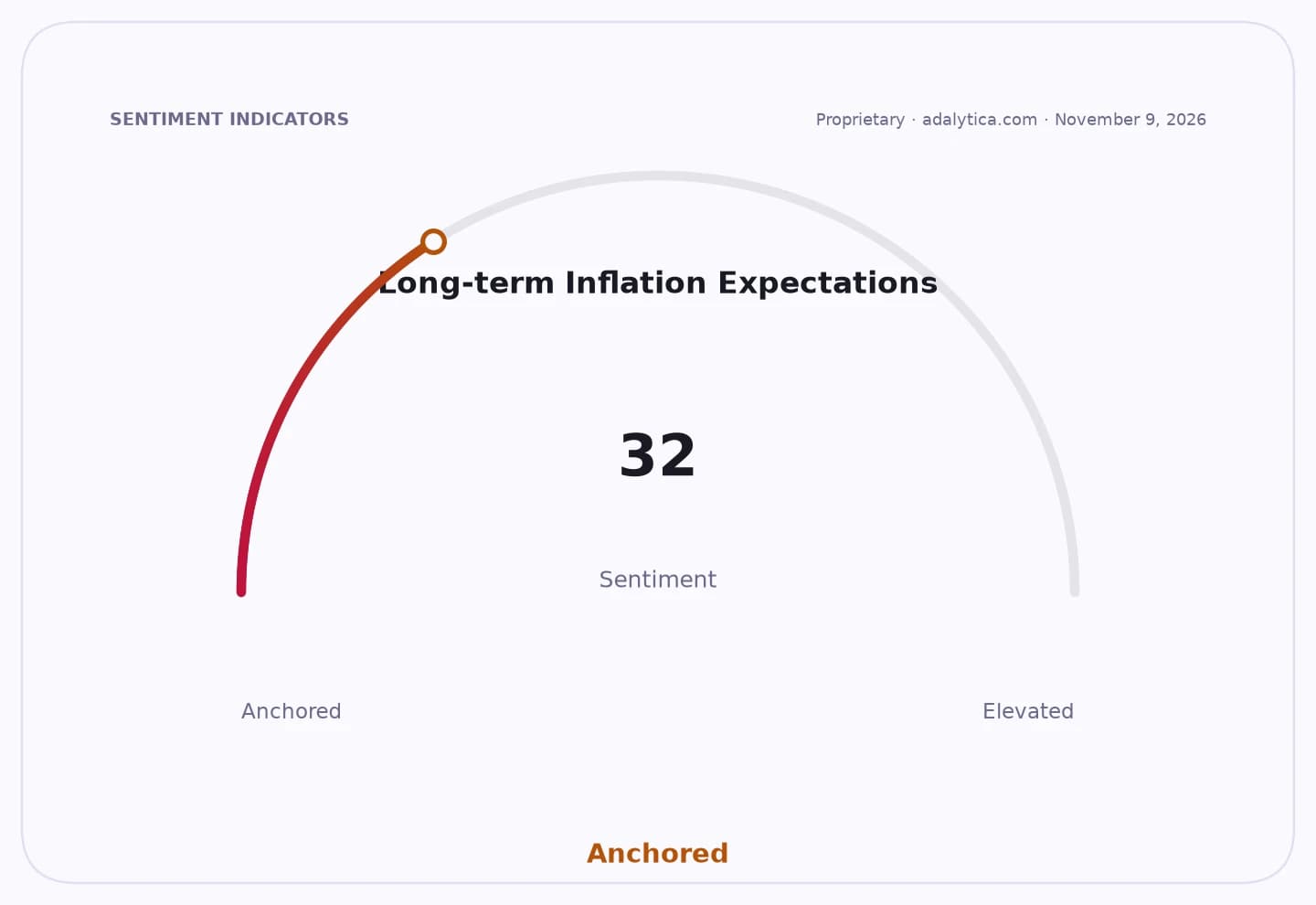
The most important lesson from the early 1980s is that crushing inflation can require punishingly high interest rates, and that’s exactly why investors still obsess over central banks today.
Volcker Era Inflation and Interest Rates
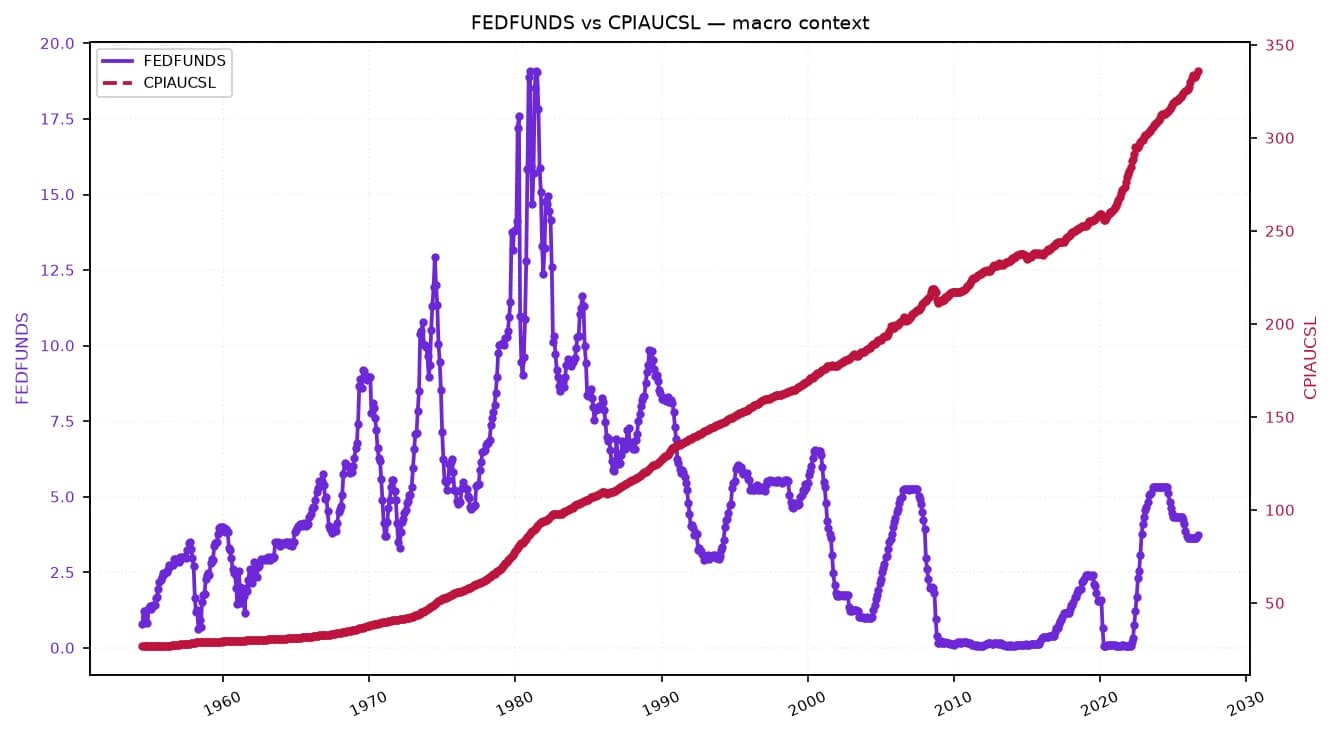
When Paul Volcker took over the Federal Reserve in 1979, inflation had already escaped control, growth was stalling and public anger was building. The Fed responded by taking the federal funds rate from 10% to nearly 19% in December 1980, with the average rate above 16% in the following year. Commercial banks’ prime rate hit 21.5%, and long-dated Treasury bonds yielded 15% — levels that would be unthinkable in most normal cycles, but were the price of restoring credibility.
Sentiment Indicators
That trade-off matters because inflation is never just a consumer problem. It reshapes borrowing costs, corporate profits, housing affordability and the value of every financial asset. The early Volcker era showed that when price growth gets embedded, the central bank may have to choose between near-term pain and long-term stability. The result was a brutal recession, a surge in unemployment into double digits and intense political backlash. But it also ended the inflation spiral and laid the groundwork for decades in which bond yields, discount rates and corporate valuations were anchored by Fed credibility.
For investors, the enduring takeaway is simple: interest rates are the gravity in markets. Higher rates compress stock valuations, especially for long-duration assets like technology and growth companies, while they can also support savers and lenders after a lag. Today’s market reactions to inflation still echo that logic. Even small surprises in consumer prices can push Treasury yields and the dollar higher, pressure rate-sensitive sectors and force investors to rethink how much growth they are paying for.
That is why the Volcker period remains so useful as a guide. It reminds investors that inflation can look temporary until it suddenly is not, and that central banks sometimes have to stay restrictive longer than markets want. It also explains why bond markets, bank stocks and broad equity indexes all react so quickly when inflation data runs hot: the path of rates matters more than the headline number alone.
The long-term investing lesson is not to fear every rate hike, but to respect what persistent inflation does to compounding. Businesses with pricing power, strong balance sheets and durable cash flow tend to survive these regimes better than highly leveraged or richly valued names. For patient investors, that means staying diversified, focusing on quality and thinking in years, not weeks. Volcker’s legacy is a reminder that painful policy can ultimately restore the conditions for healthier returns. Worth watching, and worth remembering.
| Entity | Gains | Losses |
|---|---|---|
| Savers and lenders | ▲Higher yields | ▼Near-term economic pain |
| Borrowers and housing markets | ▲Cheaper refinancing later | ▼Higher monthly costs |
| Quality companies with pricing power | ▲Better long-run stability | ▼Margin pressure during tightening |
| Long-duration growth stocks | ▲Eventual rate relief | ▼Valuation compression now |