TreviPay’s expanded pay-by-invoice option for Walmart Business customers adds a working-capital tool to one of retail’s largest business-to-business channels, giving buyers more flexibility while potentially deepening Walmart’s hold on small and midsize commercial accounts.
Walmart Business expands pay-by-invoice with TreviPay
The move matters because invoice-based checkout is not just a convenience feature; it is a financing lever. In B2B commerce, the ability to defer payment can be the difference between winning a recurring customer and losing one to a rival platform. For Walmart, broadening access to pay by invoice supports its effort to make Walmart Business a destination for procurement, replenishment and bulk purchasing, where payment terms can be as important as price.
The timing also fits a broader acceleration in digital payment infrastructure. Financial institutions and fintechs are pushing faster, more embedded payment rails, from instant settlement platforms to stablecoin experiments, as buyers and sellers seek to reduce friction in cash management. TreviPay’s expansion sits in that same arc: more payment optionality, less manual accounts receivable work and faster order conversion for merchants serving business clients.
For Walmart, the strategic value is twofold. First, flexible payment terms can lift basket sizes and repeat purchase rates among business customers that need to manage inventory and preserve cash. Second, it strengthens the ecosystem around Walmart Business without requiring the retailer to build every credit and invoicing capability in-house. That can improve customer stickiness, especially in categories where B2B buyers compare not only price and assortment but also terms, approval speed and back-office integration.
The risk is that invoice products also carry credit exposure and operational complexity. Extending terms can raise delinquency and collections risk if underwriting loosens or if customer financial conditions deteriorate. That is why partnerships with specialists such as TreviPay matter: they let retailers offer credit-like functionality while shifting some of the servicing burden to a dedicated payments provider.
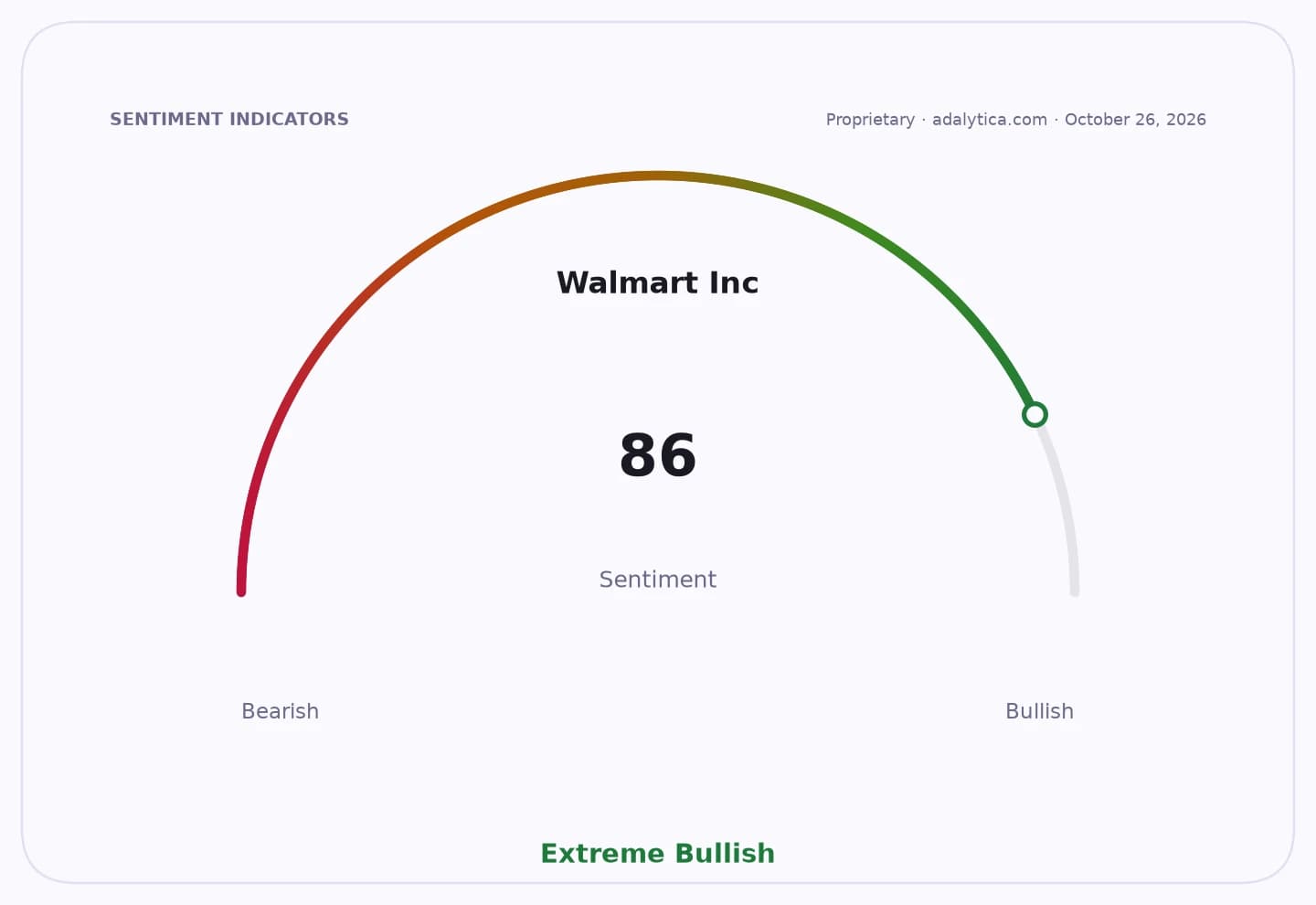
Investors are likely to view the development as incremental rather than transformative for Walmart’s earnings, but it reinforces a higher-value narrative around the company’s business-services strategy. Walmart shares have been trading well above both the 50-day and 200-day moving averages, while momentum readings remain elevated, suggesting the market continues to reward execution across e-commerce, omnichannel and membership-linked revenue streams. A deeper B2B payments stack supports that thesis by adding another reason for commercial customers to consolidate spend with Walmart.
What to watch next is whether Walmart and TreviPay broaden invoice availability further, how quickly the feature is adopted by business buyers, and whether competitors respond with similar terms. If uptake is strong, the real payoff will not be the payment option itself but the higher share of wallet it can help Walmart capture in the fragmented market for small-business procurement.
| Entity | Gains | Losses |
|---|---|---|
| Walmart Business | ▲Higher customer stickiness | ▼More credit complexity |
| TreviPay | ▲Greater merchant reach | ▼More underwriting exposure |
| Business buyers | ▲Better cash-flow management | ▼Potential late-fee risk |
| Competing B2B retailers | ▲— | ▼Pressure to match terms |