Walmart is mailing refunds to 65,022 U.S. customers after settling Federal Trade Commission allegations that its in-store money-transfer services were used by scammers to siphon off hundreds of millions of dollars from consumers.
Walmart mails refunds after FTC money-transfer settlement
The checks, tied to a $9.8 million settlement, are a reminder that payment rails and fraud controls can carry real financial and regulatory costs for retailers that handle customer cash flows. For Walmart, the payout is small relative to its scale, but the case highlights a broader risk investors watch closely: how much operational exposure a retailer has when it acts as a financial intermediary, not just a seller of goods.
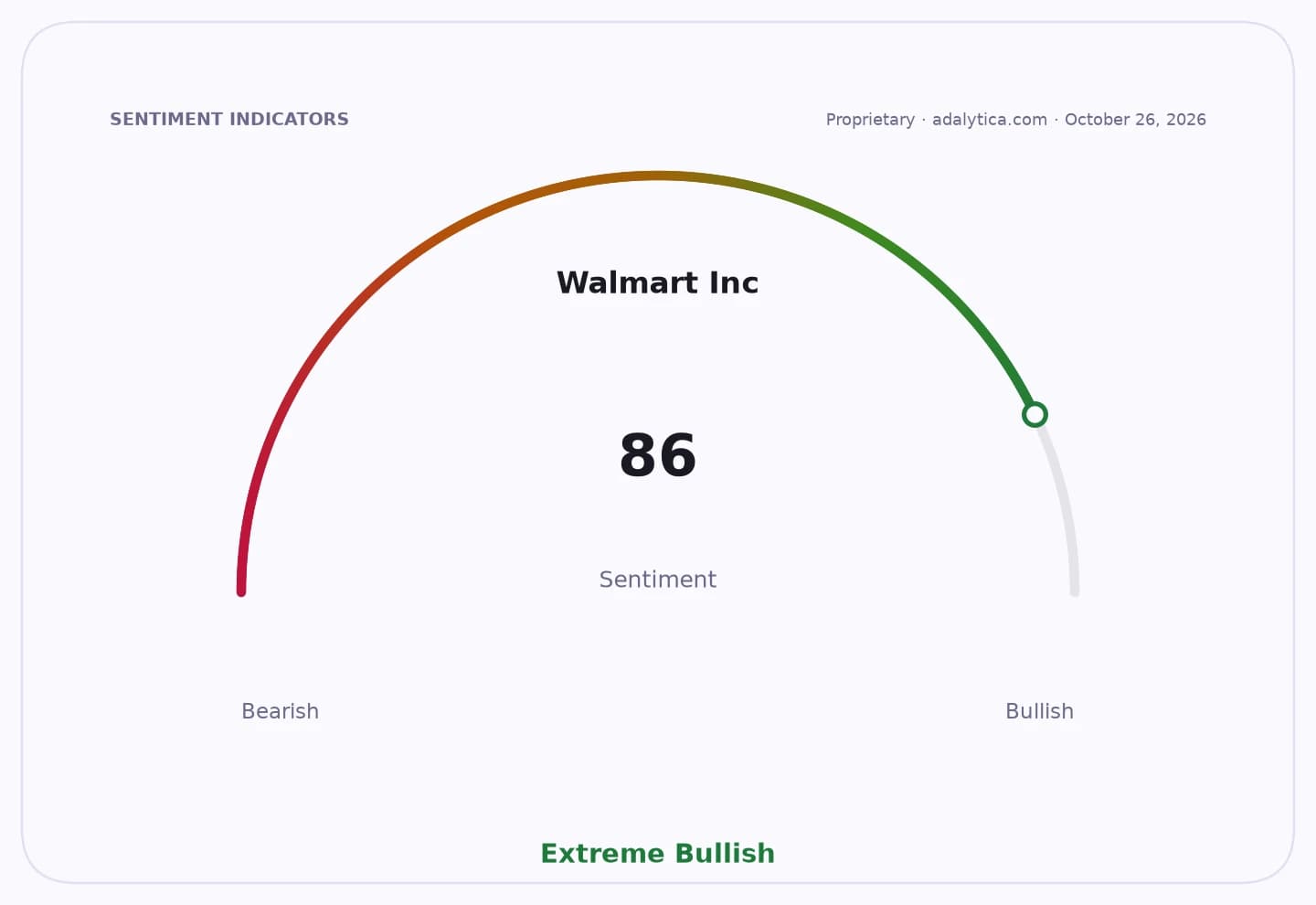
Sentiment Indicators
The FTC said Walmart failed to enforce adequate anti-fraud policies and procedures as scammers exploited its money-transfer services between January 2015 and December 2024. The agency said consumers were often instructed to send money electronically because, once transferred, it is difficult to recover. FTC Bureau of Consumer Protection Director Christopher Mufarrige said companies offering these services must train employees to comply with the law and protect consumers.
From an investor standpoint, the direct cost is limited. A $9.8 million settlement is immaterial against Walmart’s revenue base and comes nowhere near the scale of the company’s broader earnings drivers. But the matter matters more as a governance and compliance signal, especially for a retailer expanding digital services, financial products and third-party payment activity that can attract regulatory scrutiny if controls lag growth.
The timing also comes as Walmart’s shares have been volatile but strong on longer-term momentum. The stock closed at $120.29 on Oct. 26, well above both its 50-day moving average and 200-day moving average, while the relative strength index sat at 84.1, a level that typically points to overbought conditions. That suggests investors have been willing to look through isolated legal and compliance issues as long as the core retail and digital story remains intact.
For Walmart, the practical takeaway is that the company’s fee-based and payments-adjacent services remain part of a larger earnings mix that can draw scrutiny even when they are not material to headline profit. For consumers, the refunds close one chapter in a case that stretched across nearly a decade of transactions. For investors, the bigger question is whether Walmart can keep scaling new service lines without inviting more regulatory friction.
| Entity | Gains | Losses |
|---|---|---|
| Walmart customers | ▲Refund checks | ▼Delayed recovery |
| Walmart | ▲Limited legal closure | ▼Compliance scrutiny |
| FTC | ▲Enforcement win | ▼None material |
| Scammers | ▲None | ▼Tighter oversight |