Consumer staples are back in favor as investors pile into companies that can hold pricing power and cash flow while broader sentiment around spending deteriorates.
Walmart, Coca-Cola, P&G Gain on Defensive Rotation

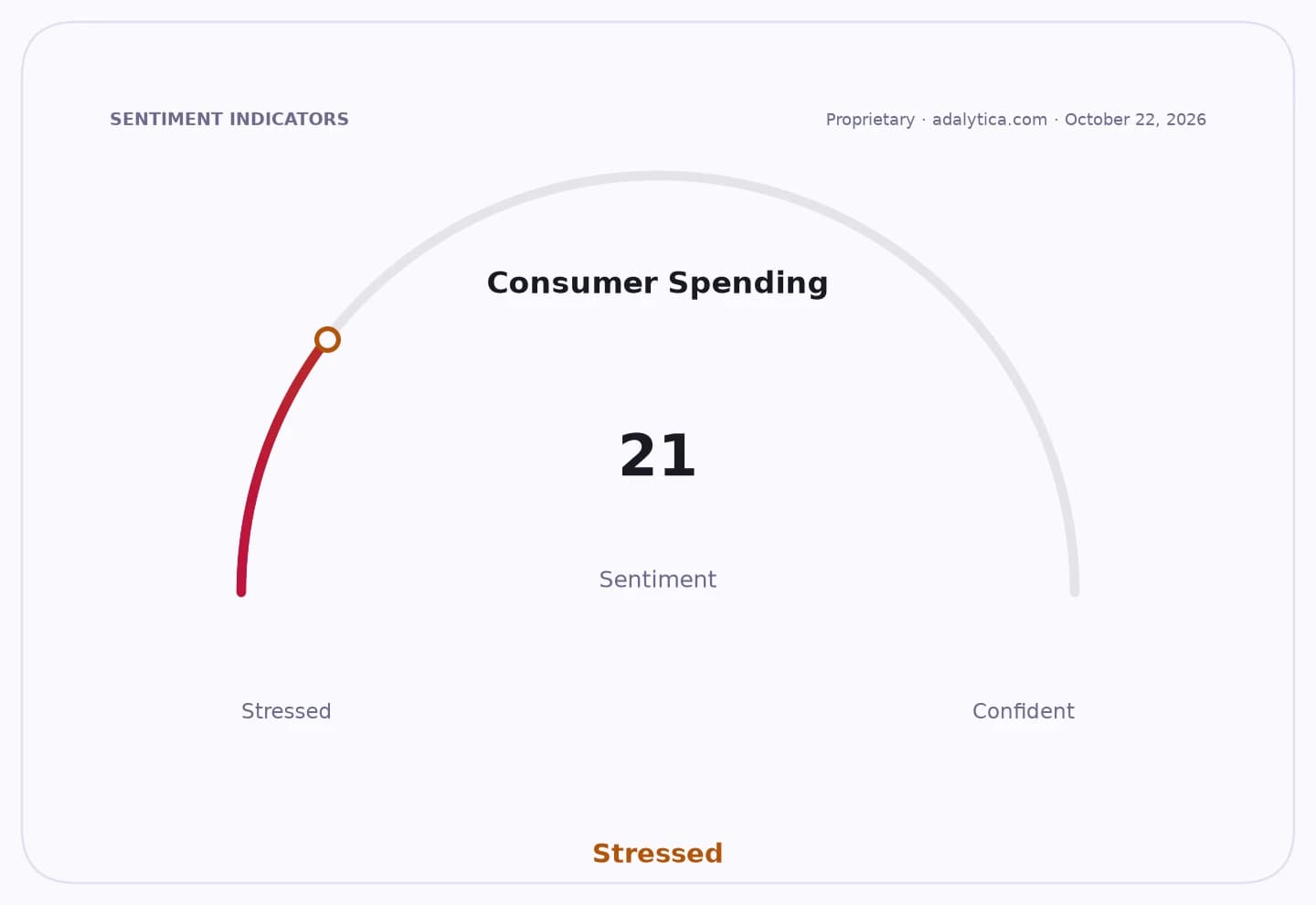
The rotation is showing up in shares of Walmart, Coca-Cola and Procter & Gamble, while sentiment gauges on consumer spending have weakened sharply. That mix suggests investors are positioning for a slower demand backdrop rather than a clean consumer rebound, with defensive brands and grocers seen as better placed than discretionary retailers if households pull back.
Sentiment IndicatorsⓘProprietary · adalytica.com · October 23, 2026
This is a snapshot — live sentiment, awareness and momentum for 130+ markets update continuously in the dashboard.Open AlphaPulse
Walmart has been the clearest beneficiary. The stock closed at $120.87 on Oct. 23, up from $117.80 two days earlier, and has climbed well above its 50-day moving average of $109.42. The move leaves the shares stretched — RSI readings are near 90, a level that typically signals an overbought market — but it also reflects confidence that grocery-led traffic and e-commerce can keep sales growing even as the consumer cools.
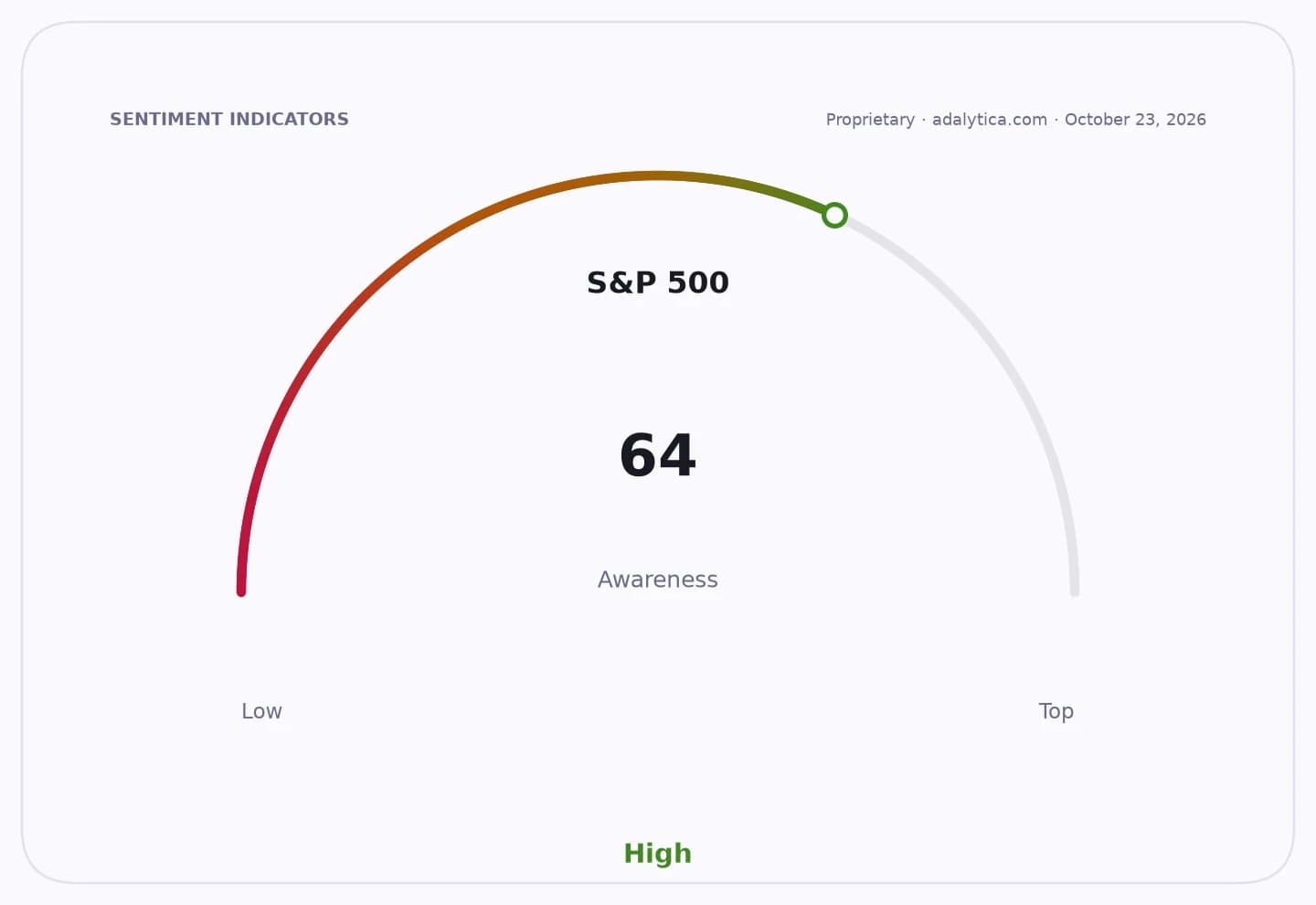
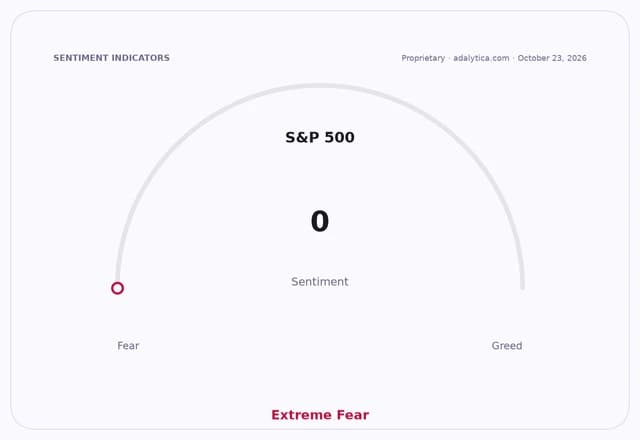
That matters because the defensive bid is not happening in a vacuum. Adalytica’s Consumer Spending Sentiment snapshot is in fear territory, with sentiment at 18 and awareness at an extreme-fear reading of 4. Broader S&P 500 trade signals also show extreme fear, even as awareness remains elevated. In practical terms, that means investors are not just buying safe stocks; they are paying up for earnings visibility.

Coca-Cola and Procter & Gamble are part of the same trade. Coca-Cola finished at $94.15 on Oct. 23, after touching $95.34 a day earlier, while Procter & Gamble closed at $163.12 following a sharp run to $165.59. Both stocks sit above their 50-day and 200-day moving averages, a sign that the market is rewarding steady volume, brand strength and the ability to pass through costs without seeing demand collapse.
The timing is important. News flow around weaker consumer spending has already hit more cyclical retail and discretionary names, with profit warnings elsewhere in the sector feeding concern that households are becoming more selective. That leaves staples and mass merchants as relative winners in a market that is increasingly pricing slower top-line growth, margin protection and balance-sheet resilience.
Microsoft’s inclusion in the broader analysis points to a second-order effect: as investors crowd into defensives, capital can still favor companies with durable cash generation and secular growth, even if they are not traditional staples. But the immediate narrative is a classic risk-off tilt — away from discretionary exposure and toward earnings that are less dependent on consumer confidence.
For investors, the key question is whether this becomes a short-lived refuge trade or a longer re-rating of defensive consumer names. If spending data continues to soften, staples could keep attracting inflows. If consumer weakness proves temporary, the overbought technical setup in some of these stocks could invite profit-taking.
| Entity | Gains | Losses |
|---|---|---|
| Walmart | ▲Defensive rotation; grocery traffic | ▼Valuation if momentum fades |
| Coca-Cola | ▲Stable demand, pricing power | ▼Volume upside if spending weakens |
| Procter & Gamble | ▲Cash-flow visibility | ▼Overbought positioning |
| Discretionary retailers | ▲— | ▼Slower consumer demand, earnings pressure |