Walmart’s push to monetize shopper data is tightening the privacy bargain at the heart of modern retail, even as the company uses that information to support advertising, digital commerce and higher-margin services.
Walmart Data Monetization and Privacy Risks
For investors, the issue matters because data-driven retailing can widen margins and strengthen customer retention — but it also raises regulatory, reputational and competitive risks at a time when consumer companies are leaning harder on first-party data to offset slowing traffic and price-sensitive shoppers.
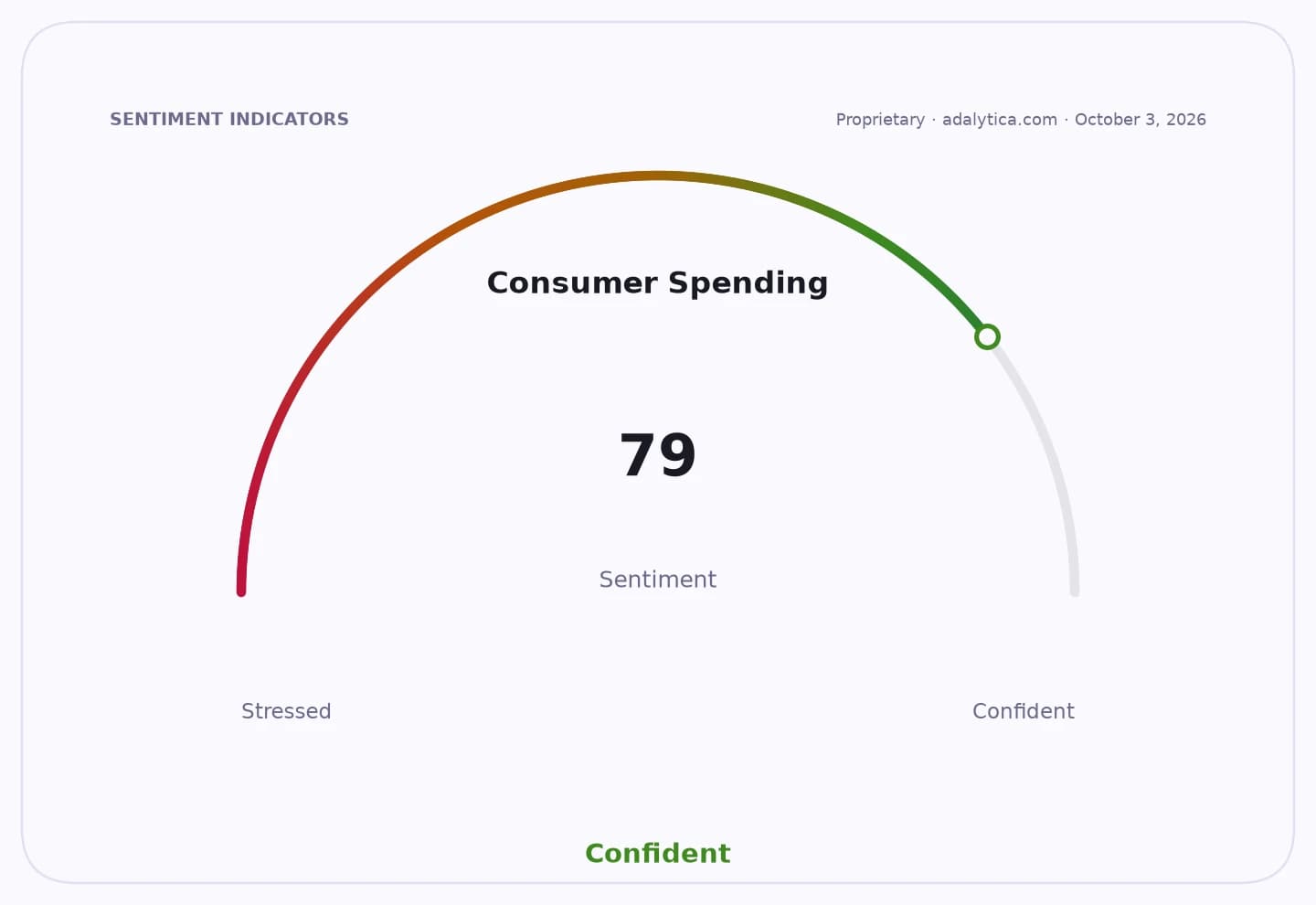
Sentiment IndicatorsⓘProprietary · adalytica.com · October 3, 2026
This is a snapshot — live sentiment, awareness and momentum for 130+ markets update continuously in the dashboard.Open AlphaPulse
Walmart is already benefiting from that shift. The stock has rebounded to about $104.26 as of Oct. 2 after swinging sharply earlier in the year, but it still trades below its 50-day moving average of roughly $108.74 and under its 200-day average near $117.88, suggesting the market has not fully priced in a sustained recovery.
The bigger narrative is that large retailers are turning shopping behavior into an asset. Walmart, like Costco and Kroger, is competing not just on groceries and general merchandise but on membership, fulfillment and retail media — businesses that depend on tracking what consumers buy, when they buy it and how they move across platforms.
That makes privacy a commercial trade-off rather than a side issue. The more precisely Walmart can target promotions and ads, the more valuable its customer data becomes. But the same data practices can invite scrutiny from regulators and force companies to balance personalization against customer trust.
Costco’s shares at about $920.65 and Kroger’s near $59.03 show the sector remains active, but Walmart’s scale gives it the clearest opportunity to profit from data-intensive retail while also carrying the most visible exposure if privacy expectations shift.
Adalytica’s Consumer Spending Sentiment gauge remains elevated at 79, with awareness at “Extreme Greed,” a backdrop that suggests shoppers are still spending but also paying close attention to value, promotions and where their data goes.
The next catalyst is whether Walmart’s digital and advertising businesses can keep expanding without triggering pushback from consumers or regulators, especially as retail chains race to convert loyalty programs and checkout flows into more profitable data ecosystems.
| Entity | Gains | Losses |
|---|---|---|
| Walmart | ▲higher-margin ad revenue | ▼privacy scrutiny |
| Shoppers | ▲personalized offers | ▼data sharing |
| Costco and Kroger | ▲sector data monetization playbook | ▼margin-comparison pressure |
| Regulators/privacy advocates | ▲compliance leverage | ▼slower retail data expansion |