Shoppers are getting a rare break on Thanksgiving groceries this year, but the lower bill looks more like a holiday promotion than a durable shift in food inflation.
Walmart, Kroger, Target Gain from Thanksgiving Grocery Deals
That matters because groceries are one of the clearest ways consumers feel inflation, and the latest price data suggest the respite may not last. US consumer prices have risen for three straight months, with the CPI now at 337.476 in October versus a forecast 338.6475 for November, underscoring that disinflation is still fragile even as supermarkets roll out eye-catching holiday discounts.
Sentiment Indicators
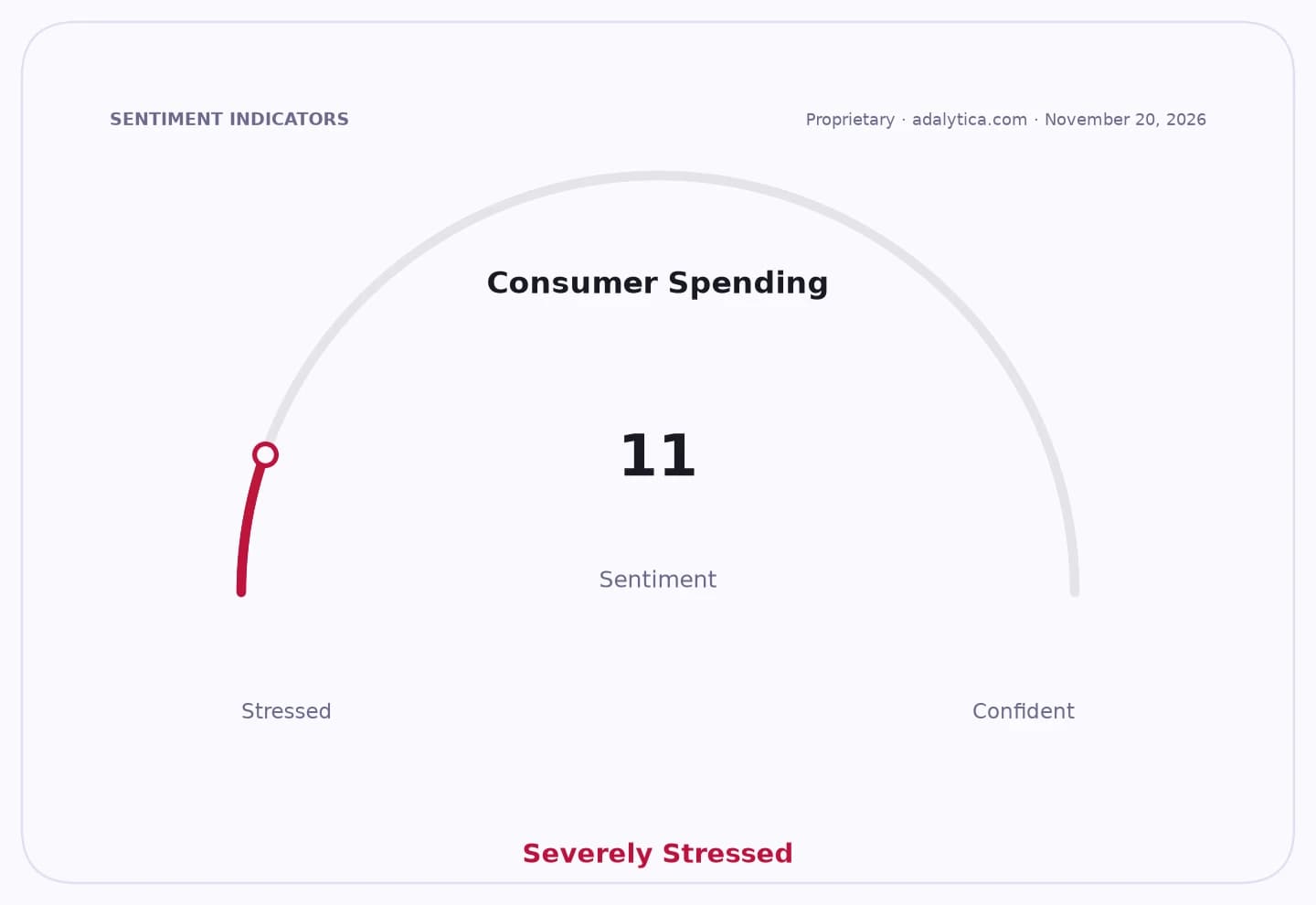
The narrative investors should focus on is simple: grocers are using Thanksgiving as a traffic-building event, not a sign that their input costs have structurally improved. The consumer is still under pressure. Adalytica’s Consumer Spending Sentiment sits in fear territory at 18, while its Food and Grocery Spending Sentiment, though neutral at 54, fell 43 points over the past month. That mix points to a household that is still bargain-hunting, even if headline basket prices look friendlier for one week in November.
That’s exactly why the deals matter economically. Grocers are trying to defend volumes in a cautious spending environment by leaning on loss leaders, private label and sharp promotional pricing. The winners are the retailers with scale and the suppliers that can absorb volume-driven pricing pressure; the losers are brands and smaller chains that cannot match the discounts without sacrificing margin. Walmart, Kroger and Target all look positioned to capture traffic if they keep pricing tight enough to pull in value shoppers, while independent grocers face a tougher squeeze.
Food & Groceries vs WMTadalytica.com
Explore this data interactively — full history, time series and cross-market comparisons.
Food & Groceries
The stock tape shows investors are already betting on that battleground. Walmart has climbed back above its 200-day moving average and closed at 127.95 on Nov. 20, with the shares extending well above their 50-day average and RSI readings still elevated, a sign the market sees it as a defensive winner. Kroger has also recovered strongly from midsummer weakness, rising back to 68.44, while Target’s sharp rebound to 165.83 suggests investors are rewarding any retailer that can prove it has regained pricing power and traffic momentum.
But this is not a clean read-through to permanently lower food inflation. The real economic backdrop is still sticky. The Federal Reserve’s balance sheet remains far larger than pre-pandemic levels, and the broader cost environment has not reset to old norms. If CPI keeps grinding higher, grocers will eventually have less room to use promotions as a shield, and consumers will be asked to absorb the difference elsewhere in the basket.
For investors, the opportunity is in the second-order effect. Thanksgiving deals are not the trade. The trade is which retailers can turn temporary price cuts into share gains without giving back margin, and which packaged-food names get squeezed as promotional intensity intensifies. That favors scale operators with efficient distribution and strong private-label penetration, not the weakest grocers or the most expensive brands.
| Entity | Gains | Losses |
|---|---|---|
| Walmart | ▲Traffic from value shoppers | ▼Margin pressure from promotions |
| Kroger | ▲Basket share and loyalty | ▼Smaller room to raise prices |
| Target | ▲Food traffic and defensive positioning | ▼Profit if discounting deepens |
| Brand suppliers | ▲Volume if promotions work | ▼Pricing power and margins |