Walmart is moving restaurant delivery into its stores, starting June 5 with Subway, in a bid to make its supercenters a one-stop fulfillment hub and grab a bigger share of the growing meal-delivery market.
Walmart Adds Subway Restaurant Delivery in Stores
The rollout matters because it turns Walmart’s store footprint into a new revenue stream without requiring a traditional restaurant buildout. By letting shoppers order prepared food from inside stores, Walmart can increase order frequency, lift basket sizes and keep customers inside its ecosystem longer, which is especially valuable as retailers hunt for incremental growth in a fragile consumer environment.
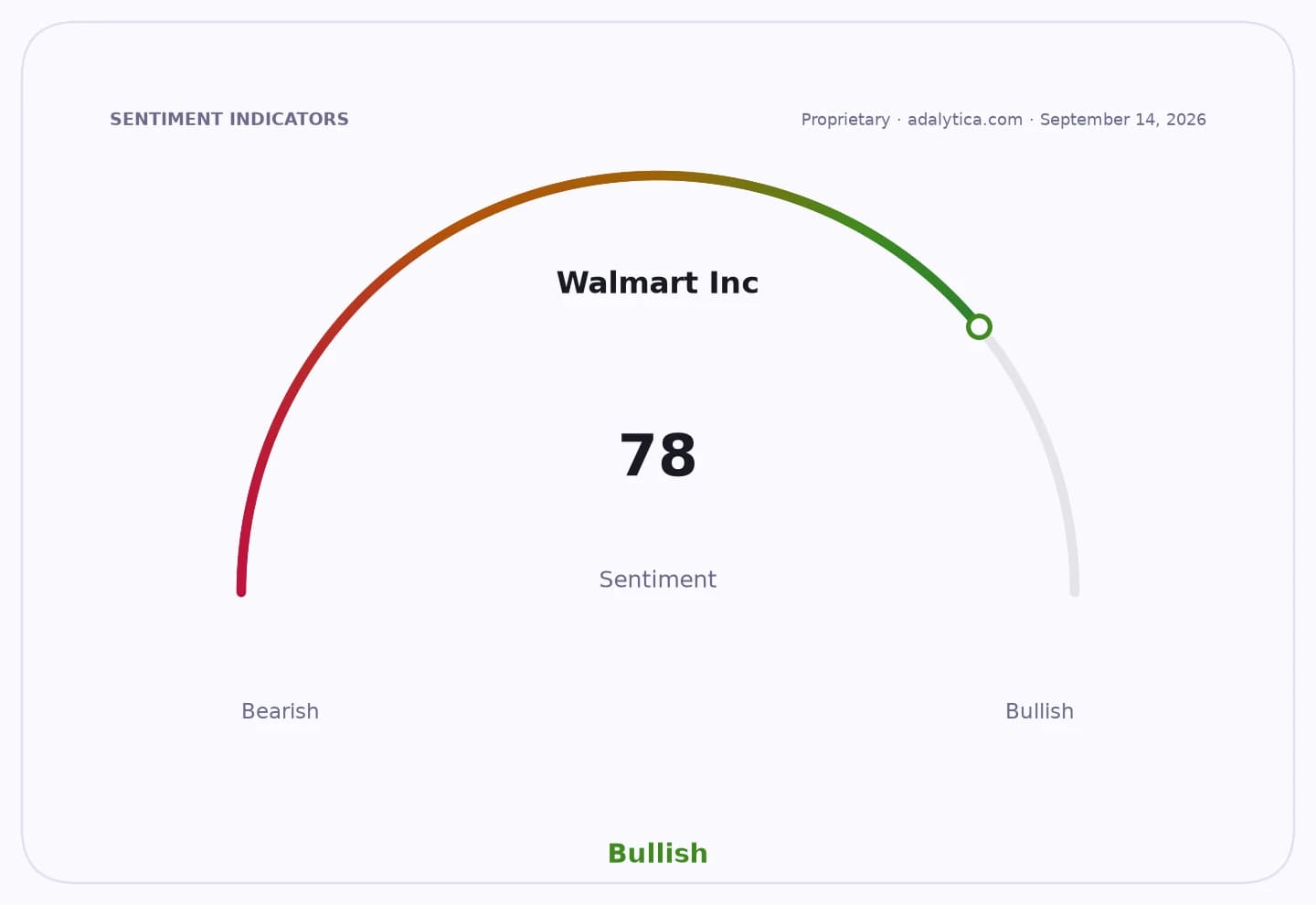
Sentiment IndicatorsⓘProprietary · adalytica.com · August 23, 2026
This is a snapshot — live sentiment, awareness and momentum for 130+ markets update continuously in the dashboard.Open AlphaPulse
The move also broadens Walmart’s competition with food-delivery players and quick-service chains by combining grocery, general merchandise and restaurant meals under one roof. That gives Walmart a logistics advantage: it already has the inventory, traffic and last-mile network, while Subway gets access to Walmart’s scale and store traffic.
Walmart shares have been volatile even as the stock has traded near key technical levels, with recent price action showing the stock slipping below its 200-day moving average and momentum cooling after a sharp summer run. The latest Adalytica.com Walmart Earnings Sentiment snapshot shows neutral sentiment at 36, although awareness remains at an “Extreme Greed” reading, suggesting the announcement is likely to keep investors focused on whether newer services can sustain traffic and margins.
For investors, the key question is whether restaurant delivery can add profitable convenience or simply add complexity to an already margin-sensitive operation. The first test will be how quickly Walmart expands beyond Subway and whether customers adopt in-store delivery often enough to move the needle on sales.
As Walmart scales the program, traders will watch for signs that the initiative boosts transaction growth, partnerships and digital engagement without pressuring operating costs. The next catalyst is whether the company extends the model to more chains and more stores, turning grocery run-and-gab delivery into a broader retail offering.
| Entity | Gains | Losses |
|---|---|---|
| Walmart | ▲More traffic and order frequency | ▼Added operational complexity |
| Subway | ▲Access to Walmart shoppers | ▼Greater dependence on one retailer |
| Restaurant delivery rivals | ▲None | ▼New competition from Walmart |
| Investors | ▲New growth lever to monitor | ▼Margin and execution risk |