Missouri families are heading into the school year with budgets already stretched by still-elevated prices for everyday goods, a pressure point that has turned back-to-school shopping into a bigger test of household finances than in past years.
Walmart, Target, XLY Face Budget Pressure in Back-to-School
The strain matters because school supplies, clothing and technology purchases arrive just as consumers are already absorbing higher costs for food, rent and other essentials. Even if inflation has cooled from its peak, price levels remain high enough that a seasonal shopping trip is now competing with monthly bills, leaving many parents forced to trade down, delay purchases or lean on credit.
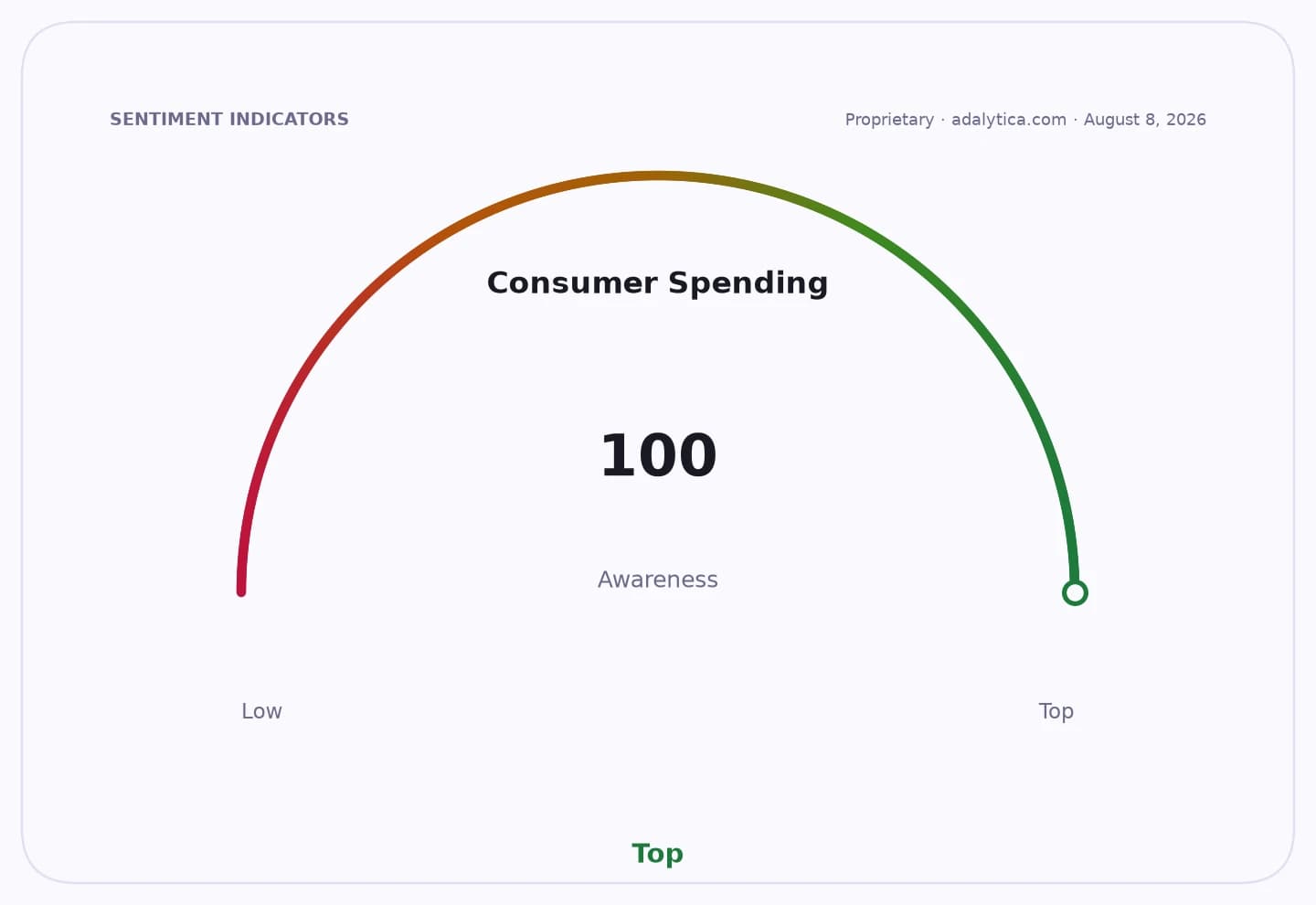
Sentiment IndicatorsⓘProprietary · adalytica.com · August 8, 2026
This is a snapshot — live sentiment, awareness and momentum for 130+ markets update continuously in the dashboard.Open AlphaPulse
That dynamic fits the broader picture in consumer data. U.S. consumer sentiment, tracked by the University of Michigan, fell to 49.5 in June from 49.8 in April and remains far below historical norms, underscoring persistent caution among households. Core consumer prices, excluding food and energy, were still running at 336.065 in June on the CPILFESL index, up from 335.423 in April, evidence that underlying price pressures have not disappeared. Retail sales excluding food services, measured by RSXFS, reached 666,056 in June and are forecast to rise to 674,837.9 in July, suggesting spending is holding up in nominal terms even as real purchasing power remains under strain.
For investors, the story is less about one state and more about what Missouri can reveal about the lower- and middle-income consumer nationwide. Broad discretionary spending may remain resilient in dollar terms, but the mix matters: families under pressure tend to favor discount chains, private-label goods and promotions over premium discretionary items. That helps explain why shares of Walmart have outperformed: the stock closed at $111.85 on Aug. 7, above its 200-day moving average of $117.79? Actually still below that level, but the recent advance has reflected the company’s ability to capture budget-conscious shoppers. Target, by contrast, has rallied sharply too, with its shares at $149.70 on Aug. 7 and well above its 200-day moving average of $114.58, but it remains more exposed to the middle-income consumer’s willingness to spend on nonessentials.
RSXFS vs UMCSENT — macro contextadalytica.com
Explore this data interactively — full history, time series and cross-market comparisons.Open AlphaPulse
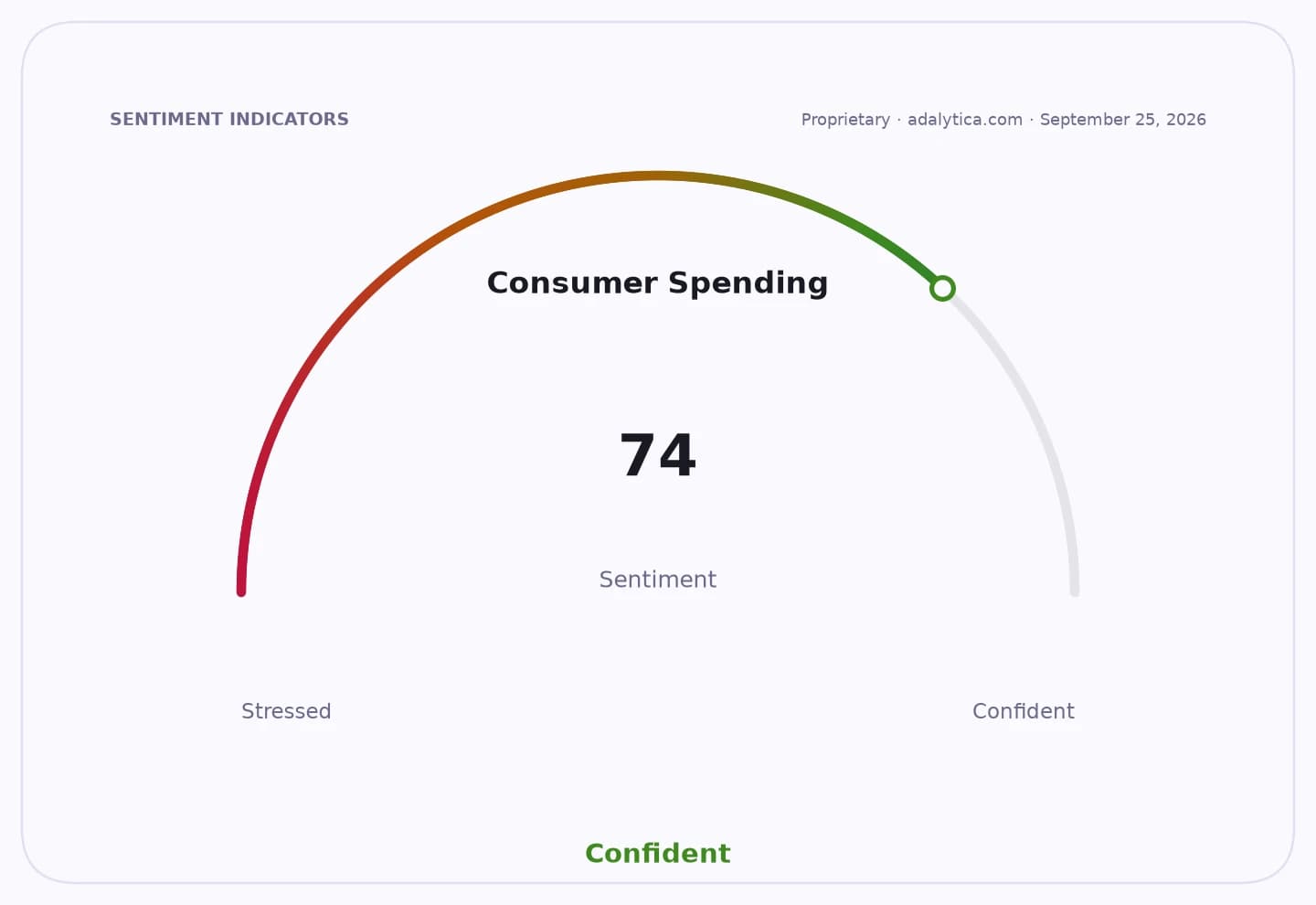
The technical picture also suggests investors are watching the consumer space closely rather than fleeing it. The Consumer Discretionary Select Sector SPDR Fund, XLY, closed at $119.86 on Aug. 7, above both its 50-day moving average of $115.94 and its 200-day average of $116.75, while its RSI reading of 62.9 points to improving momentum. That resilience has been supported by a broader market mood that remains, in Adalytica’s terms, in “Extreme Greed,” with consumer spending sentiment also at “Extreme Greed.” But sentiment can mask stress at the household level, especially when seasonal necessities crowd out optional purchases.
The bull case for retailers is that consumers are still spending and back-to-school demand can lift sales volumes even in a squeezed environment, particularly for chains with value assortments and broad traffic. The bear case is that nominal spending masks unit weakness, meaning households buy fewer items, trade down to cheaper products or use promotions more aggressively, pressuring margins.
What matters next is whether the back-to-school season turns into a one-off budgeting squeeze or a more durable sign that households are nearing the limit of their pricing tolerance. If families begin cutting back more broadly after the school season, that would strengthen the case for a softer consumer backdrop into the fall, with implications for discretionary retailers, credit usage and the pace of consumer-led growth.
| Entity | Gains | Losses |
|---|---|---|
| Walmart | ▲Budget-conscious traffic | ▼Premium mix sales |
| Target | ▲Back-to-school demand | ▼Margin flexibility |
| Missouri families | ▲Access to necessities | ▼Household savings |
| Discretionary retailers | ▲Seasonal volume | ▼Trade-down pressure |