Walmart’s surge to a $1 trillion market value has turned into one of the year’s biggest wealth-creation events, adding about $100 billion to the Walton family’s fortune and underscoring how the defensive retailer has become a rare winner in a market dominated by AI stocks.
Walmart tops $1 trillion as shares rally
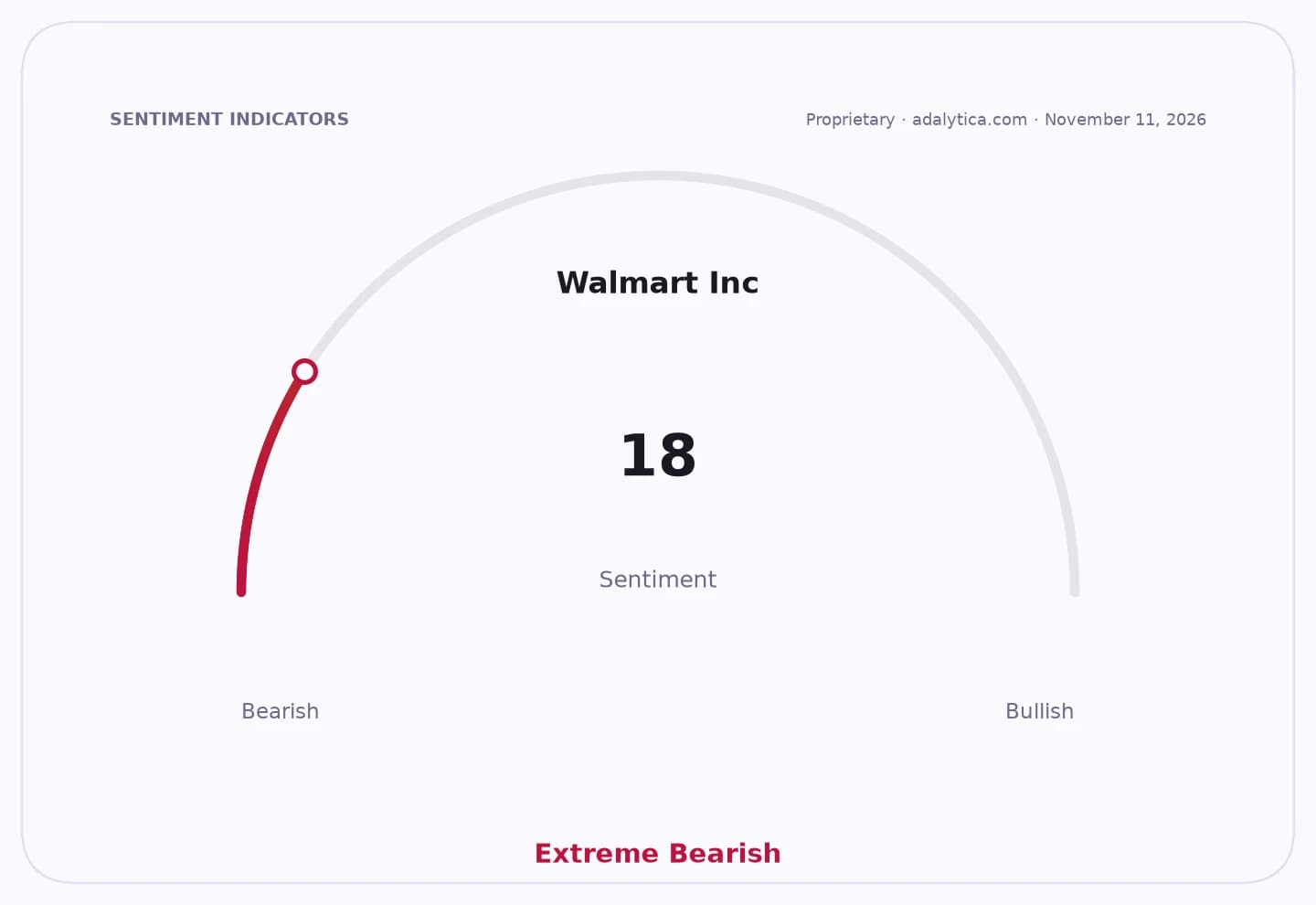
Walmart Inc
That matters because Walmart’s gains are not just a story about inherited wealth. They reflect a business that is still expanding faster than the broader U.S. market, continuing to gain share with inflation-sensitive shoppers and proving resilient even as investors rotate away from some of the year’s most crowded technology trades.
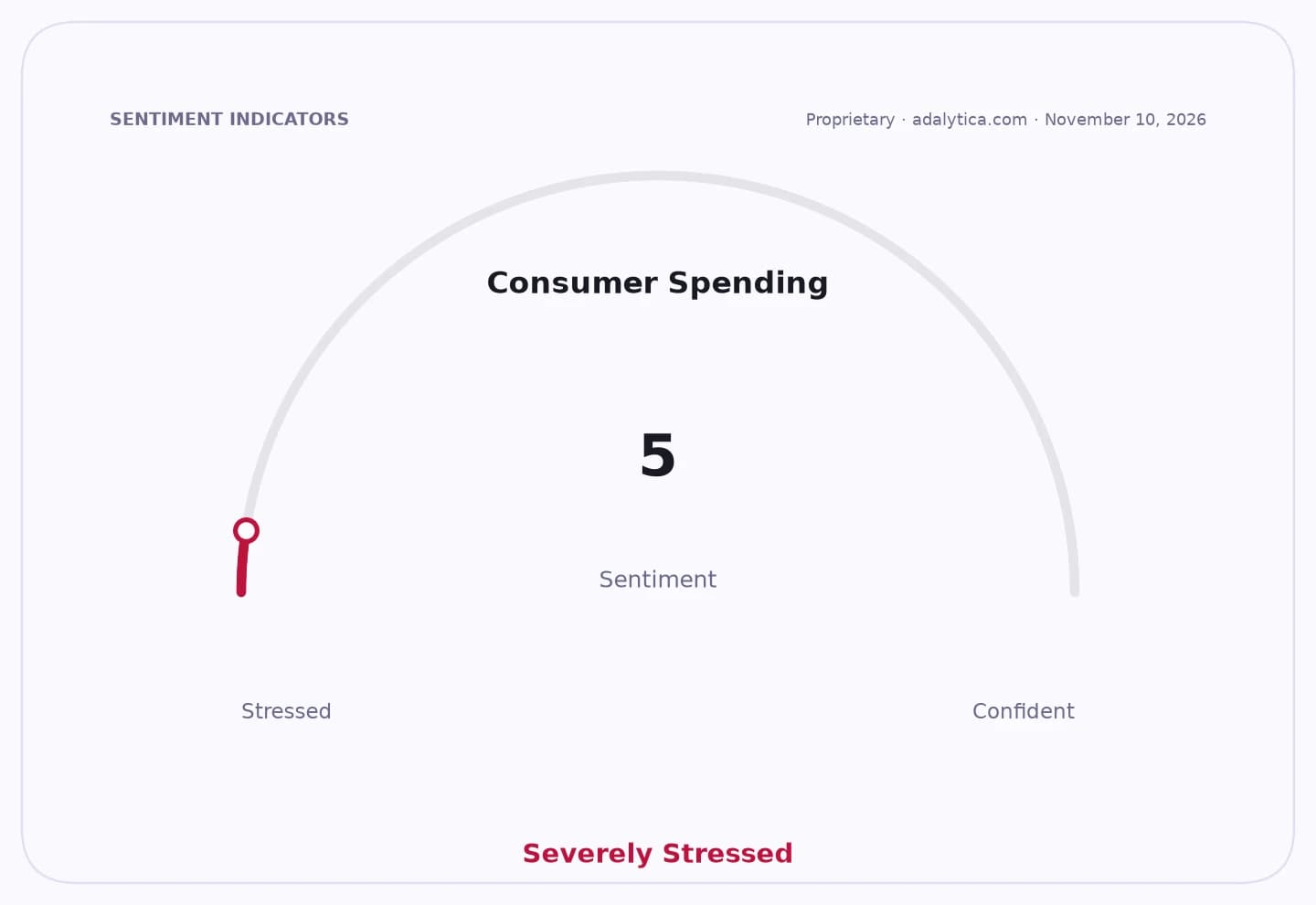
Sentiment Indicators
The Walton heirs — five of Sam Walton’s children and grandchildren — have seen their combined net worth jump by roughly $100 billion in 2026, according to Bloomberg’s tally cited in the report. Alice, Jim and Rob Walton each added about $28 billion, lifting their fortunes to around $155 billion apiece. The wealth increase is almost a mirror image of the roughly $100 billion drop in Larry Ellison’s fortune over the same period, highlighting how concentrated stock ownership can swing family fortunes even when they are not running the company.
For investors, the more important point is that Walmart is outperforming because the operating story remains intact. The stock is up nearly 13% this year, roughly in line with the S&P 500 but with a very different driver: the company has avoided the sharp valuation compression hitting some AI-linked names and kept climbing on steady earnings execution. Walmart’s market capitalization now stands at about $1.01 trillion, a symbolic threshold that places the retailer in a small club of U.S. companies worth trillions.
The latest quarter showed why the market continues to reward the company. Revenue rose 5.9% to $187.9 billion and operating income increased 2.9% to $9.4 billion. Management said customers are choosing Walmart for “price, speed, and convenience,” a combination that has helped drive multi-year e-commerce growth across its stores, clubs and delivery network. The company’s scale remains a key moat: 2.1 million workers globally, 4,600 Walmart stores and 600 Sam’s Club locations in the U.S., and a footprint that reaches 90% of Americans within 10 miles of a store or club.
The rally also comes against a more technical backdrop that suggests momentum is still strong, though stretched. Walmart’s shares have traded above their 50-day and 200-day moving averages, while the relative strength index recently moved into overbought territory before easing, a sign that the stock has attracted sustained buying interest but may be vulnerable to consolidation if earnings fail to reaccelerate. By contrast, the broader market’s own technical posture has been more mixed, even as its sentiment readings remain elevated.
That makes Walmart’s position especially notable in the current market. It has become both a defensive consumer staple and a growth compounder, benefiting from trade-down behavior, omnichannel expansion and the durability of grocery demand. The company’s expanding delivery network, including a multi-year agreement to add 300 drone delivery sites, adds another layer of optionality, even if the near-term economic contribution remains modest.
The risk for investors is that a stock trading at a trillion-dollar valuation must keep delivering: margin discipline, traffic growth and continued e-commerce share gains. A consumer slowdown, higher wage costs or slower margin expansion would likely test the premium. For now, though, the message from the market is clear: Walmart’s scale and consistency are still being rewarded, and the Walton family’s paper windfall is the clearest expression of that confidence.
| Entity | Gains | Losses |
|---|---|---|
| Walton family | ▲$100 billion wealth gain | ▼No direct control premium |
| Walmart shareholders | ▲Market-cap expansion | ▼Higher valuation risk |
| Defensive retailers | ▲Share gains from cautious consumers | ▼AI-heavy growth stocks |
| Short sellers | ▲— | ▼Momentum in WMT shares |