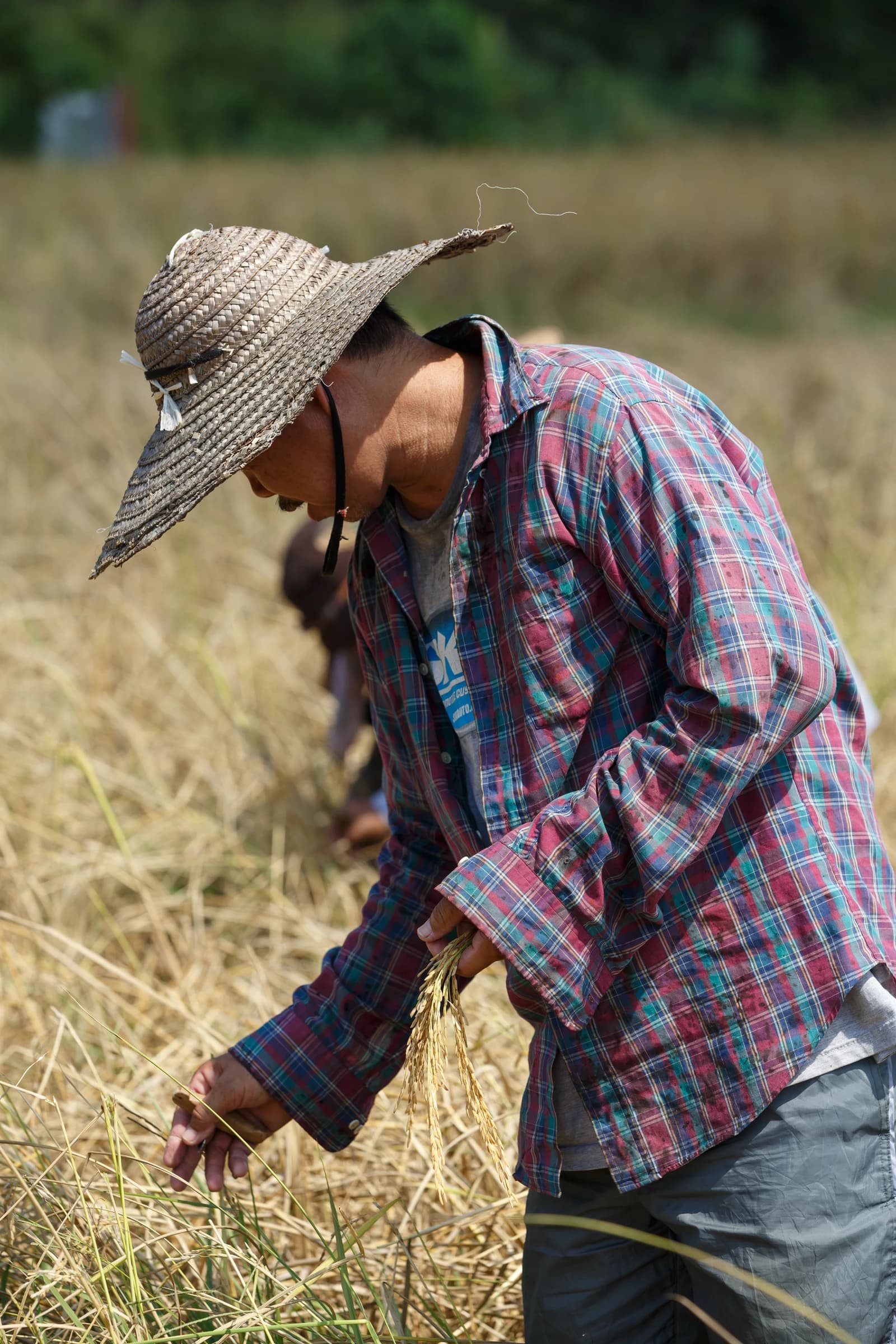
Western Agriculture’s discussion of turning rice straw from crop residue into economic value points to a broader push to turn agricultural waste into feedstock, a shift that could create new revenue streams for farmers and new demand for equipment, logistics and bio-based processing.
Western Agriculture rice straw value gains
The economic significance is in the supply chain, not the straw itself. If residues that were once burned, baled or left in the field become inputs for fuel, fiber or industrial materials, the result is more monetizable acreage, less waste disposal and potentially stronger margins for companies tied to crop handling and downstream processing.
That matters to investors because it links a niche sustainability story to real industrial demand. Deere and AGCO are already trading well above their longer-term trend lines, with Deere at $680.73 and AGCO at $127.31 in recent trading, reflecting momentum that can be reinforced if residue collection adds another layer of farm machinery demand. ADM, at $84.50, stands to benefit if agricultural byproducts increasingly feed renewable fuel and bio-processing chains.
The setup also fits a sector-wide search for higher-value uses of biomass as crop economics stay under pressure. For farmers, rice straw can become an incremental cash source; for processors, it can broaden access to lower-cost feedstock; and for equipment makers, it can support sales of balers, tillage tools and handling systems needed to move crop residue out of the field and into commercial use.
Technical readings on Deere and AGCO show both names near elevated levels, with Deere’s RSI at 72.6 and AGCO’s at 82.7, suggesting their shares have already priced in a fair amount of optimism. ADM’s RSI at 57.7 is less stretched, leaving more room for a rerating if biomass-linked demand becomes more visible in earnings or guidance.
The key question now is whether Western Agriculture’s rice-straw initiative stays a pilot-scale sustainability project or becomes part of a broader commercialization trend across rice-growing regions. Any evidence of contracts, processing partnerships or policy support would likely determine whether investors treat it as a one-off or an emerging revenue line for the farm-input and bioeconomy complex.
| Entity | Gains | Losses |
|---|---|---|
| Farmers | ▲New straw revenue | ▼Disposal costs |
| Deere, AGCO | ▲More residue-handling demand | ▼Limited if adoption stalls |
| ADM, processors | ▲Low-cost biomass feedstock | ▼Higher input uncertainty |
| Open-field burning | ▲Reduced use | ▼Loss of cheap waste removal |