Wheat futures rose as much as 3-7 cents while corn and soybeans slipped on Wednesday, with traders again pricing the risk that Russia’s intensified attacks on shipping near Ukraine’s Black Sea grain corridor could crimp exports and keep global food markets volatile.
Wheat futures rise on Black Sea shipping risk

The move matters because wheat is the grain most directly exposed to disruption around the Black Sea, the world’s most important export corridor for the crop. Fresh damage and higher shipping risk around Odesa and nearby routes raise the odds that buyers will have to source more wheat from the US, Europe or Australia, which can lift benchmark prices even if corn and soybeans remain under pressure from broader macro forces.

That divergence also reflects how investors are balancing geopolitics against softer tone elsewhere in the grains complex. Chicago corn and soybean futures were weaker as traders digested lower oil prices tied to improving sentiment around Iran, a development that can spill into the biofuels complex and ease support for crop prices. Wheat, by contrast, is being driven more by supply security than by energy-linked demand.
The technical backdrop shows wheat still trading above its 50-day and 200-day moving averages, suggesting the uptrend remains intact despite recent volatility. The contract’s relative strength index has cooled to around 40, down sharply from overbought readings earlier this year, which leaves room for further gains if export disruption worsens. Corn and soybeans are also off recent highs, with soybeans retreating after a sharp run-up, while corn remains range-bound.
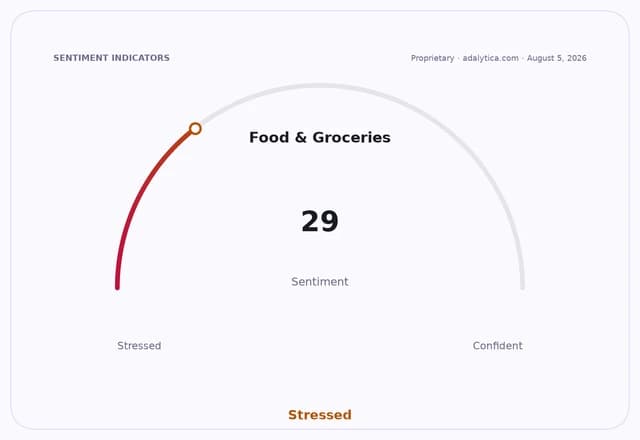
For food markets, the bigger issue is that the disruption comes on top of weather-related stress in other growing regions, leaving less cushion in global inventories. That keeps importers, millers and governments focused on securing nearby supplies and hedging price risk, especially as the Adalytica Food and Grocery Spending Sentiment gauge has weakened sharply, indicating consumers are already more sensitive to food inflation.
For investors, the near-term takeaway is that wheat has the clearest geopolitical premium in the grain complex, while corn and soybeans remain more exposed to demand and energy-linked sentiment. If attacks on Black Sea infrastructure continue, wheat could outperform its row-crop peers; if tensions ease and oil prices stay soft, the gap may narrow again.
| Entity | Gains | Losses |
|---|---|---|
| Wheat bulls | ▲Higher risk premium | ▼Buyers facing dearer imports |
| Black Sea exporters | ▲None | ▼Disrupted shipments and costs |
| Corn and soybean bears | ▲Softer prices | ▼Farmers and longs |
| Food importers | ▲Potential sourcing alternatives | ▼Inflation and margin pressure |