International wheat prices are likely to firm after August as damage to Black Sea export routes, patchy harvests and stronger import demand keep the market short of comfortable supplies.
Wheat ETF at $23.81 as Black Sea risks linger

The case for a rebound matters because wheat is still one of the most geopolitically sensitive food commodities, with prices feeding directly into flour, bread and broader food inflation in importing economies. After a volatile run-up this year, the market has not yet seen a clean easing in the fundamental pressures that pushed prices higher: attacks on key ports have disrupted shipments from a major exporting corridor, while crop revisions and uneven yields have left global supply less ample than traders had hoped.
Sentiment IndicatorsⓘProprietary · adalytica.com · August 2, 2026
This is a snapshot — live sentiment, awareness and momentum for 130+ markets update continuously in the dashboard.Open AlphaPulse

That backdrop is already visible in the futures market. The WEAT wheat ETF has been trading in a wide range, closing at $23.81 on July 31 after touching $26.00 on July 22, with its 50-day moving average at $23.49 and 200-day average at $22.14. RSI readings cooled from an overbought 85.9 to 51.4 in the space of nine sessions, suggesting some of the speculative heat has come out of the move, but the longer-term trend remains constructive above both major moving averages. In London, WEAT.L ended July at 20.58, also above its 50-day and 200-day averages, reinforcing the view that the pullback has so far looked more like consolidation than a trend break.
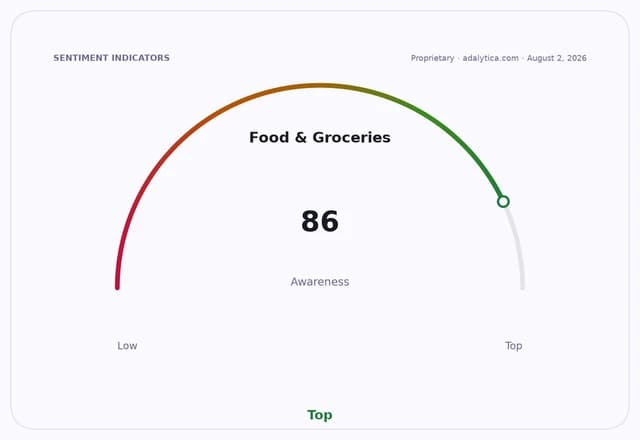
The fundamental signal is equally mixed for consumers. Adalytica’s Food and Grocery Spending sentiment was neutral at 50 on Aug. 1, but awareness remained at an elevated 86, indicating that households and markets are still highly attentive to food-price pressures. CPI sentiment also improved to 46 from 22 a day earlier, showing inflation concerns are still active even if no longer at panic levels. For import-dependent countries, that matters: a firmer wheat market after August would likely feed back into domestic food inflation and government subsidy bills just as policymakers are trying to keep price growth contained.
A recovery would also fit the broader commodity picture. U.S. crude has swung sharply, and the June forecast for the producer price index for all commodities implied a renewed move higher into July, which tends to reinforce the inflationary channel from transport and input costs to food. For wheat specifically, freight, war risk and logistics constraints remain part of the pricing equation, not just farm output. That means even a decent harvest in one region may not fully offset supply anxiety if export corridors remain vulnerable.
The bull case is that the market has already priced in a chunk of the near-term supply shock, leaving room for a rebound if Black Sea risks persist and importers keep stepping in. The bear case is that better-than-feared harvests, lower freight costs or a ceasefire-like improvement in shipping conditions could ease the squeeze faster than expected and cap prices. For now, the balance of evidence points to persistent volatility rather than a durable break lower.
Investors should watch whether the post-August period brings a second leg higher in wheat futures and whether ETF flows begin to confirm it. If the Black Sea situation stays unstable and global buyers continue to lock in supplies, wheat could extend its recovery; if not, the recent rally may prove to be another short-lived weather-and-war spike in a market that remains highly reactive to headlines.
| Entity | Gains | Losses |
|---|---|---|
| Wheat producers | ▲Higher farmgate prices | ▼Input-cost pressure |
| Exporters with access to safe routes | ▲Stronger pricing power | ▼Shipping and war-risk costs |
| Importing governments | ▲No major gain | ▼Higher subsidy and inflation bills |
| Consumers and food processors | ▲— | ▼More expensive flour and staples |