CBOT wheat fell on Tuesday as traders booked profits after a recent run-up, but the pullback did little to erase concerns that disruption around the Sea of Azov could still tighten Black Sea supply and keep the market volatile.
Wheat Pulls Back as Sea of Azov Risk Persists

The most important development is not the modest decline itself, but the way it is unfolding: wheat is backing off from elevated levels while staying sensitive to geopolitical risk in one of the world’s most important export corridors. That combination matters because Black Sea grain remains the marginal price-setter for global wheat, and any interruption to Russian and regional flows can quickly filter into futures, import costs and food inflation expectations.
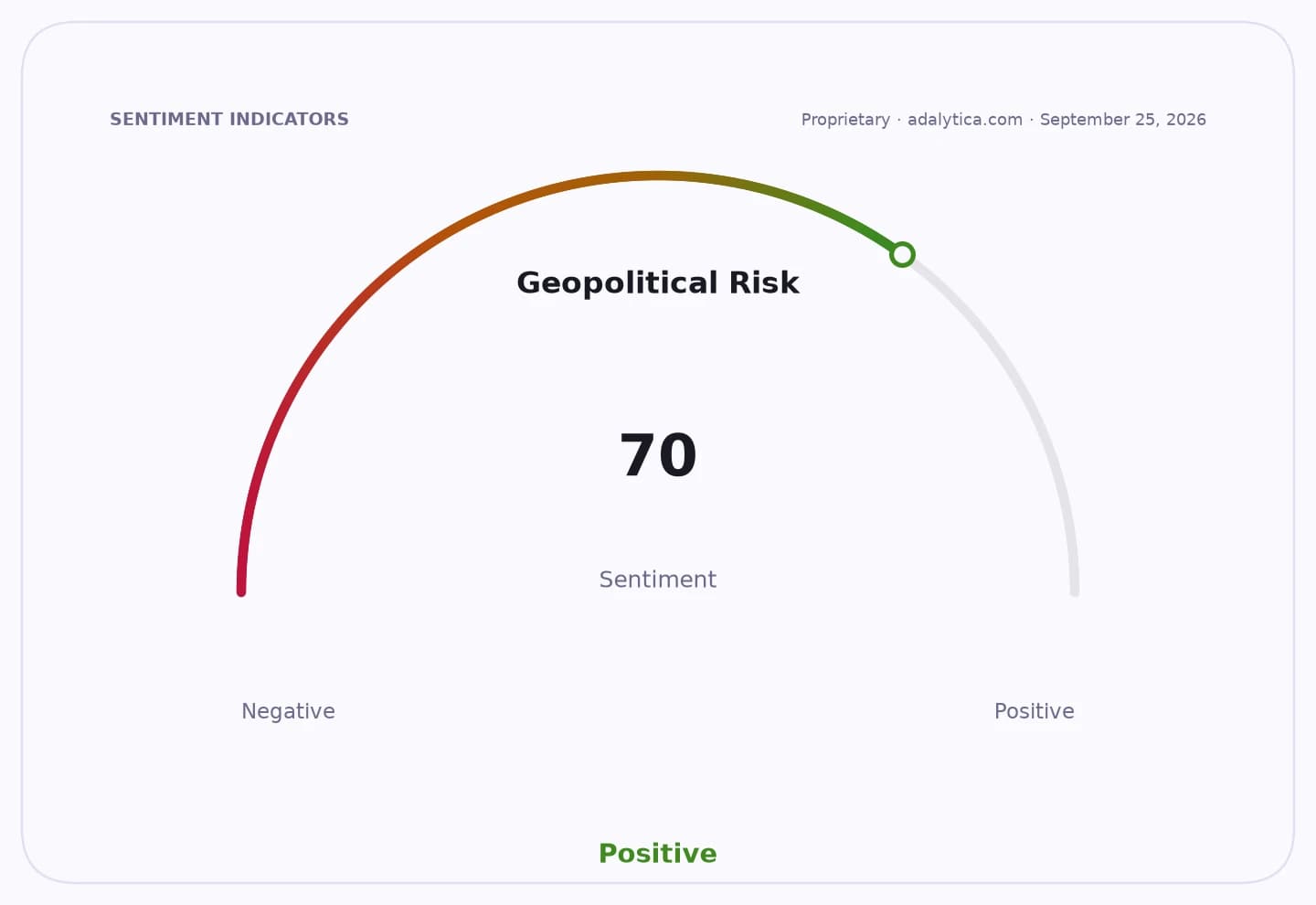
Sentiment IndicatorsⓘProprietary · adalytica.com · July 13, 2026
This is a snapshot — live sentiment, awareness and momentum for 130+ markets update continuously in the dashboard.Open AlphaPulse
Chicago soft red winter wheat on the CBOT settled lower after traders sold into strength, with the contract’s latest move looking more like a technical correction than a change in the underlying supply picture. The market had already advanced sharply earlier in the period, and the 50-day moving average now sits well below current prices, underscoring how extended the rally had become. Relative strength readings remain firm rather than exhausted, while the latest bounce in prices pushed wheat back toward the upper end of its recent Bollinger Band range, a sign that the market had become vulnerable to consolidation.
The Sea of Azov is central to the bullish counterargument. The waterway, which connects to the Black Sea and serves as a key outlet for Russian grain, has become a recurring flashpoint for shipping risk, insurance costs and logistics uncertainty. Even when vessels continue moving, the prospect of delays or tighter enforcement can support nearby wheat prices because exporters, importers and merchandisers must price in disruption risk ahead of actual supply losses.
US Dollar vs ZW=Fadalytica.com
Explore this data interactively — full history, time series and cross-market comparisons.Open AlphaPulse
That is why the decline in futures matters less as a directional signal than as a reminder of how dependent the market remains on headlines from the region. A genuine easing in shipping tensions or a faster-than-expected flow of Russian and regional wheat would likely pressure prices further. But if conditions worsen around the Sea of Azov, the selloff could prove temporary, especially with global importers still active and food agencies continuing to manage tender and procurement needs.
Broader grain markets are sending a mixed message. Corn has also retreated from earlier highs, while wheat-related ETF positioning has shown investors willing to add exposure when supply threats intensify and trim it when the market appears stretched. The dollar’s recent weakness has provided some support to dollar-denominated commodities, but the main driver for wheat remains physical supply expectations rather than macro alone. For import-dependent countries, that keeps a higher floor under procurement costs even when futures pause.
For investors, the key question is whether the latest pullback reflects the start of a broader unwind or merely profit-taking within a still-firm uptrend. The answer will hinge on Black Sea shipping conditions, any fresh export disruptions and whether buyers step back in on dips. If the Sea of Azov risk premium persists, the market may struggle to extend the correction for long. If not, the recent rally could unwind more quickly as speculative length is reduced.
| Entity | Gains | Losses |
|---|---|---|
| Wheat consumers/importers | ▲Lower near-term prices | ▼Higher supply-risk premium |
| Black Sea exporters | ▲Continued export access | ▼Shipping disruption risk |
| Futures longs | ▲Volatility opportunities | ▼Profit-taking pressure |
| Import-dependent governments | ▲Easier hedging windows | ▼Inflation pass-through if risk rises |