Wheat is the clearest market telling investors that geopolitical risk is once again feeding straight into inflation, even as China’s economy shows fresh signs of softening and Asian risk assets come under pressure.
Wheat rises as Russia-Ukraine risk lifts food prices
Missile and drone strikes linked to the Russia-Ukraine war have jolted global grain trading at a time when Chicago and European wheat prices were already vulnerable to competing supply headlines. The immediate market effect is higher food-price volatility, and that matters because food inflation remains one of the fastest ways conflict reaches consumers, central banks and corporate margins. For investors, the message is less about one crop and more about the return of a broad commodity-risk premium that can ripple through shipping, fertilizers, agribusinesses and emerging-market importers.
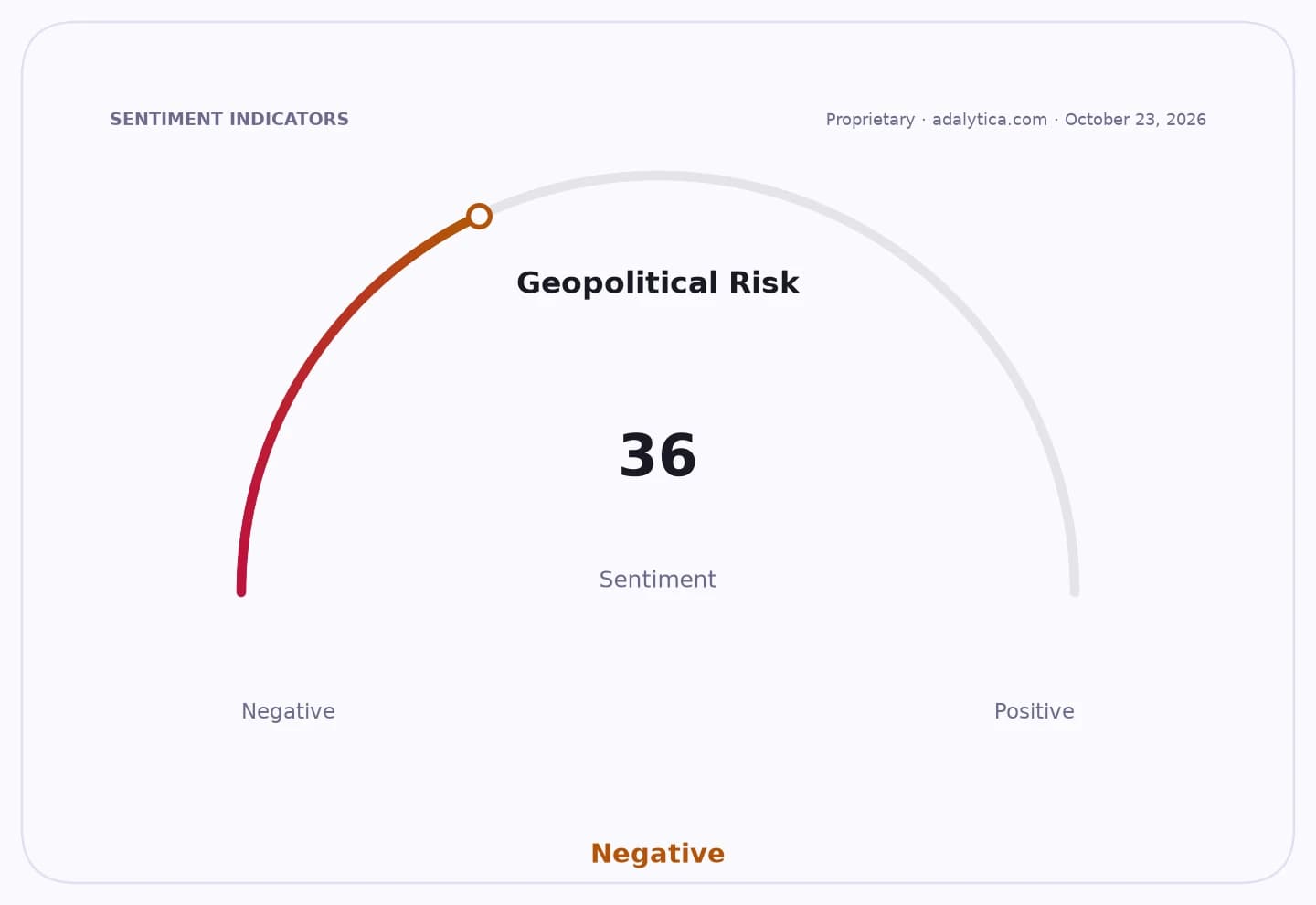
Sentiment IndicatorsⓘProprietary · adalytica.com · October 23, 2026
This is a snapshot — live sentiment, awareness and momentum for 130+ markets update continuously in the dashboard.Open AlphaPulse
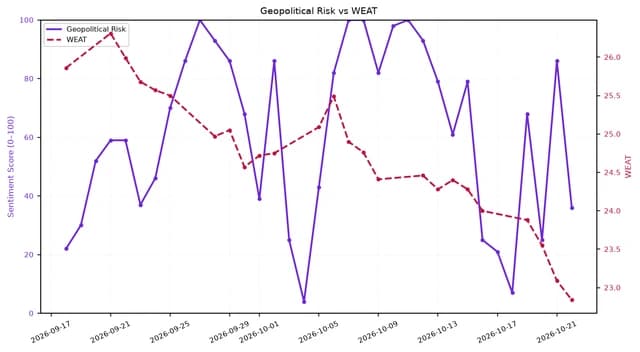
The jump in wheat comes as China’s domestic demand picture deteriorates further. Short-term household loans fell 8.3% from a year earlier in September, a record decline that points to persistent caution among consumers despite a recovery in broader bank lending. That is not a minor data point in the world’s second-largest economy: it suggests households are still reluctant to borrow and spend, limiting the kind of demand rebound global manufacturers and commodity exporters have been waiting for. The slowdown is especially important for sectors tied to discretionary spending, autos, electronics and luxury goods, where a China recovery has been a key part of the bullish case.
The market reaction has been consistent with that cross-current. The Nikkei index slipped even as broader risk appetite remained fragile, while the yen strengthened, with the dollar-yen rate easing to 156.92 from 158.27 the previous session. That matters for Japanese investors because a firmer yen can squeeze exporters’ overseas earnings expectations, particularly in technology and industrial names that rely on global demand. At the same time, the Nasdaq futures contract dropped sharply to 29,147.5 from 30,007 a session earlier, showing that tech shares are not immune when macro volatility rises and yields, currencies and geopolitical headlines move together.
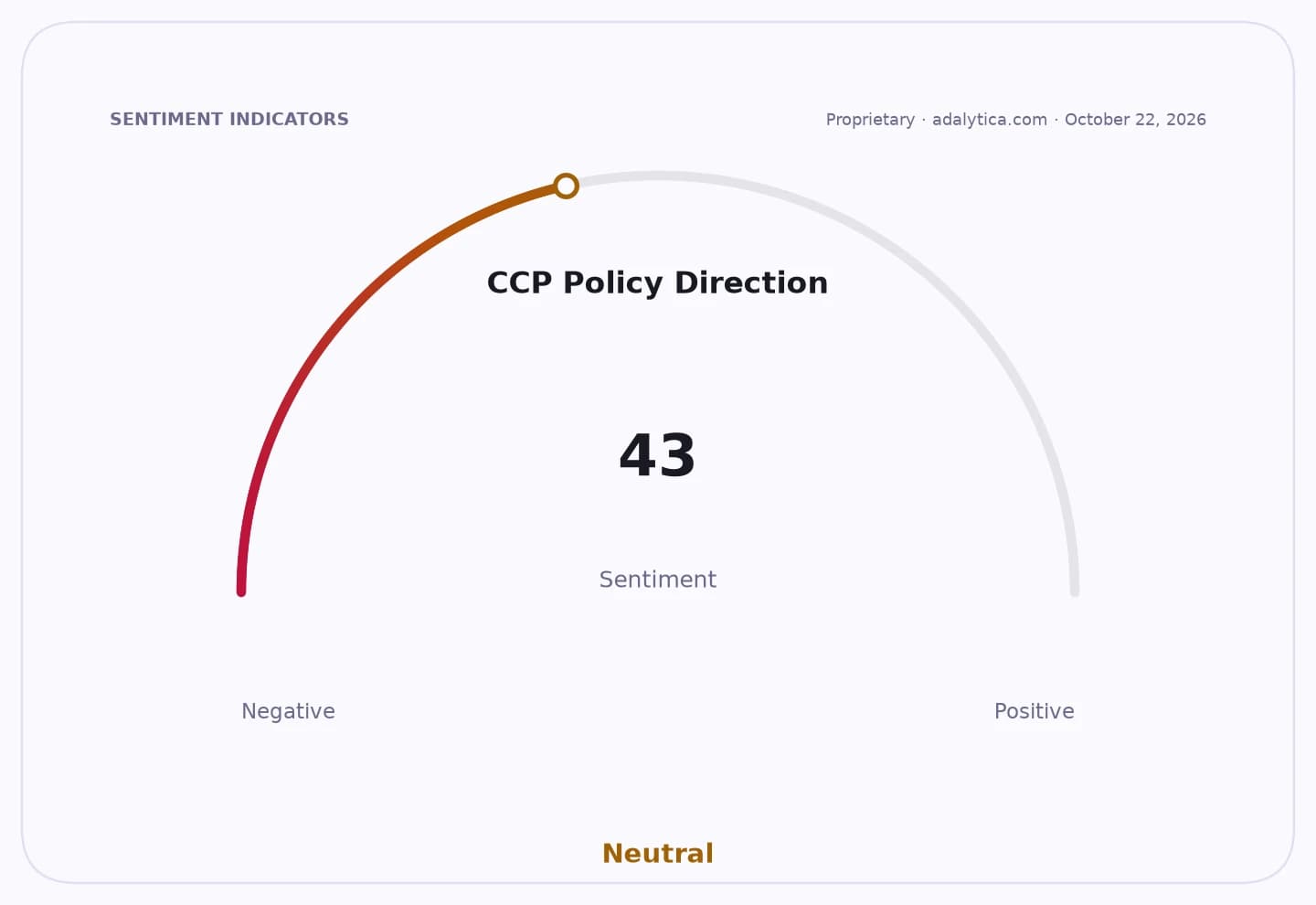
This is the kind of setup the market often underprices at first: a food shock in one region, weaker consumer credit in China and a rotation out of risk assets can quickly converge into a single narrative of slower growth and stickier inflation. Adalytica’s Global Stability Sentiment gauge has swung back to neutral at 36, with awareness in “extreme fear,” underscoring how quickly traders have moved from complacency to caution. Its US-China relations gauge is also stuck in “extreme fear,” reinforcing the idea that geopolitics is no longer a side issue — it is a direct input into pricing across commodities, currencies and equities.
The investable implication is that the market should continue to favor hard-asset exposure, agricultural plays and companies with pricing power, while punishing import-dependent economies and sectors most exposed to a China consumption stall. Wheat trackers such as the WEAT ETF are already reflecting the stress, with the fund dropping to $22.84 after rallying as high as $26.96 in September, but the broader thesis remains intact: supply shocks do not need to be permanent to create tradable dislocations. The next leg will likely be driven by whether Russia-Ukraine tensions keep grain corridors unstable and whether China’s consumer remains too cautious to reignite global demand.
For investors, the takeaway is clear: buy resilience, not hope. Food inflation risk, geopolitical fragmentation and China’s weak household demand are converging, and that combination is likely to keep rewarding commodities, defensives and select agricultural names over the most cyclical parts of the market.
| Entity | Gains | Losses |
|---|---|---|
| Wheat producers | ▲Higher pricing power | ▼Volatile export demand |
| WEAT ETF | ▲Momentum from supply shocks | ▼Pullbacks on de-escalation |
| Grain importers | ▲— | ▼Higher input costs |
| Japanese exporters | ▲Weak yen support fades | ▼Earnings pressure from yen strength |