Global wheat prices climbed as renewed fighting around the Black Sea revived the market’s most important supply risk: whether exports from one of the world’s key grain corridors can keep flowing.
Wheat rises on renewed Black Sea supply fears
Chicago wheat rose 0.6% to about $6.645 a bushel in Asian trading, after gaining as much as 0.8% earlier in the session, as traders and millers rushed to cover exposure to a region that remains central to global bread-basket supply. The move matters because wheat is already sitting in a geopolitically fragile market, where even the hint of disruption can tighten availability and push importers toward higher-cost alternatives.
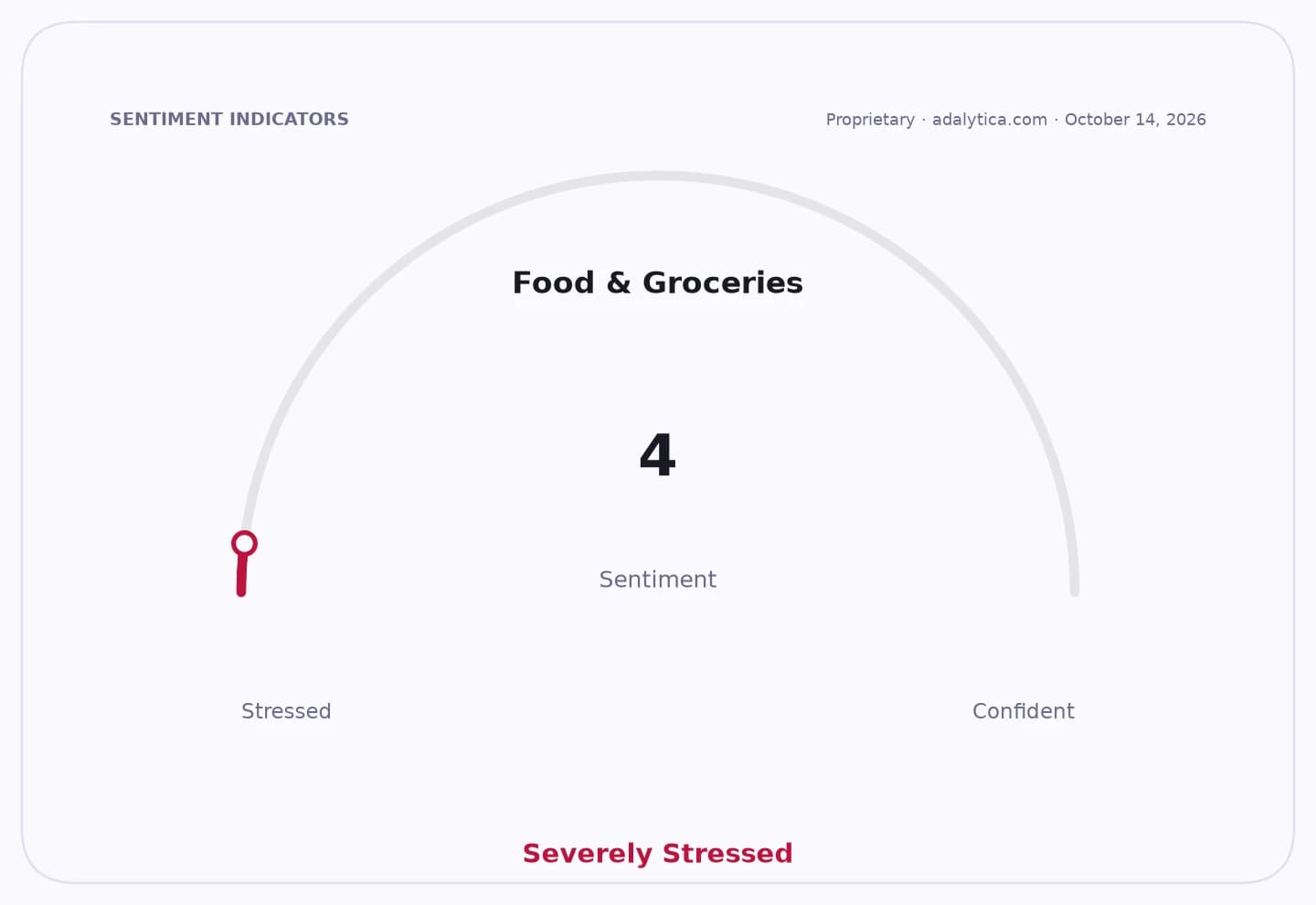
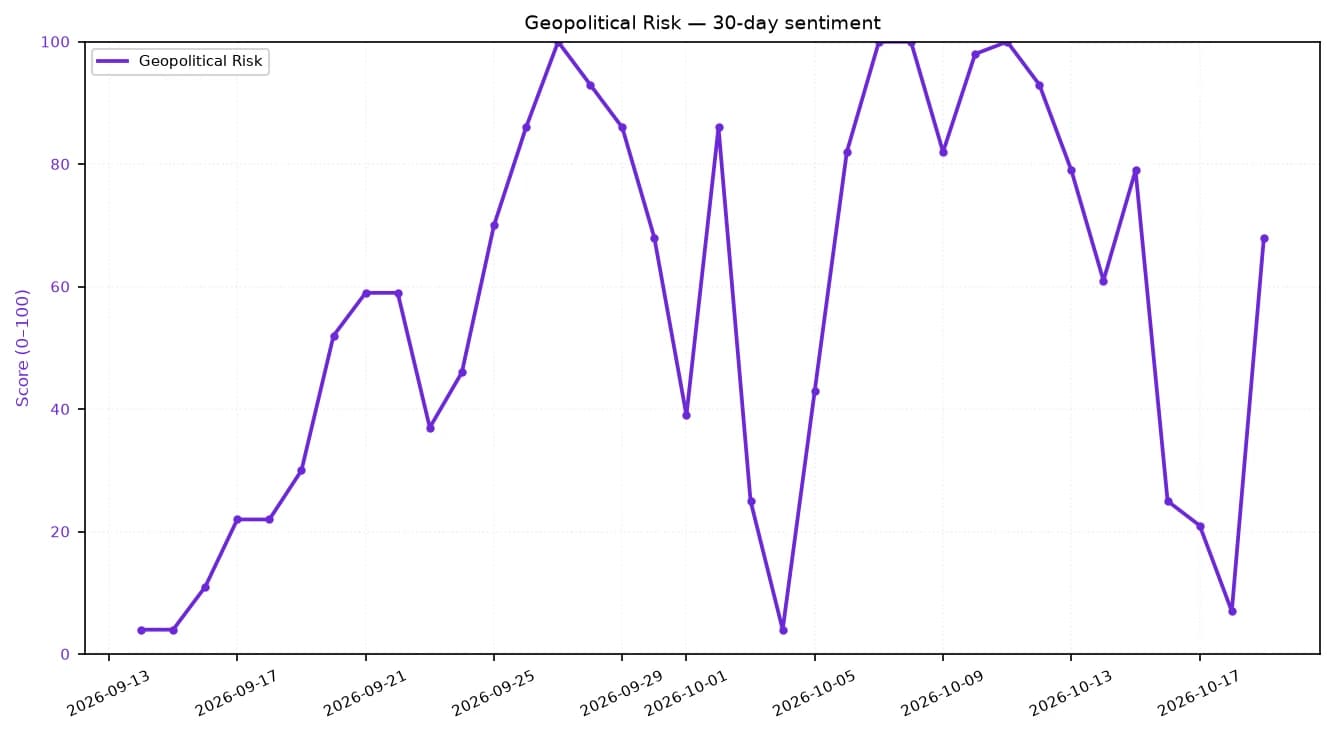
Sentiment IndicatorsⓘProprietary · adalytica.com · October 23, 2026
This is a snapshot — live sentiment, awareness and momentum for 130+ markets update continuously in the dashboard.Open AlphaPulse
The latest price pop followed fresh military strikes between Russia and Ukraine, which dashed hopes for a near-term agreement to restore smoother shipments through Black Sea ports. That matters economically far beyond the futures screen: when export channels are threatened, buyers face higher procurement costs, food processors face margin pressure, and governments in import-dependent countries must compete harder for cargoes.
Australia was an immediate beneficiary. Wheat prices at five of the country’s biggest grain ports climbed to their highest since June 2024 as overseas buyers looked for replacements in case Black Sea shipments slow. That is the classic second-order trade in agricultural shocks: when one export hub tightens, another is pulled into the rally.
There are also signs that the market is beginning to reposition for a more durable supply scramble. Open interest and covering demand have helped underpin grain prices even after earlier expectations of ample Russian flows and a strong Australian crop had pressured the market. The broader grain complex was mixed, with soybeans up 0.2% and corn down 0.2%, underscoring that wheat is the immediate geopolitical barometer.
For investors, the message is straightforward: Black Sea risk is back as a live catalyst, and wheat-linked exposure may still be under-owned relative to the scale of the supply shock. Exchange-traded products such as WEAT are already close to their 50-day average but have slipped sharply from recent highs, while diversified agriculture baskets like DBA show the market remains sensitive to weather, export policy and shipping disruption. If the fighting persists or diplomacy stalls, wheat prices can extend higher quickly, creating upside for grain traders, exporters and select ag input beneficiaries — and more pain for importers, food manufacturers and consumers.
The market is underestimating how quickly a regional military escalation can spill into global food inflation. Until export routes are clearly stabilized, wheat remains one of the cleanest ways to express a geopolitically driven inflation trade.
| Entity | Gains | Losses |
|---|---|---|
| Wheat exporters outside Black Sea | ▲Higher demand, better pricing | ▼More volatility |
| Australian grain sellers | ▲Stronger export bids | ▼Supply repricing risk |
| Import-dependent millers | ▲Inventory stress relief | ▼Higher input costs |
| Food consumers/global buyers | ▲None | ▼Food inflation pressure |