Whirlpool and other appliance makers are trimming production because Americans are simply buying fewer refrigerators, washers and other big-ticket home items, a slowdown that looks more cyclical than structural but still threatens margins in the near term.
Whirlpool Cuts Output as Appliance Demand Slows

That matters because appliance factories are built around heavy fixed costs — labor, depreciation, maintenance and overhead do not disappear when orders slow. When demand softens, producers have less volume to spread those costs over, which can pressure profits even if pricing holds up. For investors, the key question is whether this is a temporary digestion period after the pandemic-era buying binge or the start of a longer reset in the category.
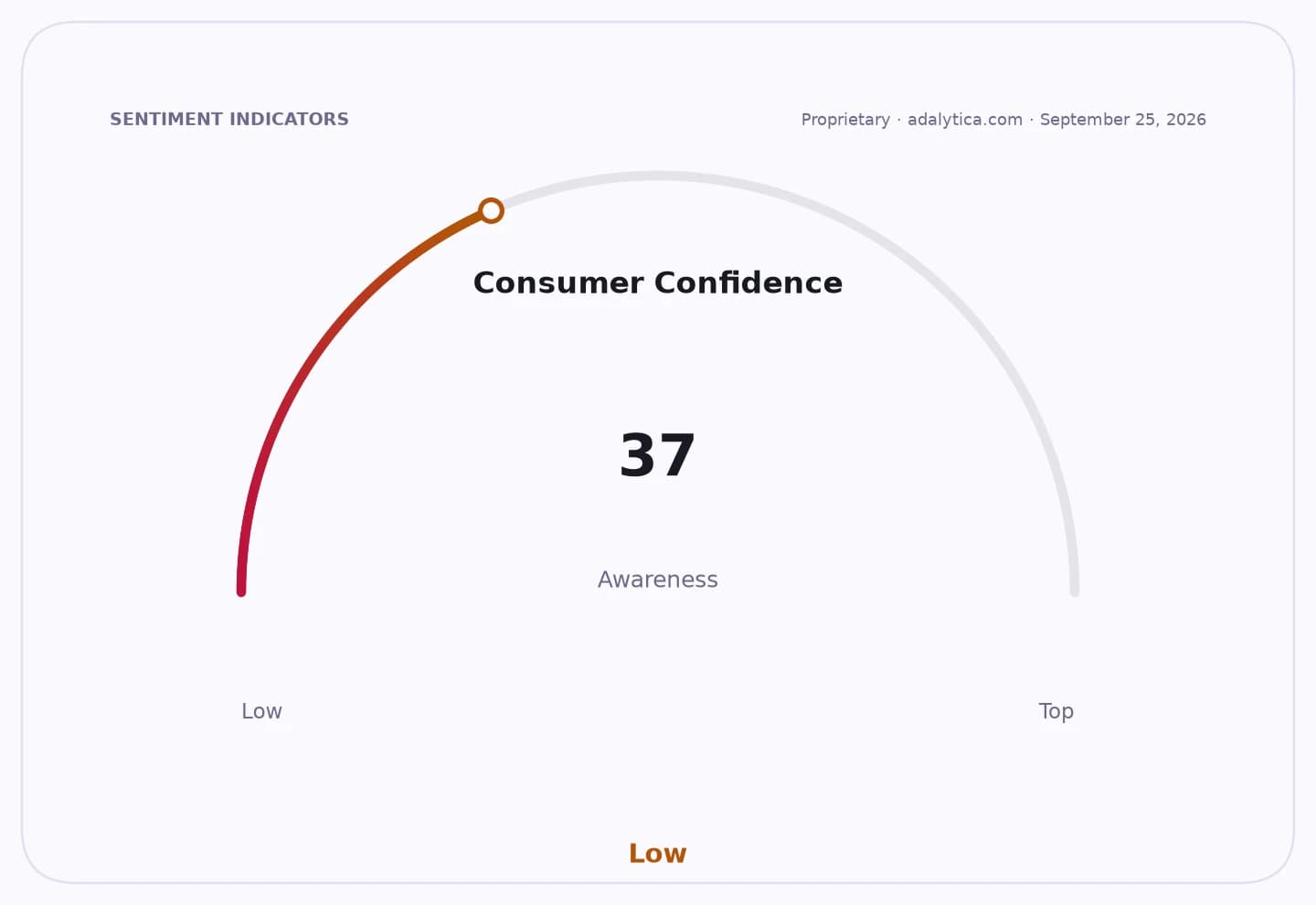
Sentiment IndicatorsⓘProprietary · adalytica.com · September 17, 2026
This is a snapshot — live sentiment, awareness and momentum for 130+ markets update continuously in the dashboard.Open AlphaPulse
The data points to a classic cooling-off phase. U.S. housing starts, a useful proxy for demand for new household equipment, are forecast to slip to 1,184,900 in August from 1,239,000 in July, a reminder that weaker home construction is not helping appliance sales. Existing-home prices remain elevated as well, with the S&P CoreLogic Case-Shiller index at 336.663 in June, keeping affordability strained and discouraging churn in the housing market. Fewer moves usually mean fewer new appliances.
The backdrop is also less friendly on the consumer side. Adalytica’s consumer spending sentiment gauge has fallen to 63 from 100 in May, while food and grocery spending sentiment is in “Extreme Fear” at 11, suggesting households are still selective with discretionary purchases. At the same time, Whirlpool’s stock has been punished hard, sliding to $32.42 from more than $90 in February, reflecting investor anxiety that lower factory utilization could bite earnings before demand stabilizes.
HOUST vs CSUSHPINSA — macro contextadalytica.com
Explore this data interactively — full history, time series and cross-market comparisons.Open AlphaPulse
There are reasons to think the weakness is not a permanent deterioration in the business. Part of the slowdown likely reflects pull-forward demand from the early pandemic, when many households upgraded kitchens and laundry rooms. Tariffs and raw-material inflation also helped reshape pricing and demand, while the latest round of Section 232 tariffs has added another layer of uncertainty for the industry. Whirlpool’s own filings point to intense competition and a changing retail environment, but they do not suggest the category itself is broken.
That makes the investment case more about patience than panic. Appliance makers will need better housing turnover, steadier consumer confidence and a cleaner cost backdrop before margins can fully recover. Until then, investors should expect choppy results, but for long-term buyers who believe U.S. household formation and replacement demand still matter, the current weakness may be more of an earnings air pocket than an end-of-cycle story.
| Entity | Gains | Losses |
|---|---|---|
| Whirlpool and peers | ▲Potential volume rebound later | ▼Margin pressure now |
| Consumers | ▲Lower prices over time | ▼Less product choice if factories idle |
| Housing market | ▲More focus on affordability | ▼Weaker appliance-linked spending |
| Short-term sellers | ▲Better near-term thesis | ▼Long-term buyers if demand normalizes |