The Trump administration’s push to turn the United States into the “crypto capital of the world” is running into a practical problem: the White House team meant to execute it is now down to zero known staffers.
White House crypto staff drops to zero

That matters because the administration has already taken one of the boldest pro-Bitcoin steps in U.S. history — making Bitcoin a formal federal reserve asset in March and ordering that coins seized through forfeitures not be sold. But a policy is only as powerful as the staff behind it, and the departure of Patrick Witt leaves no publicly known official coordinating the president’s digital-asset agenda at the very moment Washington still needs to write the rules investors are waiting for.
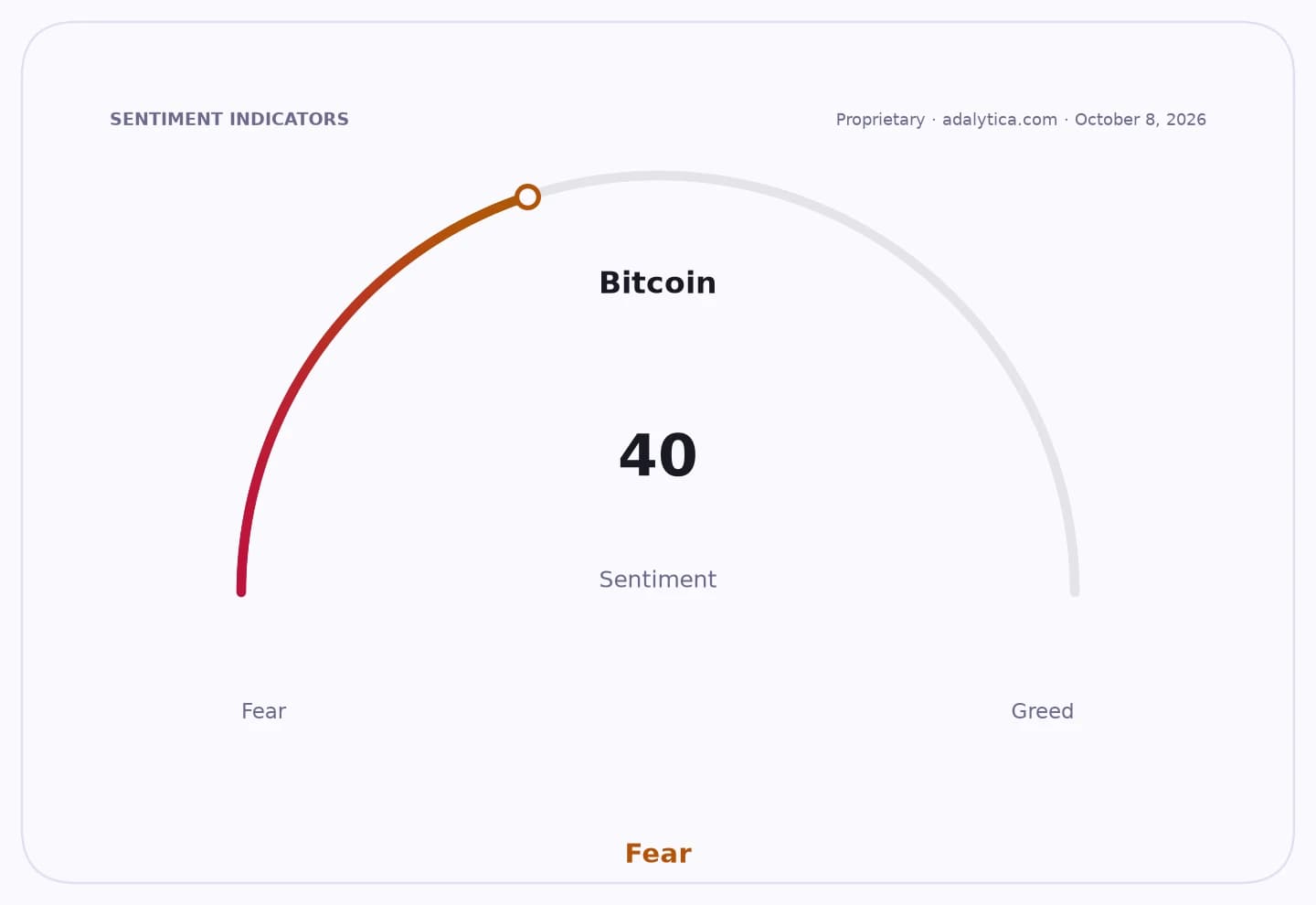
Sentiment Indicators
For markets, the gap is more than a personnel footnote. The crypto industry has spent months betting that a friendly White House would accelerate market-structure legislation, clarify custody and trading rules, and legitimize Bitcoin as a strategic asset. Instead, the administration’s crypto council is hollowing out just as the CLARITY Act and related reforms remain unresolved. That delay keeps regulatory overhang alive for exchanges, brokers and issuers, even as the federal government itself has embraced Bitcoin in a way no prior administration has.
The economic significance is bigger than one staff roster. If the U.S. government is already sitting on roughly 328,372 BTC, according to BitcoinTreasuries, then policy execution around reserve management, acquisitions and market oversight could influence liquidity, investor confidence and the broader institutional adoption curve. Treasury and Commerce were authorized to explore budget-neutral ways to acquire more Bitcoin, but those options now look harder to advance without a functioning team inside the White House to coordinate among agencies.
That disconnect is exactly why investors should pay attention. Bitcoin remains near $81,800, with the 50-day moving average around the same level and the 200-day average far lower, underscoring that the long-term trend is intact even as short-term momentum cools. Adalytica’s Bitcoin Fear & Greed Index is at 22, in “Fear,” which tells me sentiment is washed out even as the policy backdrop remains structurally constructive. In other words, the market may be underestimating how much upside can emerge once Washington stops stalling and starts implementing.
The same applies to crypto equities. Coinbase has slipped back toward the $170s and MicroStrategy has retreated from its highs, showing that the market is pricing in uncertainty rather than a clean policy runway. That creates opportunity. The winners in the next phase are likely to be the firms with direct leverage to a friendlier U.S. regulatory regime: exchanges, custodians, infrastructure providers and Bitcoin-heavy balance-sheet names. The losers are the ones that need clarity and political momentum most, but are now waiting on an understaffed White House.
The narrative is simple: Trump has already made the strategic bet on Bitcoin, but the administration is struggling to staff the machine needed to convert that bet into durable policy. Until that changes, crypto investors are left with a powerful headline and an incomplete execution path — and that gap is where the asymmetry lives.
| Entity | Gains | Losses |
|---|---|---|
| Bitcoin holders | ▲Reserve demand narrative | ▼Policy execution delays |
| Coinbase | ▲Trading/clarity upside | ▼Regulatory uncertainty |
| MicroStrategy | ▲Bitcoin thesis support | ▼Near-term sentiment pressure |
| White House crypto agenda | ▲Pro-crypto optics | ▼Staffing and implementation capacity |