Rising government borrowing costs are turning fiscal strain in advanced economies into a market problem, not just a policy one, as investors demand higher yields to fund widening deficits and swelling debt loads.
US Treasury Yields Near 5% as Fiscal Strain Builds
That is the central message from economist Nouriel Roubini’s latest warning: with sovereign yields climbing and debt-to-GDP ratios edging higher, bond markets are once again acting as enforcers. The stakes are economic as much as financial. Higher borrowing costs raise the bill for governments already facing ageing-related pension and healthcare liabilities, while also narrowing room for tax cuts, spending increases or stimulus if growth slows.
Sentiment Indicators
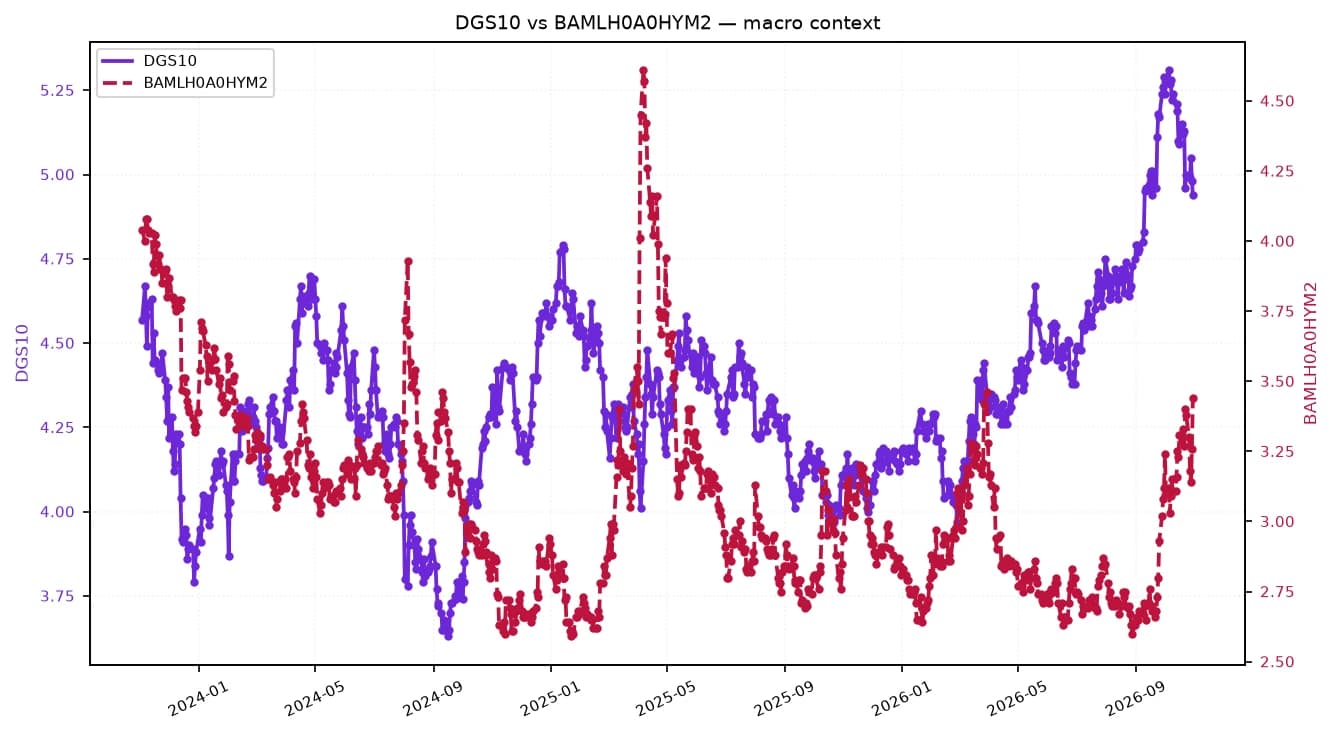
The immediate market backdrop underlines the point. The U.S. 10-year Treasury yield is trading near 4.95%, according to the latest data, after a recent move back above 5% that has kept pressure on global duration assets. The benchmark has climbed sharply from 0.73% in 2020 and remains close to levels that challenge easy fiscal assumptions. High-yield credit spreads have also widened to 3.37 percentage points, up from 2.88% in March 2025, showing that investors are not just repricing sovereign risk but are also demanding more compensation across credit markets.
That matters because the cost of money is now high enough to constrain policy. Roubini argues that when the average borrowing rate exceeds nominal growth for too long, debt ratios stop drifting lower and begin to compound upward unless governments run tighter primary budgets. In other words, countries can grow out of debt only if financing costs stay below growth or if governments impose fiscal discipline early. When that does not happen, markets do the disciplining.
The contrast between the U.S. and other major sovereigns is telling. The Federal Reserve’s policy rate has risen to 3.88%, with the market forecasting 3.89% next month, reinforcing a higher-for-longer environment even before any renewed inflation shock. At the same time, bond prices have been volatile: TLT, the long-duration Treasury ETF, has recovered to 81.73 from a low near 79.46 in October, but its 200-day moving average remains above the current price, a reminder that long bonds are still trading below their broader trend. That suggests investors are willing to buy duration on tactical dips, but not yet to fully embrace a structural bull market in government debt.
The market discipline Roubini describes is not theoretical. He points to Britain’s brief Liz Truss episode as a case where gilt markets forced a reversal before a larger crisis developed. Greece, by contrast, needed a full sovereign crisis before austerity and restructuring were imposed. The difference matters for investors because it shows how bond markets can either prevent policy excess or, when ignored, amplify it into a much deeper recession, banking stress and eventual restructuring.
There are also limits to financial engineering. Roubini says attempts by the U.S. Treasury to reduce long-end yields through buybacks are unlikely to solve the underlying problem. That view aligns with the broader market message: in a sovereign market measured in trillions of dollars, no finance ministry can permanently overrule the term structure without credible fiscal repair. The recent move in Treasury yields and the continued sensitivity of long-duration assets suggest investors still care more about the path of deficits than about tactical interventions.
For investors, the implication is twofold. First, sovereign duration remains vulnerable in countries where fiscal credibility is weak and growth is slowing. Second, sectors that depend on lower long-term rates — from housing to rate-sensitive equities — remain exposed if “bond vigilantes” keep pushing borrowing costs higher. By contrast, countries with stronger external balance sheets, reserve currencies or better fiscal frameworks should hold up relatively better.
The narrative now turning through markets is simple: after years in which deficits were financed cheaply, bond investors are reasserting a price for fiscal slippage. If growth softens and inflation stays sticky, the pressure on governments could intensify quickly. Roubini’s warning is that the first countries to watch are not necessarily the weakest on paper, but the ones where markets decide the adjustment has been delayed too long. France, he says, is among them — but not alone.
| Entity | Gains | Losses |
|---|---|---|
| Bond investors | ▲Higher yields | ▼Price volatility |
| Fiscal hawks | ▲More leverage over policy | ▼ |
| Governments with weak finances | ▲ | ▼Higher financing costs |
| Long-duration bond funds | ▲Tactical rallies on dips | ▼Structural drawdown risk |