Retail furniture is entering a structural reset, and the winners will be the companies that stop selling sofas and start selling solutions.
Williams-Sonoma, furniture retail reset, sourcing shift
That is the core message behind a growing split in the market: consumers are changing how they buy, where they buy and what they expect from furniture retailers, while the old mass-market model is being squeezed by price competition, imported supply and a weaker appetite for big-ticket discretionary spending. In Australia, Fantastic Furniture has shut its last manufacturing plant in Sydney and moved production to China and Vietnam, ending its made-in-Australia identity and cutting 100 jobs. That is not just a company story; it is a sign that furniture retail is being reorganized around lower costs, faster sourcing and a more global supply chain.
Sentiment Indicators
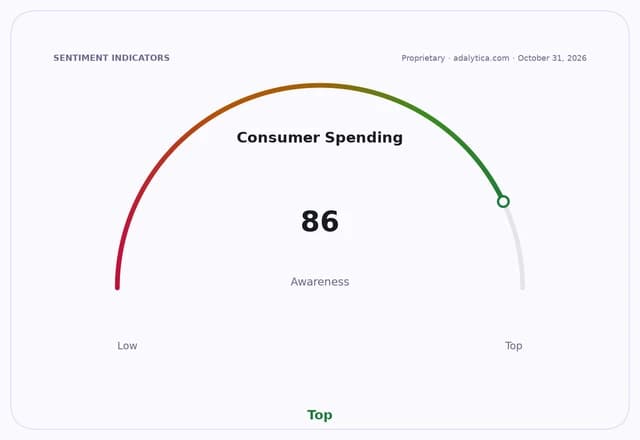
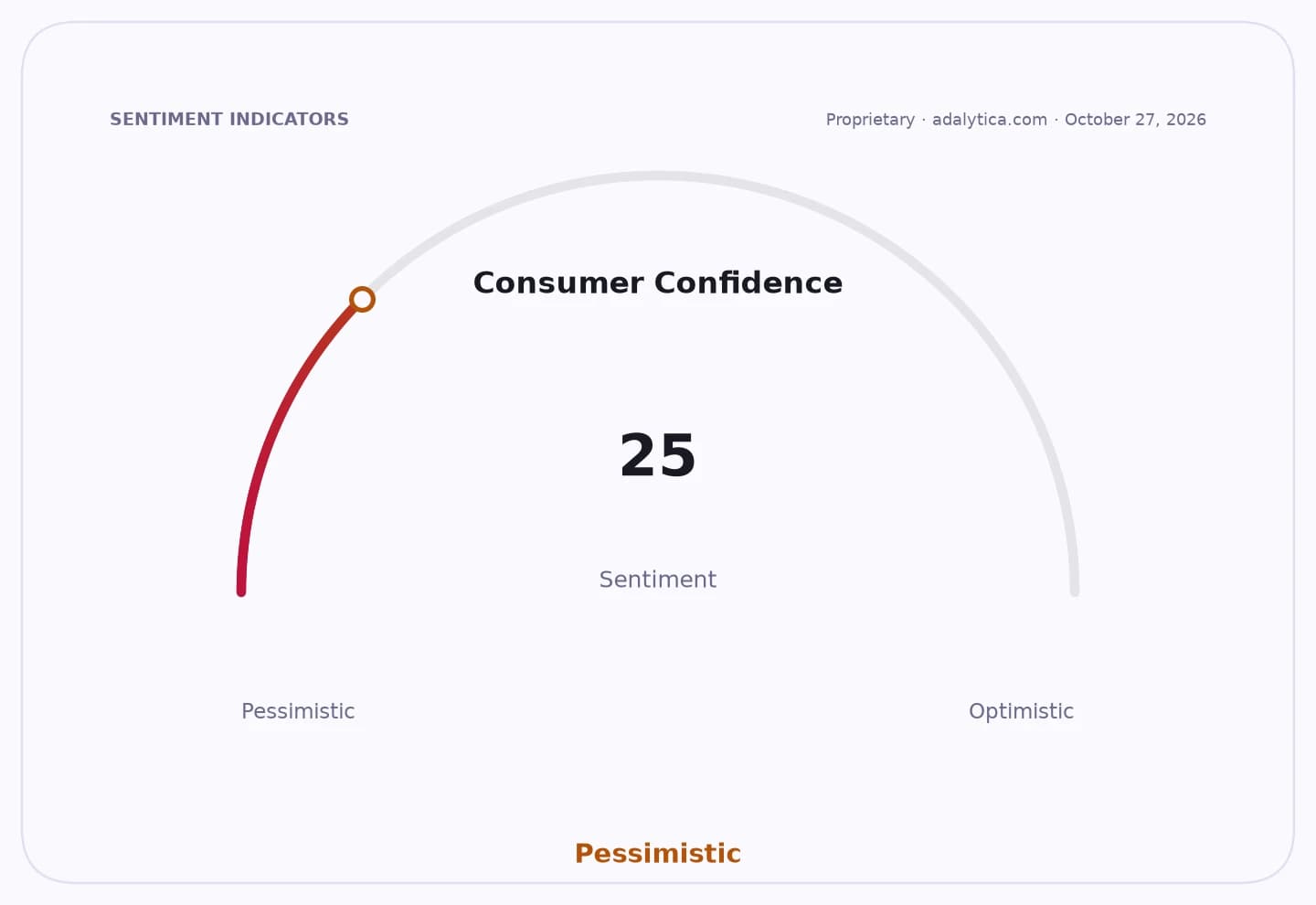
Economically, the pressure is straightforward. Furniture is one of the most interest-rate-sensitive corners of consumer spending. When mortgage costs are high and confidence is fragile, households delay upgrades, trade down to cheaper products or buy fewer items altogether. Adalytica’s consumer confidence recession sentiment sits at 29, deep in fear territory, even as consumer spending sentiment has surged to 96, a sign of erratic and polarized demand rather than healthy, broad-based growth. For retailers, that means a market where shoppers are still spending, but much more selectively — and demanding more value, convenience and customization for every dollar.
That is why the old playbook is breaking down. The sector no longer rewards companies that rely on standard catalogues and domestic production alone. Instead, the edge is shifting toward retailers that can combine design, flexibility, omnichannel execution and supply-chain discipline. Williams-Sonoma and Haverty’s are already showing how differentiated merchandising and tighter execution can support sales, while the broader market has made clear that even established brands must keep reinventing their assortments and sourcing. West Elm and the Williams Sonoma brand both posted mid-single-digit comp growth in the latest period, showing that consumers will still pay for a sharper product mix and stronger brand proposition.
RSXFS vs CSUSHPINSA — macro contextadalytica.com
Explore this data interactively — full history, time series and cross-market comparisons.
The same pattern is visible in the supply chain itself. In Recife, Brazil, retrofit projects and compact urban living are driving demand for custom furniture that fits small, irregular spaces — a reminder that furniture growth is increasingly tied to urbanization, property reuse and space efficiency, not just suburban home buying. That creates an opportunity for made-to-order manufacturers, installers, logistics providers and technology vendors that can deliver precision rather than mass volume.
For investors, the implication is clear: the best exposure is not necessarily the legacy retailer that still depends on bulky inventories and thin margins. The asymmetric opportunity lies in brands and enablers that can monetize customization, imported cost advantages and home-refresh demand without being trapped by old manufacturing footprints. That favors companies with strong direct-to-consumer capabilities, disciplined sourcing, private-label leverage and the ability to serve both value shoppers and premium buyers.
The market is underestimating how durable this reset can be. As consumption becomes more fragmented and retailers learn to serve smaller homes, shorter replacement cycles and more price-sensitive households, the furniture industry is likely to see more consolidation, more offshore production and more pressure on weaker local operators. The takeaway: own the companies reinventing the furniture stack, not the ones defending the past.
| Entity | Gains | Losses |
|---|---|---|
| Global-sourcing retailers | ▲Lower costs, pricing flexibility | ▼Local manufacturers |
| Custom-furniture makers | ▲Retrofit demand, margin resilience | ▼Standard catalog brands |
| Williams-Sonoma / premium brands | ▲Brand power, stronger comps | ▼Commodity furniture chains |
| Australian independents | ▲— | ▼Jobs, domestic manufacturing edge |