The United States is pressing the World Bank to lift its restrictions on financing upstream oil and gas projects, a shift that could redirect billions of dollars toward fossil-fuel infrastructure in developing economies and reshape how multilateral lenders back energy access.
World Bank Upstream Oil Gas Financing Shift

Treasury Secretary Scott Bessent said the Bank should adopt a “technology-neutral” approach and stop excluding upstream projects before their merits are assessed, arguing that reliable and affordable power is central to growth, industrialisation and job creation. The call comes as Washington tries to steer the World Bank back toward poverty reduction and economic expansion, with energy supply now framed as a core development issue rather than a climate-screened exception.
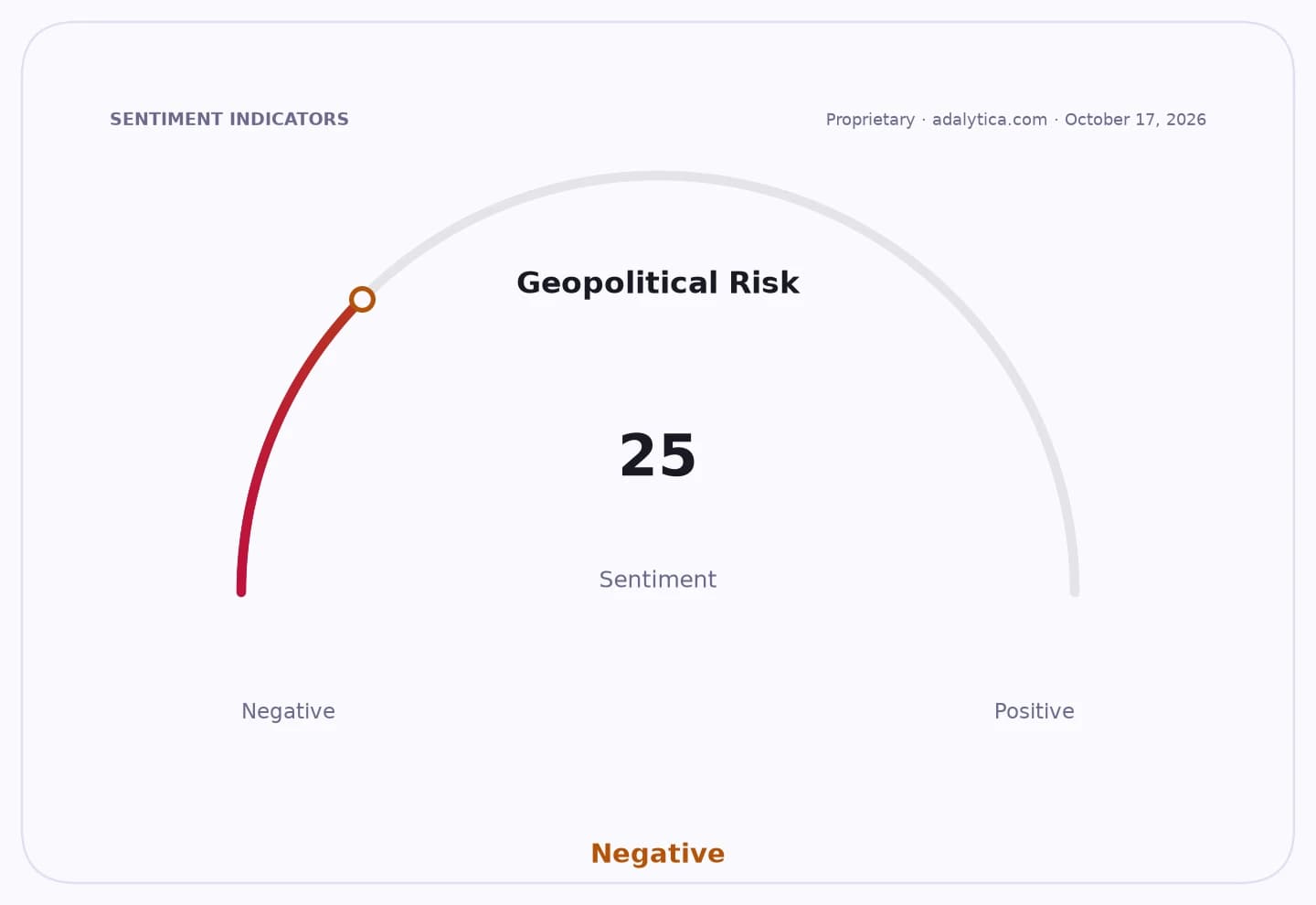
Sentiment IndicatorsⓘProprietary · adalytica.com · October 20, 2026
This is a snapshot — live sentiment, awareness and momentum for 130+ markets update continuously in the dashboard.Open AlphaPulse
The policy push matters because the World Bank and African Development Bank have set a goal of extending energy access to another 300 million people in Africa. Bessent said that target will be harder to meet without support for natural gas, and pointed to a newly approved International Development Association project designed to secure near-term gas supplies and develop gas strategies in West Africa.
For investors, the shift reinforces a more favorable backdrop for oil and gas developers, equipment makers and lenders tied to emerging-market energy projects. It also supports the broader view that multilateral funding may become less restrictive for hydrocarbons, especially gas, which Washington is presenting as a bridge fuel for power generation and industrial growth.
The message lands at a time when energy markets remain elevated and politically sensitive. Brent-like crude benchmarks are hovering near $100 a barrel equivalent in the provided data, while U.S. oil prices have also been volatile, and that keeps governments under pressure to prioritize supply security over transition-only financing rules.
The move could also affect how the World Bank allocates capital across regions and sectors, with the U.S. pushing for phase-outs of lending to countries such as China and Poland that it says have outgrown Bank support. Bessent also urged the IFC to meet its pledge to direct 40% of new commitments to the poorest and most fragile countries, signaling that Washington wants the institution to do less broad-based lending and more targeted development finance.
The next test is whether other shareholders accept a formal rewrite of the Bank’s energy framework, and whether the institution’s climate-focused members push back against reopening support for upstream hydrocarbons. The debate is likely to remain a key issue at the IMF and World Bank meetings as the U.S. presses for faster reforms in lending, procurement and surveillance.
| Entity | Gains | Losses |
|---|---|---|
| Oil and gas developers | ▲Easier access to multilateral financing | ▼Fewer financing exclusions |
| Natural gas exporters | ▲Stronger project backing | ▼Weaker loan restrictions |
| World Bank climate bloc | ▲More emphasis on poverty goals | ▼Less control over energy screens |
| Emerging-market borrowers | ▲More energy funding options | ▼Higher policy pressure to justify projects |