Africa’s push for energy security is shifting from national projects to regional systems, with leaders at Africa Energy Week in Cape Town arguing that the continent will only attract durable investment if countries build more cross-border trade links, shared infrastructure and deeper financial cooperation.
Africa Energy Week Pushes Cross-Border Energy Links

That matters because energy in Africa is still too fragmented to support reliable growth at scale. Power grids, pipelines, ports and fuel markets do not stop at borders, and neither do the investment decisions that determine whether new refineries, gas projects and electricity networks get built. The message from South Africa’s Deputy Minister of Mineral and Petroleum Resources, Phumzile Mgcina, was simple: no country can secure a sustainable energy future alone.
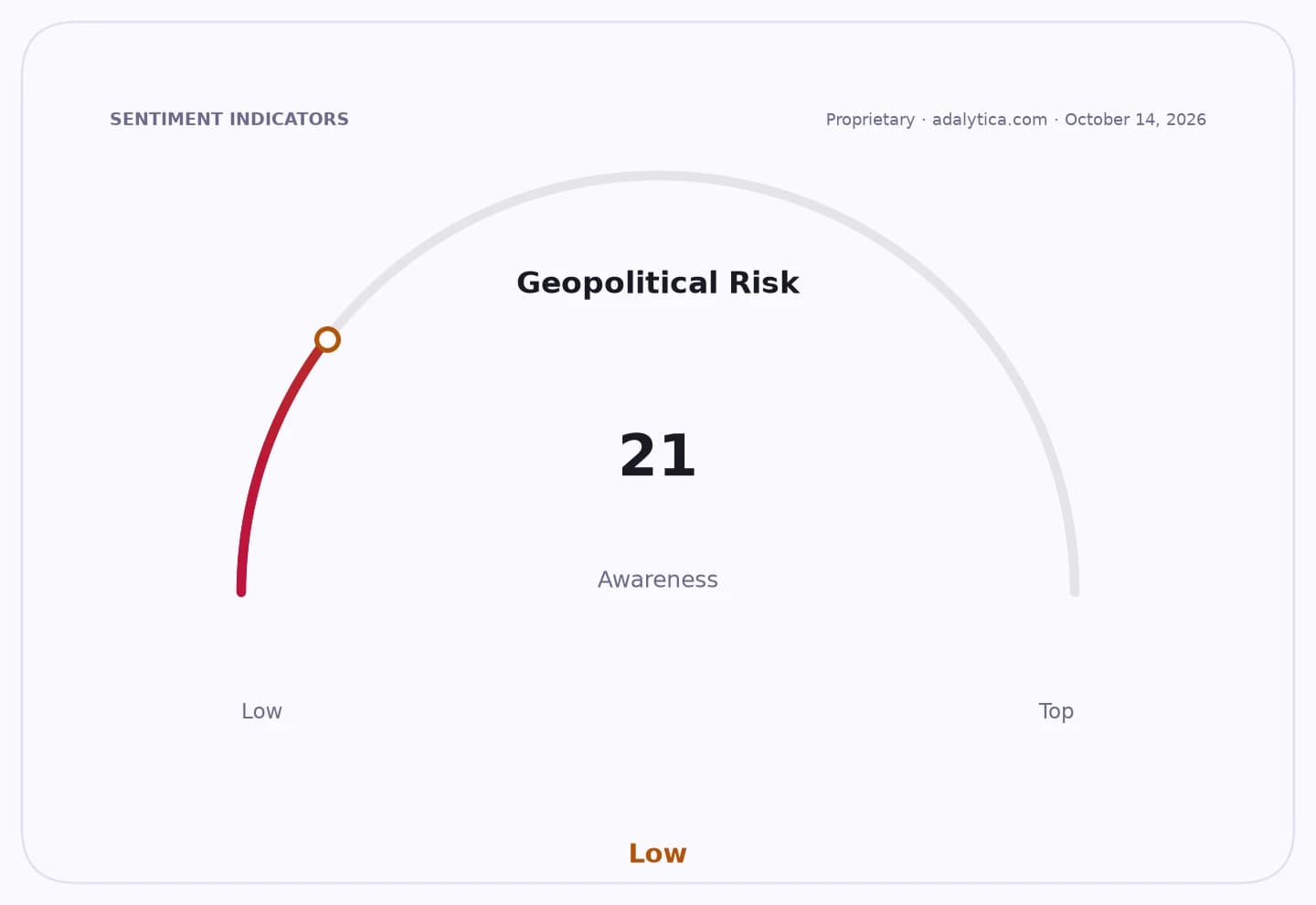
Sentiment IndicatorsⓘProprietary · adalytica.com · October 17, 2026
This is a snapshot — live sentiment, awareness and momentum for 130+ markets update continuously in the dashboard.Open AlphaPulse
For investors, that points to a long-term opening in the companies and funds exposed to African energy infrastructure, storage, logistics and power development. Projects that connect markets tend to be more bankable than stand-alone assets because they broaden the customer base, improve utilization and reduce the risk that one country’s policy shift strands capital. That is especially relevant in a region that still needs billions of dollars in upstream production, transmission lines, terminals and processing capacity.
The conference theme — “Affordable and Abundant Energy for Africa” — captures the core investment case. Cheap, reliable energy is not just a social goal; it is the foundation for industrialization, fertilizer production, refining, mining and broader manufacturing. NJ Ayuk of the African Energy Chamber framed that argument in familiar terms, saying African institutions need to grow stronger so the continent’s resources benefit its own people first. He pointed to Dangote’s industrial operations as proof that local capital can move the needle when it is matched with scale and execution.
Tanzania’s participation through the Petroleum Upstream Regulatory Authority shows the wider policy angle. If more regulators, national oil firms, banks and private operators align on cross-border standards and infrastructure, projects become easier to finance and faster to deliver. That would help African producers capture more value at home instead of exporting raw materials and importing expensive refined products.
The broader market backdrop still favors the theme. Global energy investors remain focused on supply security, while African governments are trying to balance development with affordability and a push toward cleaner generation. That combination keeps the region in play for both traditional hydrocarbons and renewables, particularly where new infrastructure can serve multiple uses over time.
For long-term investors, the takeaway is not to chase one conference headline. It is to recognize a structural trend: Africa’s energy opportunity gets bigger when governments cooperate instead of compete. The winners are likely to be the builders of regional networks, financiers of long-duration assets and producers able to serve domestic and export markets at once. That is a story worth watching, and for patient investors, potentially worth owning.
| Entity | Gains | Losses |
|---|---|---|
| African energy infrastructure builders | ▲More projects, higher utilization | ▼Isolated, underused assets |
| African governments cooperating regionally | ▲Better energy security, lower import risk | ▼Policy fragmentation |
| Local banks and financiers | ▲Larger pipeline of bankable deals | ▼Missed cross-border opportunities |
| Import-dependent fuel markets | ▲More stable supply and pricing | ▼Continued exposure to shortages |