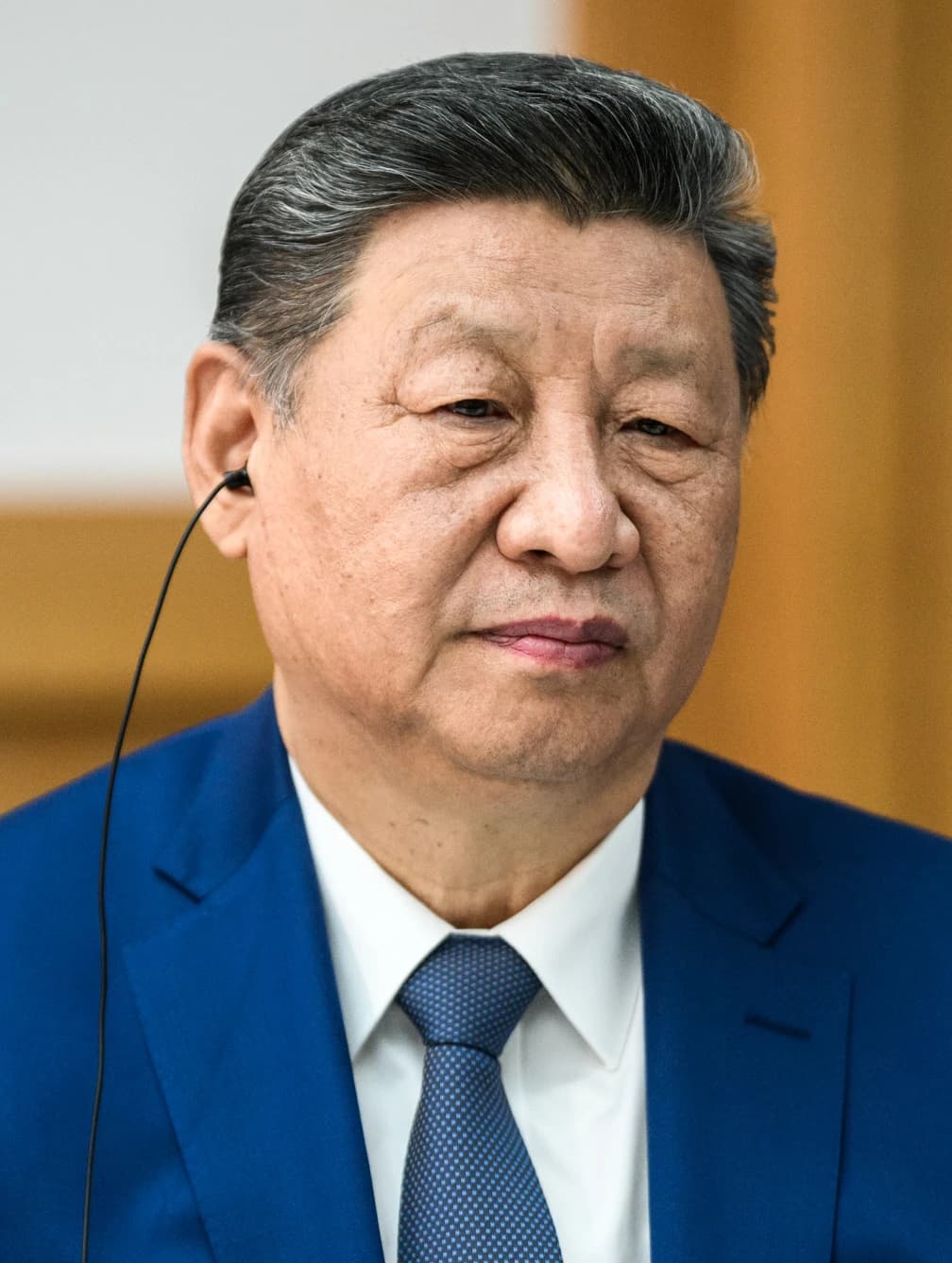
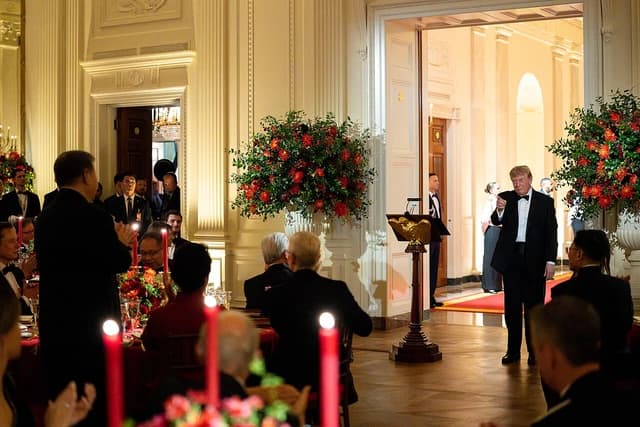
Xi Jinping’s remark that Beijing and Washington have “a common understanding” after a lavish state dinner is the clearest sign yet that the world’s two biggest economies are trying to lower the temperature on trade and technology conflict, a shift that matters immediately for Chinese equities, the yuan and cross-border risk appetite.
Xi Jinping remarks lift China stocks and FXI
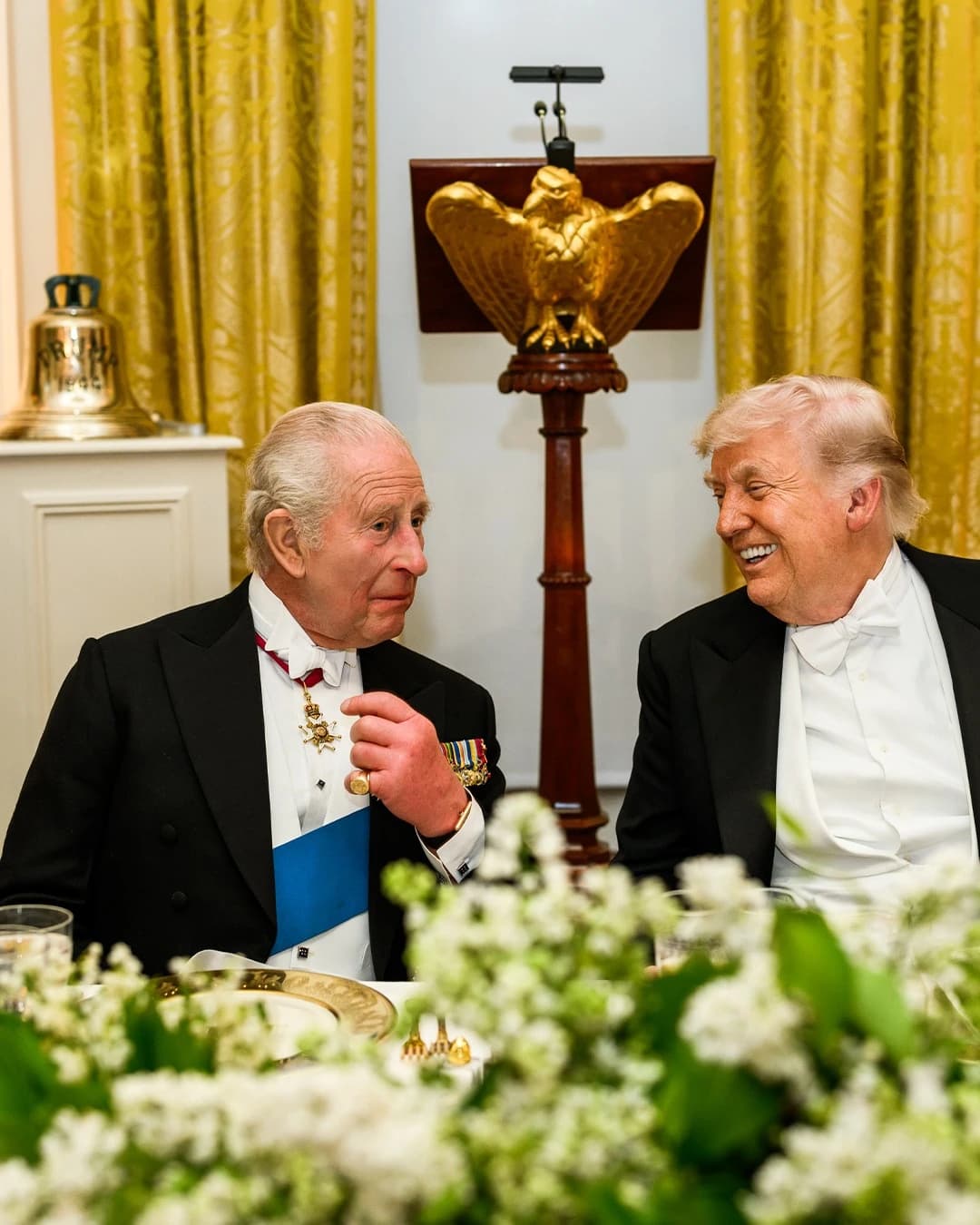
The most important economic implication is not the dinner itself but the prospect of a more predictable policy backdrop between the U.S. and China. That lowers the odds of abrupt tariff escalation, export controls or retaliatory measures that would hit trade flows, corporate margins and capital spending on both sides of the Pacific. It also helps explain the bid in China-focused assets, even though investors remain cautious that any rapprochement could prove tactical rather than durable.
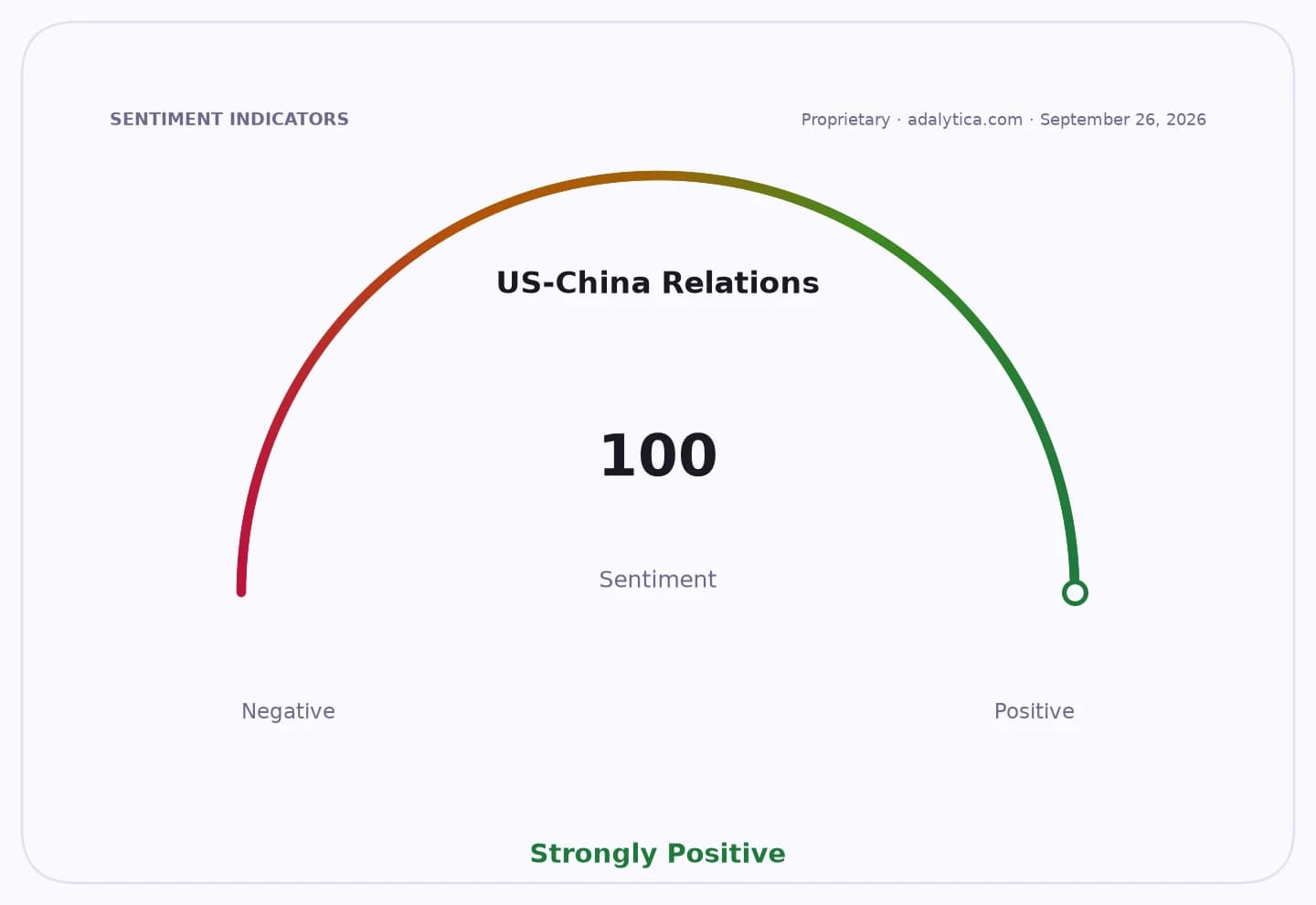
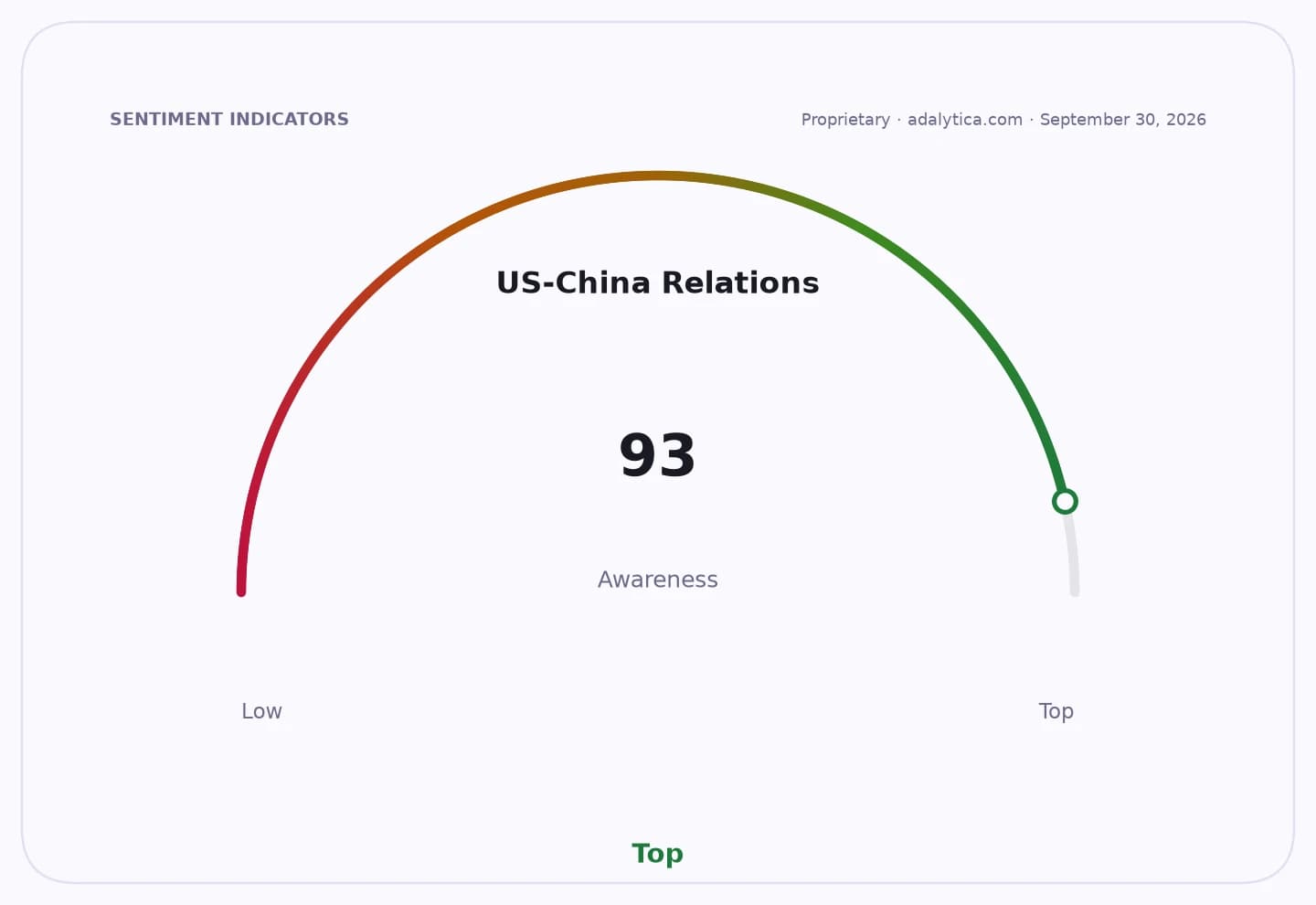
Sentiment IndicatorsⓘProprietary · adalytica.com · September 30, 2026
This is a snapshot — live sentiment, awareness and momentum for 130+ markets update continuously in the dashboard.Open AlphaPulse
The iShares China Large-Cap ETF, FXI, has been trading with a fragile technical tone despite the diplomatic thaw. It closed at 33.86 on Sept. 29, below its 50-day moving average of 35.18 and under its 200-day average of 36.14, while its 14-day RSI at 41.9 and a negative MACD show the fund is still in a corrective phase rather than a confirmed trend reversal. The tech-heavy KWEB has been weaker still, ending at 24.37, versus a 50-day average of 26.33 and 200-day average of 29.27. Alibaba, a bellwether for China risk, finished at 107.74, well below its 50-day average of 117.43 and 200-day average of 130.84.
That underperformance underlines the market’s central question: whether warmer rhetoric can survive the structural rivalry over semiconductors, AI, data security and supply chains. Beijing has already signaled it wants to narrow the agenda to managed competition, and recent reporting on a new U.S.-China AI dialogue suggests both sides are willing to talk about terminology, safety and governance even as they compete for technological advantage. For investors, that matters because AI and advanced computing are now part of the trade relationship, not a separate policy file.
US-China Relations vs FXIadalytica.com
Explore this data interactively — full history, time series and cross-market comparisons.Open AlphaPulse
The immediate market read-through is mixed. A genuine easing in bilateral tensions would favor Chinese internet and consumer-exposed stocks, exporters with U.S. demand, and broader emerging-market sentiment. It would also pressure safe-haven trades and reduce volatility premia built into China assets. The bear case is that any détente is mostly diplomatic theater, with the U.S. still inclined to preserve restrictions on sensitive technologies and China still committed to strategic self-reliance.
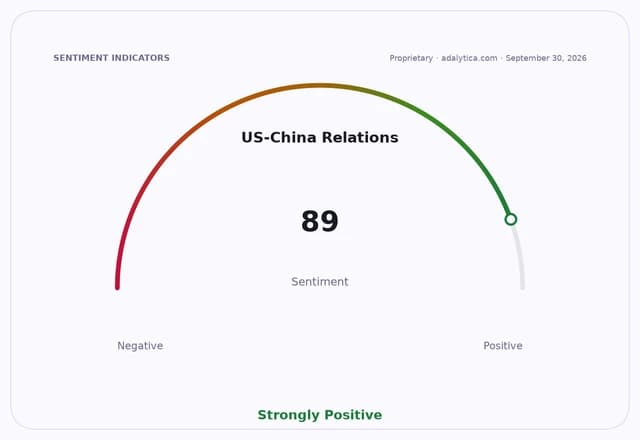
Sentiment gauges point to that tension. Adalytica’s U.S.-China Relations Sentiment is at 89, labeled extreme greed, while Global Stability Sentiment is 86, also in extreme greed, suggesting markets are pricing a calmer backdrop even though awareness remains low. China CCP policy-direction sentiment has improved to 71, implying Beijing is signaling more openness to managed stability. That combination often supports risk assets in the short term, but it can reverse quickly if talks stall or if either side moves from rhetoric back to leverage.
For now, Xi’s “common understanding” suggests both governments see value in keeping channels open at a moment when AI, tariffs and industrial policy are tightly linked. If that tone persists, China equities could get some room to rebound from oversold levels. If it does not, investors will quickly return to treating every summit photo as a pause, not a pivot.
| Entity | Gains | Losses |
|---|---|---|
| China stocks | ▲Lower policy risk premium | ▼Less urgency for stimulus bets |
| U.S. multinationals | ▲More predictable China access | ▼Less leverage in negotiations |
| FXI/KWEB longs | ▲Re-rating potential | ▼Fragile if talks fade |
| Hardline hawks | ▲Better diplomatic cover | ▼Reduced pressure for escalation |