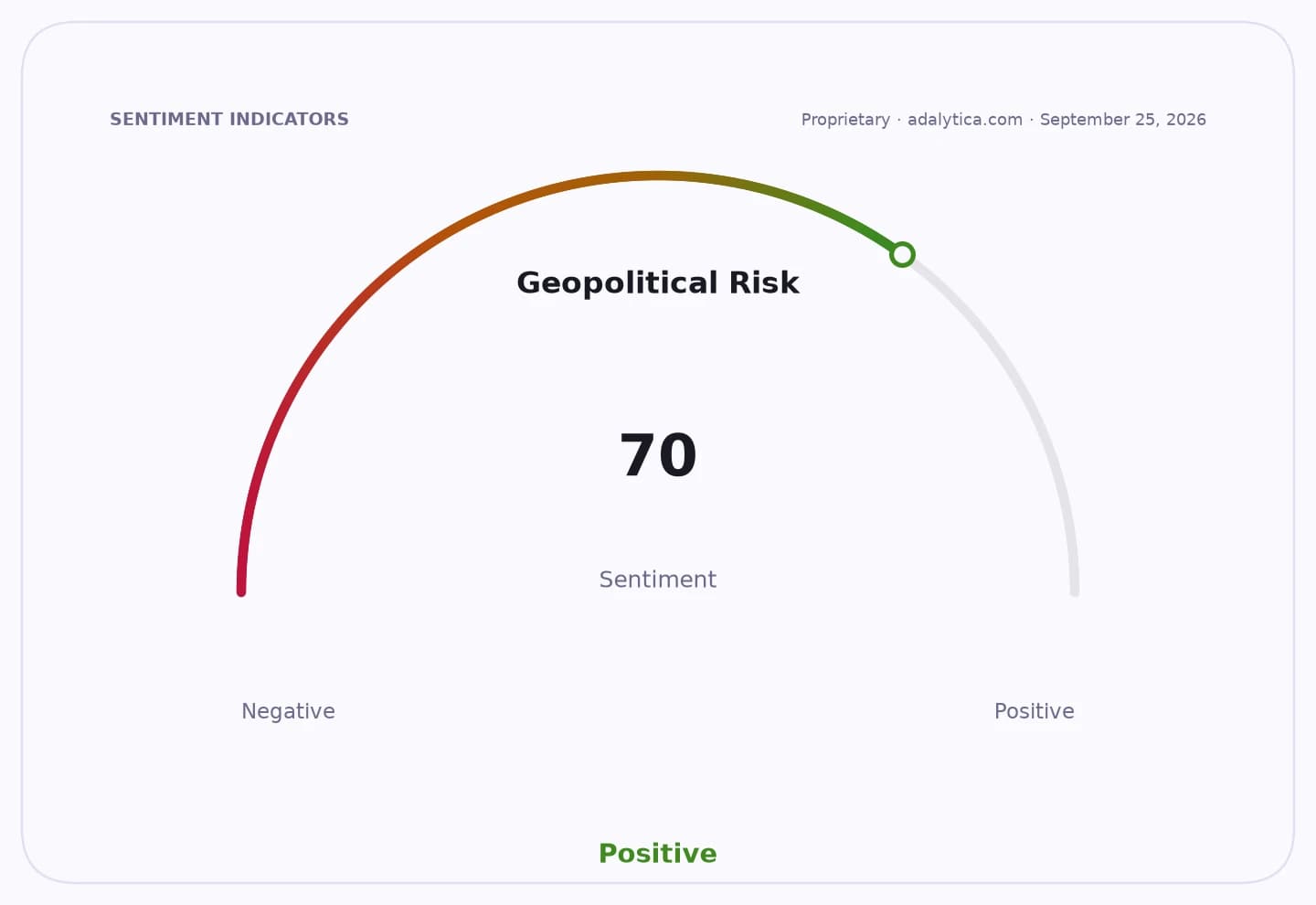
The Japanese yen’s drop to around 162 per dollar is deepening pressure on policymakers and raising the odds of currency intervention, as a stubborn U.S.-Japan yield gap keeps investors betting against the currency.
Yen Weakness Raises Intervention Risk
That matters because the weaker yen is no longer just a trading story. It is feeding higher import costs, squeezing households and forcing Tokyo and the Bank of Japan to weigh whether defending the currency is worth the economic and political cost.
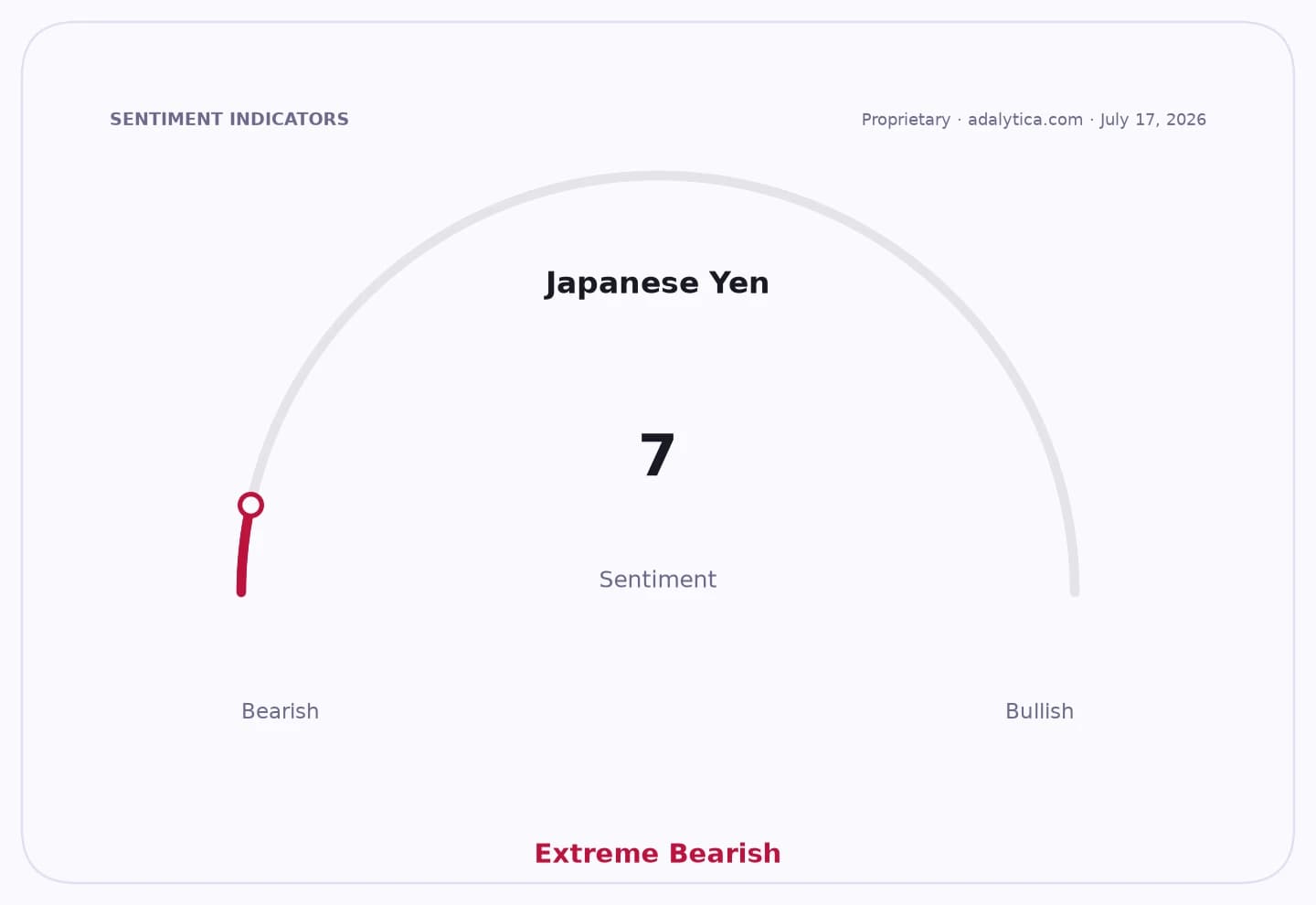
Sentiment IndicatorsⓘProprietary · adalytica.com · July 17, 2026
This is a snapshot — live sentiment, awareness and momentum for 130+ markets update continuously in the dashboard.Open AlphaPulse
U.S. Treasury yields remain elevated, with the 10-year near 4.62% and the 2-year around 4.26%, while the Federal Reserve funds rate sits at 3.63%. Against that backdrop, Japan’s near-zero rates still make the yen one of the market’s most obvious funding currencies, leaving it vulnerable whenever risk sentiment turns and U.S. yield expectations stay firm.
The currency’s latest move underscores how little relief Japan has gotten from conventional policy tools. The dollar traded at 162.4 yen on July 17, after a run of similar closes above 162 this week, while the yen proxy ETF FXY slipped to 56.45 on July 16, below both its 50-day and 200-day moving averages. Adalytica’s Japanese Yen Trade Signals snapshot shows “Extreme Fear,” with sentiment at 7 and awareness at 1, a sign that traders see further downside risk.
Japanese Yen — 30-day sentimentadalytica.com
Explore this data interactively — full history, time series and cross-market comparisons.Open AlphaPulse
For investors, the implications are immediate. Importers face higher costs, Japanese consumers face more inflation at the store, and firms with overseas earnings may see translation gains, even as domestic demand gets pinched. The yen’s weakness can also whip up equity volatility, especially for the Nikkei and rate-sensitive sectors that have been caught between a weaker currency and fears of imported inflation.
The move comes as the dollar itself looks stronger on a trade-signals basis, while U.S. yields remain high enough to keep capital flowing toward dollar assets. That combination has left Tokyo with an increasingly familiar dilemma: tolerate more yen weakness and risk accelerating inflation, or step in and risk a short-lived fix.
For now, traders are watching for any signal that Japan is preparing to act, while the next catalysts are U.S. inflation and Fed messaging, Tokyo’s response to rising import prices, and any change in the central bank’s tolerance for currency weakness.
| Entity | Gains | Losses |
|---|---|---|
| U.S. dollar holders | ▲Higher relative yield support | ▼— |
| Japanese exporters | ▲Better overseas earnings conversion | ▼Import costs rise |
| Japanese households | ▲— | ▼Higher prices for imported goods |
| Japan authorities | ▲— | ▼Pressure to intervene |