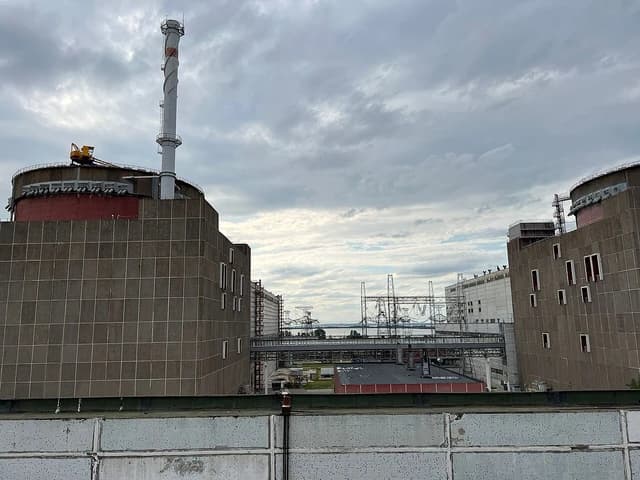
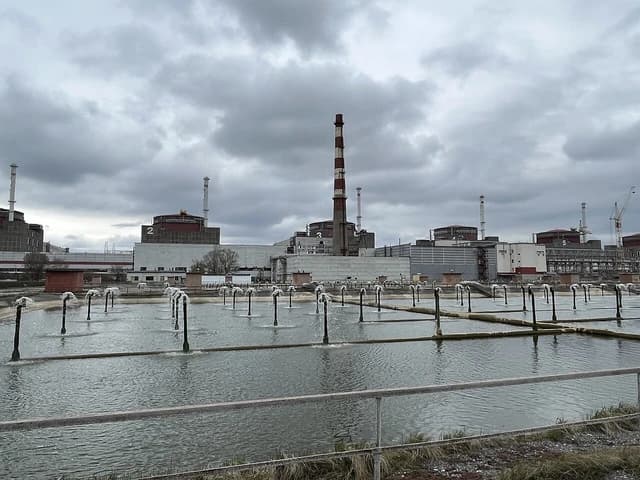
Russia’s report that Ukrainian forces attacked the Zaporizhia nuclear power plant puts Europe’s biggest war-linked energy asset back in the geopolitical crosshairs, raising the risk of a power-supply shock that markets still underprice. Even if the incident does not materially damage the plant, it reinforces how quickly the conflict can spill into electricity, fuel and uranium markets — and why investors should keep a higher risk premium on energy, defense and nuclear-related assets.
Zaporizhia attack lifts energy and uranium hedges

For investors, the key issue is not just the plant itself. Zaporizhia is a reminder that the war’s most important market consequence is volatility: in gas, crude, power and the companies tied to securing or replacing those flows. Europe has spent years trying to reduce exposure to Russian energy, yet every escalation in Ukraine reintroduces the same trade — higher defense spending, tighter energy balances and renewed demand for non-Russian supply chains.
Sentiment IndicatorsⓘProprietary · adalytica.com · October 5, 2026
This is a snapshot — live sentiment, awareness and momentum for 130+ markets update continuously in the dashboard.Open AlphaPulse
That backdrop helps explain why energy shares remain one of the market’s most responsive geopolitical hedges. The Energy Select Sector SPDR Fund has climbed to about $62.76, up from $56.97 in early August and well above its 200-day moving average near $55.98, showing that investors continue to pay for exposure to oil and integrated producers even as crude has eased back to about $96.16 a barrel, according to the latest U.S. benchmark data. The 50-day moving average near $61.89 suggests the sector is still in a constructive trend despite recent pullbacks.
The nuclear trade is the more underappreciated angle. The Global X Uranium ETF, URA, has been volatile, but the strategic case remains intact: any fresh fear around nuclear infrastructure tends to sharpen the case for uranium producers, fuel-cycle names and utilities looking for baseload power security. URA still trades well below its 200-day moving average near $48.05, near $39.62 on the latest reading, which tells you sentiment has not yet fully caught up with the long-term supply and energy-security story.
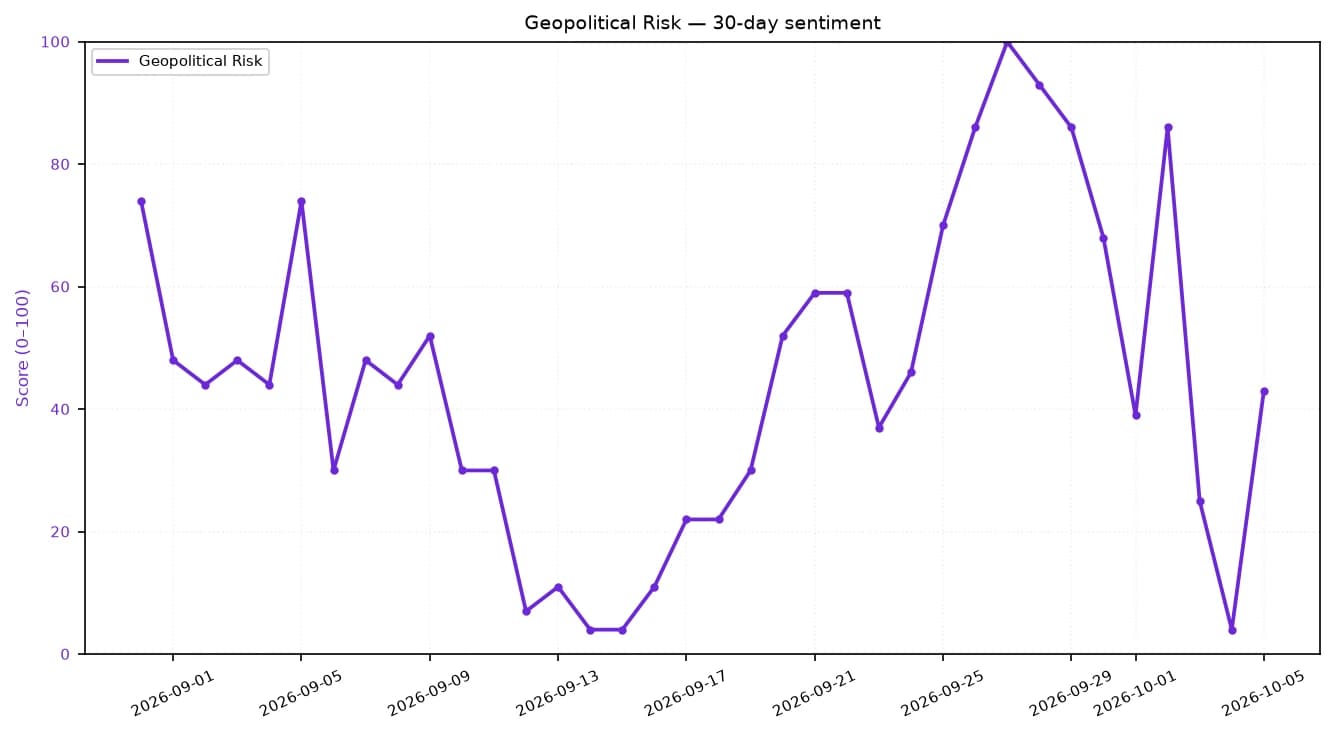
Geopolitical Risk — 30-day sentimentadalytica.com
Explore this data interactively — full history, time series and cross-market comparisons.Open AlphaPulse
The broader market message is that geopolitics is no longer a background variable. It is a direct input into pricing for oil, nuclear fuel, defense and even inflation expectations. In a world where investors are already debating whether the next leg of growth comes from AI infrastructure and electrification, war risk keeps the case alive for commodities and hard-asset exposure as portfolio ballast.
Adalytica’s Global Stability Sentiment gauge sits at 43, neutral, but its awareness reading is only 4, or extreme fear, showing that the market is alert even when the headline sentiment looks calm. That gap matters: these are the conditions in which a single escalation can reprice entire sectors quickly.
The investable takeaway is straightforward: stay long the geopolitical hedges. I believe the best asymmetry remains in energy majors, uranium exposure and defense names that benefit when the market is forced to pay for security rather than assume it. If Zaporizhia becomes one more reminder that the war can hit critical infrastructure at any time, the winners will be the assets tied to supply scarcity, resilience and military readiness.
| Entity | Gains | Losses |
|---|---|---|
| Energy producers | ▲Higher risk premium | ▼Demand for cheaper oil |
| Uranium miners/URA | ▲Nuclear security premium | ▼Stable sentiment |
| Defense contractors | ▲More spending urgency | ▼Peace dividend |
| European consumers | ▲Energy alternatives | ▼Lower power prices |